
A House Shaped by Use — Repetition and Wear
Some houses resist daily life. Others absorb it. How repetition, wear, and quiet structure produce a Mediterranean home that does not need managing.
JOURNAL
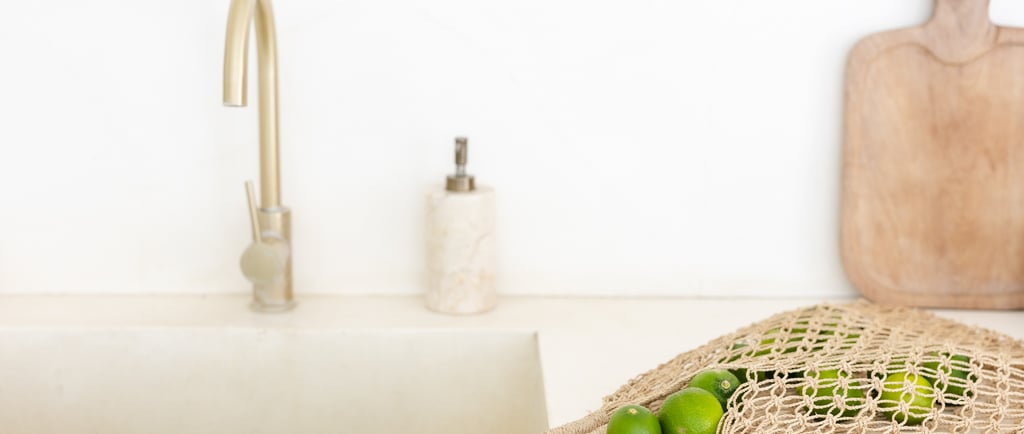
Some houses feel calm not because they are protected from use, but because they are shaped by it. Doors are opened without hesitation. Chairs are pulled out and pushed back again. Surfaces are cleared, used, and left ready for the next moment. Nothing needs to be prepared or restored. The house does not react to daily life; it accommodates it.
This accommodation is rarely visible at first glance. It reveals itself through repetition. The same gestures occur every day, often without conscious thought. You move through rooms knowing where things are. You reach for objects without searching. You occupy spaces without adjusting them. Over time, this lack of friction becomes the defining quality of the house.
Repetition without effort
Repetition is often misunderstood as monotony. In domestic space, it does the opposite. It removes the need for constant decisions. When rooms behave predictably, attention is freed. The house stops asking questions and daily life answers none. Meals happen where they always have. Rest happens where it is expected. Work, preparation, and retreat remain distinct, not because they are labelled as such, but because they have been used that way consistently.
In houses that resist this kind of repetition, daily life becomes more effortful. Furniture needs to be moved to function. Objects must be protected from use. Rooms change roles depending on the moment. Nothing settles. The space may appear flexible, but the flexibility comes at the cost of ease. Each action requires adjustment. Each return requires reconfiguration.
When spaces resist daily life
This tension is rarely acknowledged directly. It appears instead as a low-level fatigue. A sense that the house is always slightly unfinished, always waiting to be corrected. Calm becomes conditional, dependent on tidying, resetting, or staging. Use feels temporary rather than accepted.
In contrast, houses shaped by routine allow daily life to unfold without preparation. Morning does not require the space to wake up. Evening does not require it to be transformed. The house absorbs these shifts quietly. Light changes. Activity changes. The rooms themselves remain steady.
Wear as confirmation
This steadiness is not rigidity. It does not mean that the house is fixed or inflexible. It means that change happens through occupation rather than rearrangement. A table hosts breakfast, then work, then dinner, without being redefined each time. A chair remains where it belongs, even as different people use it throughout the day. Movement adapts around these anchors instead of displacing them.
Over time, wear becomes visible. Not as damage, but as confirmation. Edges soften. Surfaces dull slightly. Objects acquire familiarity. This wear is often treated as something to prevent, yet it is one of the clearest signs that a house is working as it should. Things that age well do so because they are used consistently and without ceremony.
The value of this kind of wear is not aesthetic. It is practical. It signals that materials were chosen for endurance rather than effect, and that the house was not designed to impress briefly, but to support repeated contact. When use leaves traces without degrading the space, daily life feels legitimate rather than intrusive.
A house that does not need managing
Rooms benefit from this legitimacy. A kitchen remains a place of preparation, not because it cannot become anything else, but because it does not need to. A bedroom withdraws because it is allowed to. A living room holds shared time without absorbing everything else around it. The clarity of these roles reduces friction between activities. Life does not spill everywhere at once.
This clarity is particularly noticeable in houses that are occupied by several people, or used intermittently. When routine is embedded in the space, arrival does not disrupt balance. Guests intuit where to sit. Children move ahead without instruction. Returning after absence feels immediate rather than disorienting. The house remembers how it is used, even when its occupants leave.
None of this requires visible organisation or strict order. In fact, overly controlled environments often struggle most with daily life. When calm depends on maintaining a specific arrangement, use becomes a threat. In houses shaped by routine, calm survives disorder. Objects can be left out. Movement can be uneven. The underlying structure holds.
Design that prioritises use accepts that rooms will be entered half-distracted, that objects will be handled without care, that days will overlap rather than resolve cleanly. Instead of resisting this reality, the house absorbs it. In doing so, it becomes quieter.
A house that works this way does not ask to be managed. It does not demand attention or adjustment as the day unfolds. Rooms remain available, objects remain where they are, and use accumulates without altering the balance of the space. Over time, this steadiness becomes almost unnoticed. And that is precisely the point: daily life moves through the house without resistance, and the house holds it without comment.
Contact
© 2025. All rights reserved.
An editorial study of French Mediterranean interiors, shaped by observation, lived experience, and a respect for spaces that age gracefully.