
The Kitchen Table - Center of the Mediterranean House
Not an island. Not a counter. The kitchen table is where the day organises itself — meals, work, pauses, light. The quietest architecture of gathering.
JOURNAL
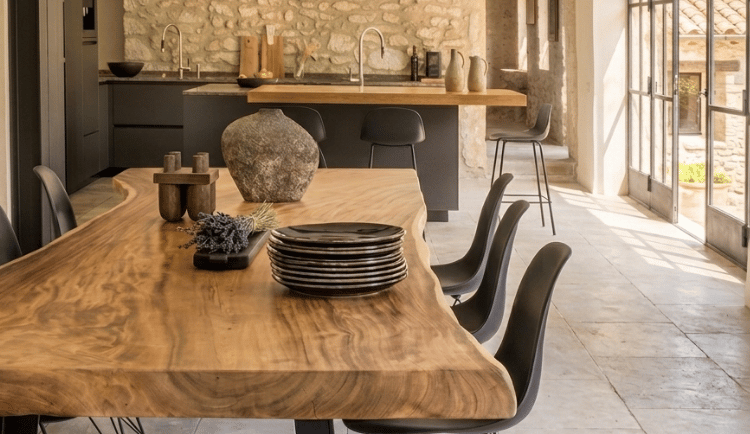
Where the day begins
In many houses, the kitchen table is the first place that becomes active in the morning. A window is opened. Coffee is placed on the table before the rest of the house fully wakes. Someone sits down briefly while another person moves around the room preparing breakfast.
This moment is rarely planned. It happens because the table is already there, already proportioned for sitting, already receiving the first light of the day. It does not need to be arranged.
The kitchen may contain more elaborate elements: a large island, a range, carefully aligned cabinets. Yet the table often becomes the true point of gravity. It is where people pause between tasks, where conversations start without ceremony, where the day slowly gathers momentum.
Architecture rarely announces this role. It simply allows it.
A surface that accepts interruption
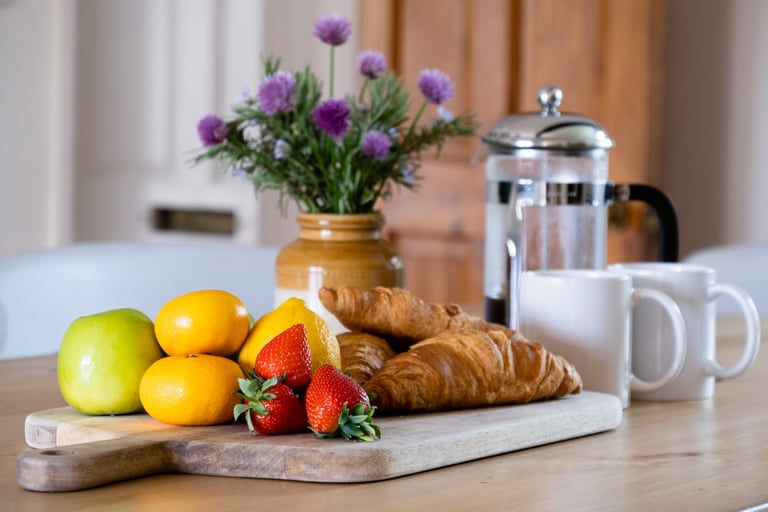
Unlike a dining table set for a specific meal, the kitchen table is rarely empty for long. A notebook remains open from the night before. A bowl of fruit sits in the center. Someone leaves a pair of glasses beside a cup.
These small accumulations do not feel intrusive. They belong to the rhythm of the room.
Because the table is used repeatedly throughout the day, it tolerates interruption. Someone sits for two minutes while waiting for water to boil. A child spreads out homework for half an hour. Groceries are unpacked and sorted before being stored.
None of these actions require preparation. The table is simply available.
This quiet availability is one of the reasons many houses feel easier to inhabit when a table is integrated directly into the kitchen rather than separated into a formal dining room.
The house absorbs routine instead of staging it — a dynamic also explored in Why Some Houses Are Easy to Live In.
The difference between islands and tables
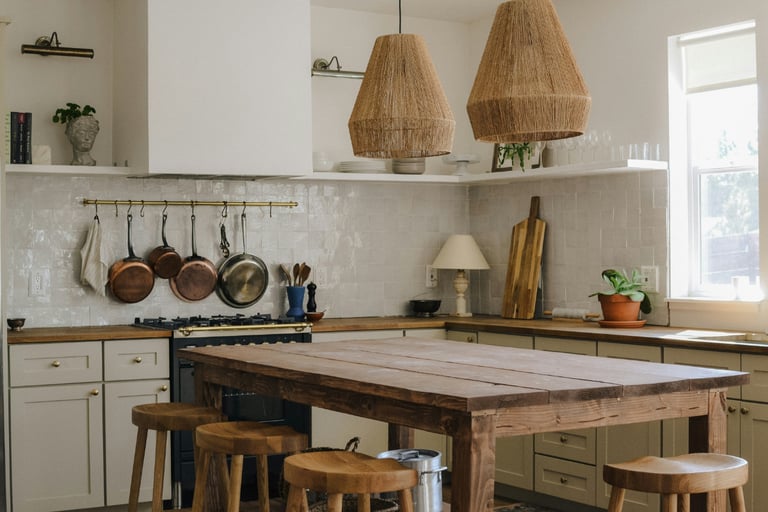
Contemporary kitchens often prioritize islands. They offer storage, preparation space, and seating along one edge. They are efficient and visually impressive.
Yet islands behave differently from tables.
An island usually belongs to work. Its height encourages standing. Its surface is often occupied by cooking tools, appliances, or preparation. Sitting there can feel temporary, even slightly peripheral.
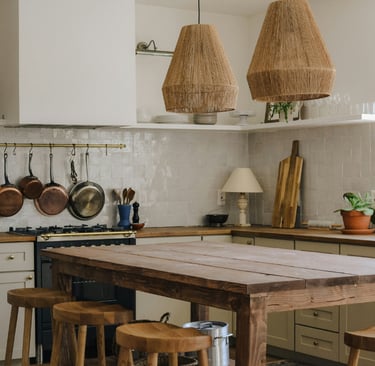
A table, by contrast, invites duration. Chairs surround it. Its height corresponds to the body at rest. People face each other rather than the wall of cabinets.
The difference is subtle but decisive. One surface organizes tasks. The other holds time.
This distinction explains why many houses that rely exclusively on an island eventually reintroduce a table somewhere nearby. The need is not technical. It is social.
Light where people sit
The location of the table within the kitchen also shapes how the room behaves across the day.
In many southern houses, the table is placed near a window but not directly in front of it. The goal is not spectacle but usability. Direct glare would make long conversations uncomfortable. Instead, light arrives indirectly, filling the room while leaving the surface calm.
This moderated light allows the table to remain usable from morning to afternoon. Someone can read there in the morning and return later to write or talk without needing to adjust the space.
The preference for mediated daylight follows the same logic explored in Why Southern Homes Prefer Filtered Light. Rooms that filter light rather than amplify it tend to remain stable over time.
The table as a crossroads
Over the course of a day, the kitchen table becomes a crossroads of small movements.
Someone passing through the kitchen stops for a moment to finish a cup of coffee. A bag is placed briefly on a chair. A quick conversation begins before either person continues elsewhere.
These encounters are rarely planned. They occur because the table sits at a natural intersection of circulation.
In houses where the kitchen connects to other rooms through a corridor or doorway, this intersection becomes even more apparent. Movement slows slightly as people pass the table. A chair is pulled out. Someone sits down for a few minutes.
Meals without ceremony
Formal dining rooms once organized meals around a specific moment. The table was set, used, and cleared according to a schedule. In many houses today, meals are more fluid.
Breakfast may last only ten minutes. Lunch might be taken individually at different times. Dinner may stretch late into the evening when guests are present.
The kitchen table adapts to these variations without needing to be reconfigured. Plates appear and disappear. Chairs shift slightly. The room absorbs change without losing its structure.
This flexibility does not come from design tricks. It comes from proportion. A table that is large enough to gather people but modest enough to remain part of daily life becomes an anchor rather than a stage.
The center without emphasis
Despite its importance, the kitchen table rarely appears as a focal point in design discussions. Photographs often emphasize cabinetry, lighting fixtures, or expansive countertops.
Yet in daily life, the table quietly organizes the room.
It defines where people sit. It determines how chairs move through the space. It creates a stable surface that remains available even as other parts of the kitchen change.
What the table holds is not ceremony. It is the record of small returns — meals taken, work set down and resumed, a child sat for a moment and gone again.
The marks on the surface, the slight wearing of the chair where it always sits, the cup left in the same place — these accumulate into a center the room arranges itself around. There is no announcement, no design intention to underline it.
The kitchen table is the quiet architecture of gathering because the gathering is what made it, not the other way around.



Contact
© 2025. All rights reserved.
An editorial study of French Mediterranean interiors, shaped by observation, lived experience, and a respect for spaces that age gracefully.