
Why Southern Homes Prefer Filtered Light
Mediterranean light is forceful. Shutters, depth, and shade make rooms livable through long sunlit days — filtration as the south's quiet form of shelter.
JOURNAL
When Light Becomes Demanding
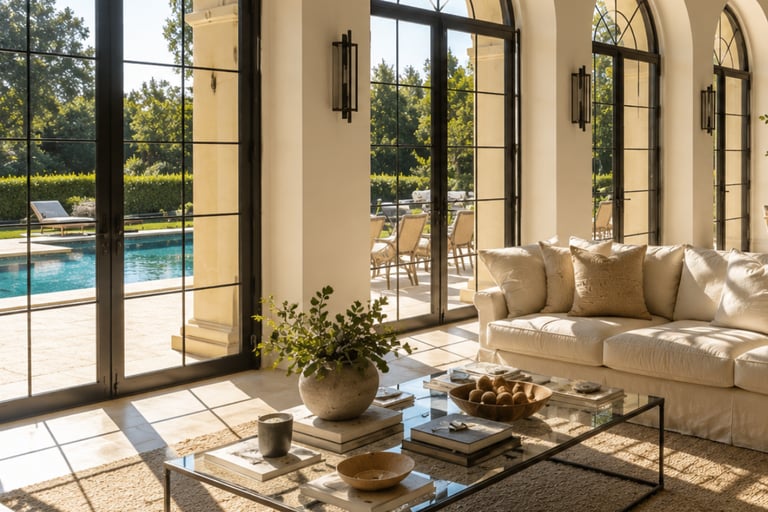
Unfiltered light is often described as generous, honest, even healthy. In practice, it can be exhausting. It sharpens edges, flattens textures, and turns rooms into stages that demand constant adjustment. You move a chair to escape glare. You half-close your eyes without noticing. You avoid certain corners at certain hours. The room is technically bright, yet never fully at ease.
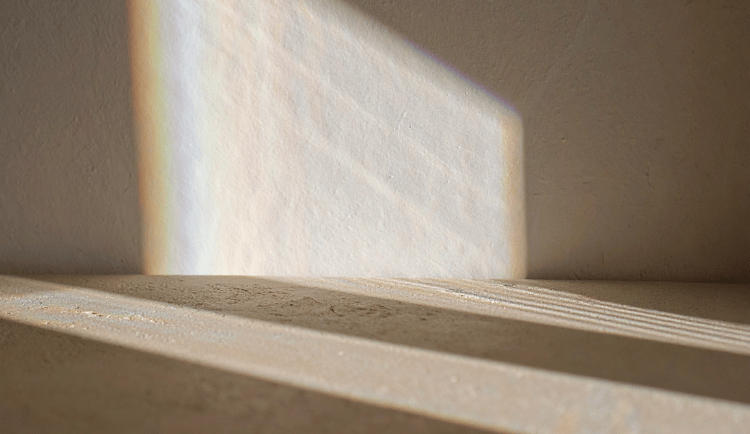
Filtered light behaves differently. It doesn’t arrive all at once. It settles. It allows surfaces to keep their depth and people to keep their attention. Nothing needs to be corrected immediately. You can stay where you are.
This difference is felt before it’s understood. And it’s one reason southern homes, almost without exception, have learned to prefer light that is mediated rather than absolute.
Duration Over Drama
Direct sunlight has a peak. It is dramatic at certain hours and punishing at others. Filtered light has duration. It holds a room steady as the sun moves, allowing it to remain usable from morning to late afternoon without constant intervention.
This is less about beauty than about tolerance. A room filled with filtered light forgives small imperfections. Dust does not announce itself immediately. Walls keep their color instead of bleaching into abstraction. Materials retain weight and texture. You don’t feel rushed to tidy, rearrange, or escape.
Southern homes did not arrive at this by theory. They learned it through repetition.
In regions where daylight remains present for most of the day, architecture gradually learns to regulate it rather than amplify it — a logic explored in Climate as the First Designer.
How Southern Houses Receive the Sun
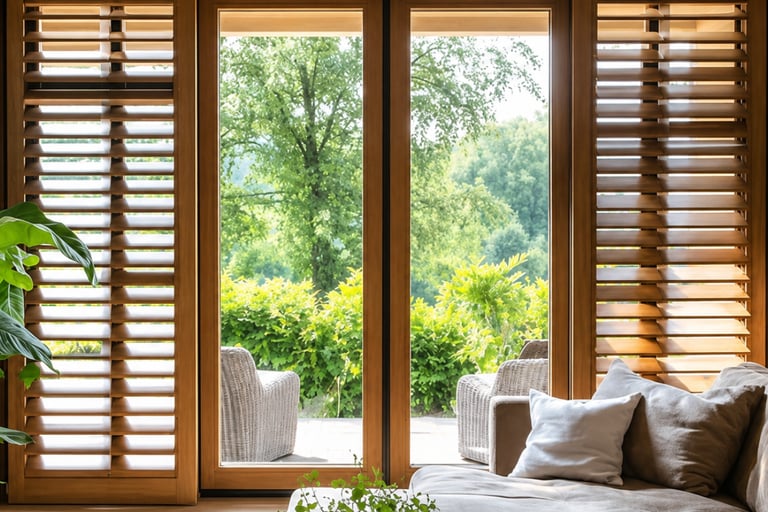
Shutters, deep window reveals, thick walls, curtains that are drawn as often as they are opened. These elements are not decorative gestures. They are practical responses to a sun that does not need encouragement. The goal is not to block light entirely, but to slow it down, break it apart, and let it arrive indirectly.
In this context, glare is not a sign of openness. It is a form of excess.
There is a quiet distrust of full exposure in southern architecture. Not because light is unwelcome, but because it is already present in surplus. Rooms are designed to receive it on their own terms.
A Contrast of Climates
This approach contrasts sharply with how light is treated in cooler or darker climates. There, light is precious. It is invited in as directly as possible. Large panes, minimal obstruction, reflective surfaces. Brightness becomes a virtue in itself because it compensates for scarcity.
In the South, brightness does not compensate for anything. It compounds.
This difference explains why certain design ideas travel poorly. What feels uplifting in a northern apartment can feel aggressive in a southern house. Filtered light is not a style transplanted from tradition. It is a local intelligence shaped by conditions.
Rooms That Hold the Day
The impact of this choice is most visible over the course of a day.
Rooms with filtered light rarely have a single “best” moment. They do not peak dramatically at noon or collapse into discomfort by mid-afternoon. Instead, they change slowly. Shadows move, but they don’t cut. Brightness shifts, but it doesn’t dominate. The room remains legible.
This stability affects how people behave. When light is harsh, attention shortens. When light is moderated, the body settles. Time stretches. The room becomes a place to stay rather than a place to pass through.
Shadow as a Form of Shelter
There is also a psychological dimension that is rarely discussed. Full light flattens hierarchy. Everything is equally visible, equally present. Filtered light introduces gradation. Some areas recede. Others come forward.
Enclosure is often misunderstood as confinement. In reality, it is what allows rest. Southern homes tend to understand this intuitively. They offer shelter not just from heat, but from excess stimulation.
Shadow is not the absence of light, but its counterbalance. It creates pause. It gives the eye somewhere to land.
These subtle shifts between brightness and retreat are closely related to the spatial pauses that help a house regain calm, explored in The Role of Pause: Why Houses Need Moments of Nothing.
How Houses Age Under Filtered Light
Over time, this balance shapes how houses age. Materials under filtered light change slowly. Stone softens instead of bleaching. Wood darkens instead of drying out. Textiles fade gently rather than abruptly.
The house retains continuity because it is not constantly being pushed to extremes.
This calm is often attributed to style, when it is really the result of moderation.
Filtered light shapes the house slowly. Walls darken in places, lighten in others. Shutters fade unevenly. Floors mark where the sun has fallen most often.
None of this is decoration; it is the record of a long relationship between a building and its sky.
To live in a southern house is to receive the day as something the architecture has already prepared for.
The choice is not how much light — there is always more than enough — but how to let it in without letting it dominate.
Start With The Light
Filtering is the fix — but first you need to see where your light enters unfiltered, and what it lands on. The free Light Audit shows you, step by step.
Contact
© 2025. All rights reserved.
An editorial study of French Mediterranean interiors, shaped by observation, lived experience, and a respect for spaces that age gracefully.