
Light Across the Dayin a Mediterranean House
A Mediterranean room is not one room. Morning clarity, noon restraint, evening containment — how a house keeps proportion as light moves through it.
JOURNAL
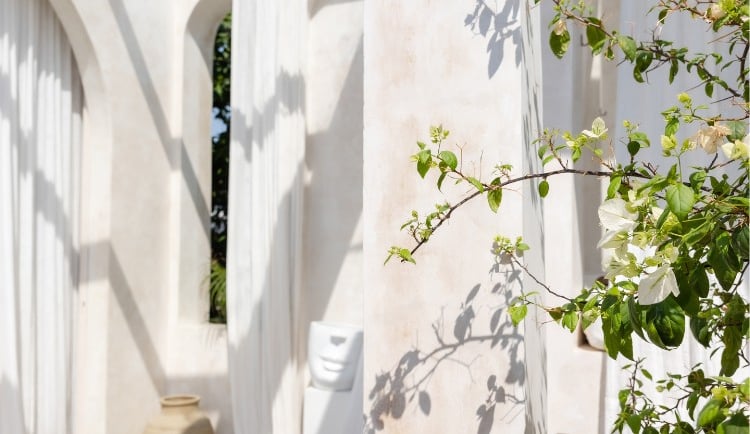
Light does not belong to a single room.
In French Mediterranean interiors, light moves through the house over the course of the day, shaping how spaces are used rather than how they are displayed. Rooms do not compete for brightness or drama. They participate in a shared rhythm, each responding differently as the sun shifts.
This understanding of light is not decorative. It is practical, seasonal, and lived.
Rather than asking how to bring more light into every room, Mediterranean homes ask a quieter question: how should this space feel at this hour?
Morning: clarity without exposure
Morning light arrives low and directional. It enters through openings rather than flooding the house all at once. Walls are still cool. Shadows are long and defined.
Spaces used early in the day respond by staying clear and open. Surfaces remain calm. Materials are pale but not reflective. Light is allowed to reveal texture gradually instead of bouncing back immediately.
Morning rooms are not theatrical. They are legible.
This is why breakfast tables are often placed where light passes across them rather than directly onto them. Why kitchens in older houses favour side light or filtered openings. Why bedrooms are designed to soften early brightness rather than amplify it.
The goal is not to wake the house abruptly, but to let it come into focus.
Noon: restraint against excess
At midday, light is at its most assertive. It flattens surfaces, sharpens contrasts, and exposes everything it touches.
Mediterranean interiors respond to this intensity with restraint.
Walls absorb rather than reflect. Openings are measured. Transitional spaces become important, offering relief from direct exposure. Shaded areas are not secondary; they are essential.
This is when the house protects itself.
Rooms used at midday often feel quieter than expected. Dining areas are cooled by depth and proportion. Living spaces pull back from full exposure. Materials show their strength here, especially stone, plaster, and unfinished wood, which hold light instead of scattering it.
The absence of shine is deliberate. Glossy surfaces perform poorly at noon. They compete with the sun instead of accommodating it.
By limiting visual noise, the house remains usable even at peak brightness.
Afternoon: movement and pause
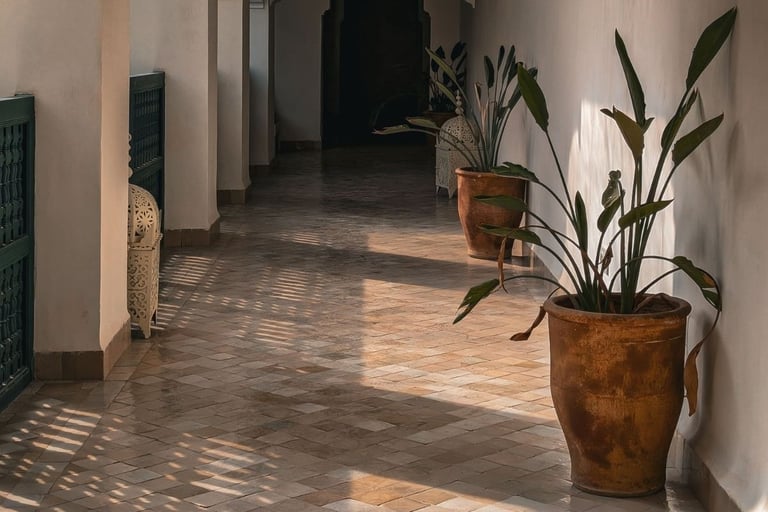
As the sun shifts, light begins to travel horizontally again. It moves across floors, climbs walls, and enters spaces it did not touch earlier.
This is when the house becomes dynamic.
Rooms do not need to change for this moment; they need to allow it. Furniture placement, circulation paths, and openings are all arranged to let light pass through rather than stop abruptly.
Transitional areas matter most here. Corridors, thresholds, and in-between spaces become active. Light marks time as it moves, creating a sense of continuity between rooms.
Nothing needs to be added. The architecture does the work.
This is why Mediterranean interiors rarely rely on strong artificial lighting during the day. The house is already in motion.
Evening: containment and depth
Evening light is slower, warmer, and more intimate. It settles rather than moves.
Rooms used at this hour are shaped to hold light instead of letting it escape. Seating is positioned inward. Walls deepen in tone. Materials appear denser.
The shift from day to evening is not abrupt. It is gradual, and the house supports that transition by narrowing focus.
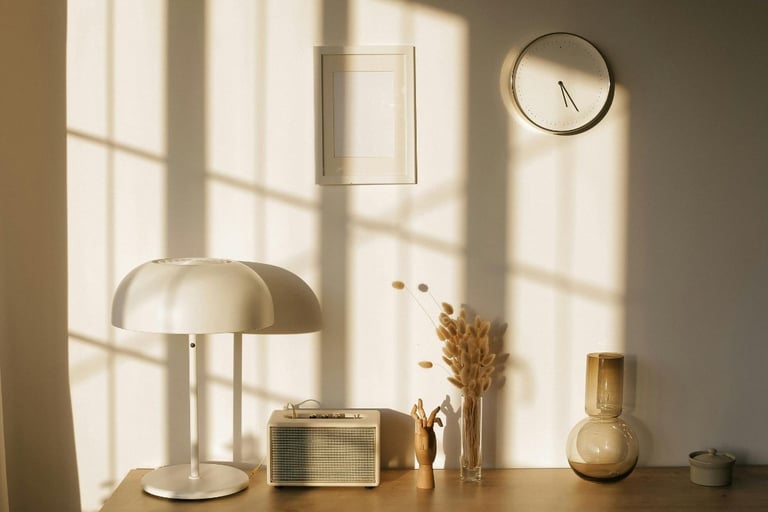
Artificial light does not replace daylight; it echoes it. Lamps are low and directional. Shadows are welcomed. Brightness is local rather than general.
This is when restraint shows its value most clearly. Spaces that avoided excess during the day feel calm and resolved at night. Nothing needs to be hidden.
What happens to a room once the directional sun has gone is examined more closely in The Evening Hour and How Houses Hold It.
Between hours: the small adjustments
Between the four hours described above, the house is constantly being tuned by hand. A shutter drops at the first heat of midday. A curtain is loosened in the late afternoon. A window is opened again as the air cools.
These adjustments are small, almost unnoticed. But they are what allow the architecture to stay accurate to the day. Without them, even a well-designed Mediterranean room would lose its calibration.
This is why the southern house has historically resisted automation. The hand on the shutter is part of the rhythm. It marks the hour by acting on it.
Rooms shaped by this kind of attention feel different from rooms managed by switches and sensors. They carry the trace of someone deciding, again, how the light should fall.
A shared rhythm, not isolated moments
What defines French Mediterranean interiors is not how bright individual rooms are, but how the house moves as a whole.
Light is allowed to vary. Some spaces are bright briefly, others remain subdued. This variation creates balance across the day.
Homes designed this way do not seek consistency in exposure. They seek continuity in experience.
Each room plays a role, but none claims priority.
This shared rhythm is the reason Why Southern Homes Prefer Filtered Light treats brightness as a duration rather than an event.
Why this matters
When light is treated as a connective element rather than a feature, interiors gain longevity.
Design decisions stop chasing effect and start responding to use. Materials age naturally. Spaces remain relevant across seasons and years.
Most importantly, the house feels lived rather than staged.
Light is not something to be added.
It is something to be received, moderated, and allowed to pass through.
Understanding this changes everything else.
Track Your Own Light
The light changes hour by hour. The free Light Audit gives you a simple way to read yours — morning, midday, and afternoon — before you change a thing.
Contact
© 2025. All rights reserved.
An editorial study of French Mediterranean interiors, shaped by observation, lived experience, and a respect for spaces that age gracefully.