
Seating in the Living Room
Low profiles, generous depth, materials that wear in. Why seating decides whether a French Mediterranean living room settles — and why nothing else can fix it.
LIVING ROOM
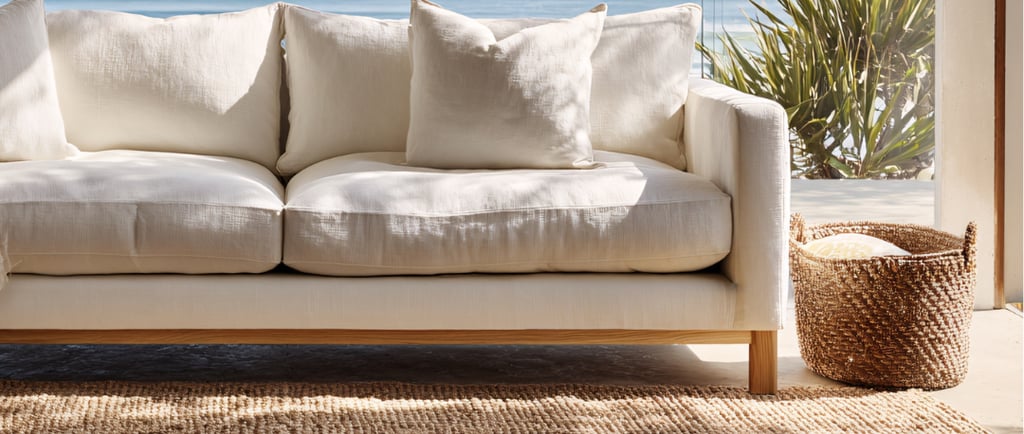
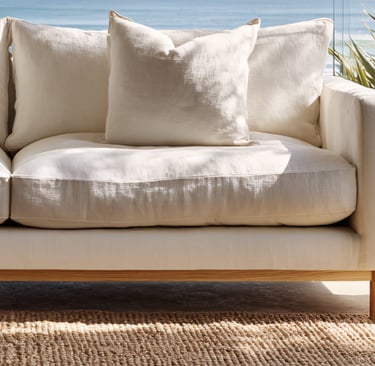
Seating defines the living room more than any other element.
In a French Mediterranean interior, sofas and chairs do not call attention to themselves. They exist to support use, proportion, and materials. Comfort is immediate and unquestioned; design is subtle and grounded.
Everything else — the walls, the floors, the light — responds to seating. If seating is wrong, the room never feels right, no matter how carefully chosen the other elements are.
Low, grounded profiles
Seating must sit low.
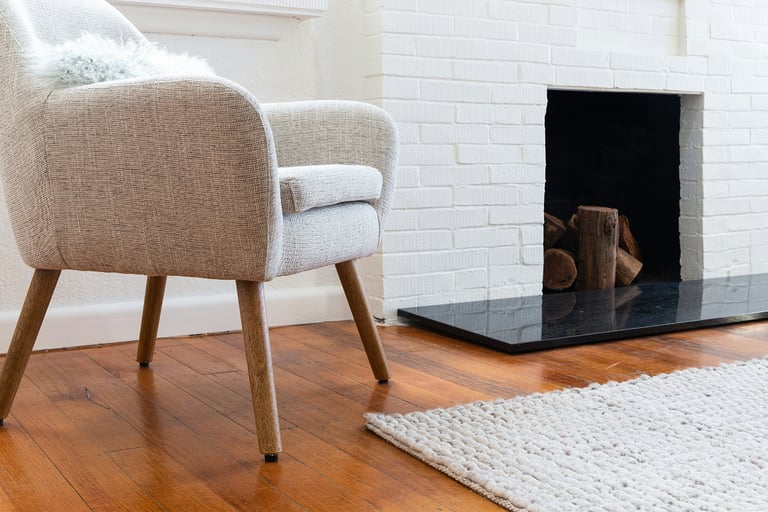
Low sofas and chairs maintain sightlines, allow light to move freely, and respect the horizontal flow of the room.
Tall or high-profile seating interrupts proportion, draws attention, and quickly feels out of place. Even a well-made piece can fail if it works against the architecture.
The goal is visual weight without assertion.
Depth matters more than silhouette.
Generous seating invites use, while shallow or sculptural pieces may look considered but rarely perform over time.
Scale is read horizontally, in relation to the wall behind and the floor below.
Proportion, not style, decides whether a piece belongs.
Materials in context
Seating is where materials meet use.
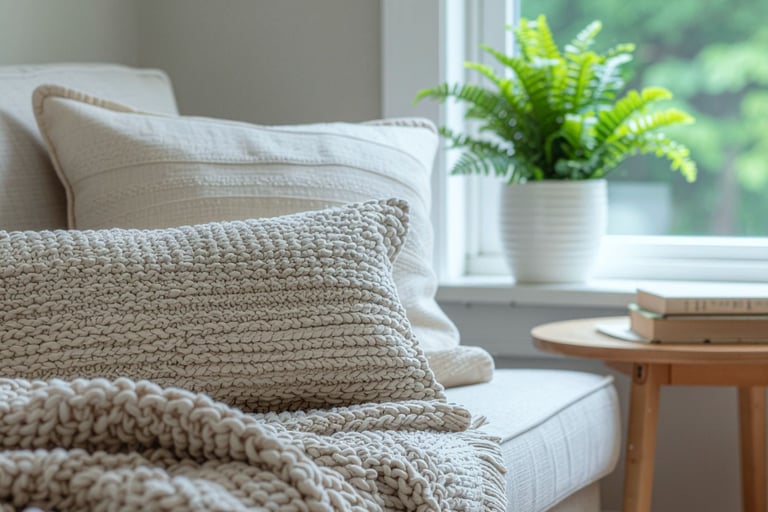
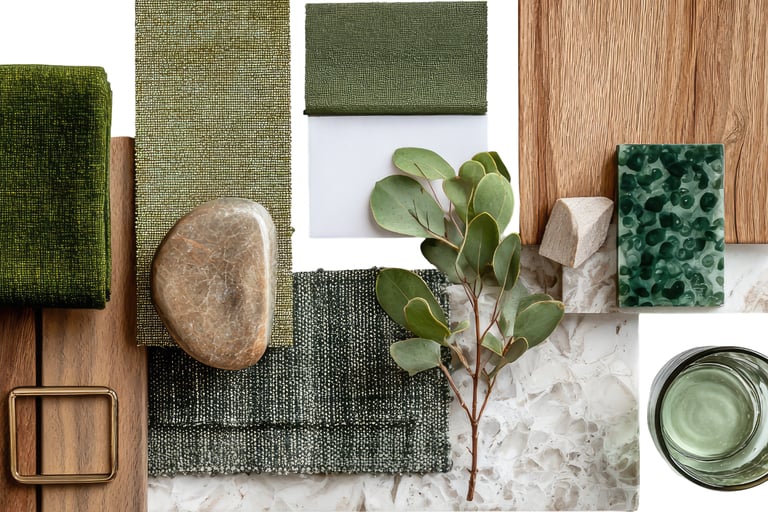
linen and wool remain soft without dominating, absorb light, and settle with time
wood frames age gradually and carry visual weight
stone or ceramic elements, such as side tables or built-in seating, help ground the arrangement
Synthetic fabrics, high-gloss finishes, or overly processed wood tend to resist both light and time. They hold their appearance but lose their place in the room — a contrast that becomes clearer in Materials and Finishes That Last in the Living Room, where materials are understood through how they age.
Arrangement and negative space
How seating is arranged matters as much as the pieces themselves.
group elements horizontally to follow the movement of light
leave space between pieces to allow the room to breathe
avoid overcrowding or imposed symmetry
Rooms that feel too full often do so because seating has been misjudged in scale or placement.
This balance depends on how light moves through the room and how space is held between elements — a relationship developed in Light and Proportion in the Living Room.
Color and texture
Seating also establishes how color and material interact.
base tones respond first to light (linen, warm neutrals)
deeper tones provide weight without contrast (olive, charcoal)
texture adds depth without becoming visible from a distance
When seating is resolved, color no longer needs to lead. It adjusts to the conditions already in place, a relationship explored in Color in a French Mediterranean Living Room.
Selection criteria
Not every piece belongs.
Each element must:
support the room without drawing attention
age well under light and use
respond to proportion first, comfort second, style last
If a piece requires justification, it is usually out of place. Comfort is non-negotiable, but it should not be visible at first glance.
A sofa that appears impressive before it is used rarely belongs.
Seating here is meant to be inhabited, not displayed.
When a piece demands attention, it competes with the architecture instead of supporting it.
The opposite condition — seating that does not announce itself — is developed further in The Comfort of Understatement.
Ageing under southern light
Seating is the part of the room most directly affected by use. Cushions soften. Linen develops a slight sheen where it is sat on most often. Wood frames lose their sharpest edges.
None of this is damage. It is the record of the room being lived in.
Pieces chosen for this kind of wear settle into the room more deeply over time.
The cushion compressed by years of use sits at a slightly lower angle, which is often the angle the room needed in the first place.
The arm darkened where a hand has rested marks the seat as occupied even when no one is in it.
Synthetic upholstery and high-gloss frames produce the opposite effect.
They resist marking, which means they accumulate evidence of use without absorbing it — small stains, slight discolorations that read as damage rather than patina.
The seating begins to feel out of place in a room that is otherwise getting better with time.
Result
When seating is correct, the room settles.
Nothing needs to compensate. Nothing needs to be added later. The space holds together through use, proportion, and time.
Seating does not define the style of the room.
It defines whether the room works.
Contact
© 2025. All rights reserved.
An editorial study of French Mediterranean interiors, shaped by observation, lived experience, and a respect for spaces that age gracefully.