
The Comfort of Understatement in a Mediterranean Room
A well-scaled room does not announce itself. Why restraint — in proportion, surface, finish — produces the quiet comfort the south builds for.
JOURNAL
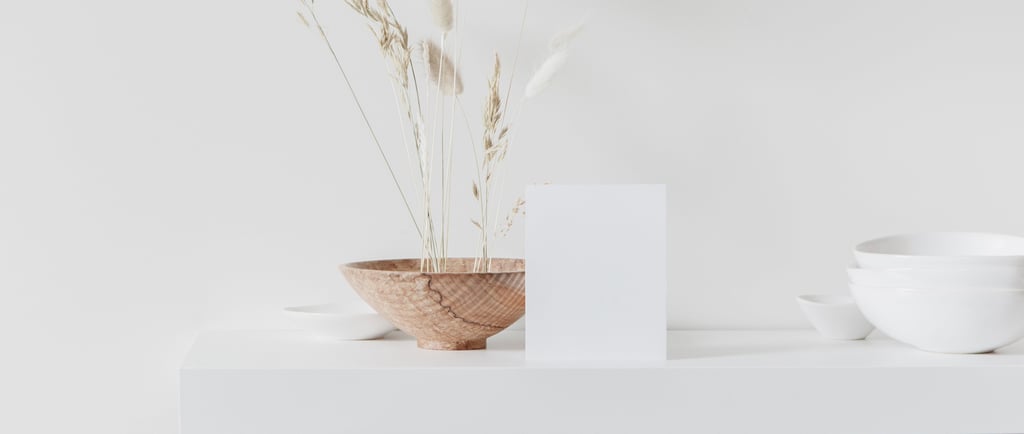
Before the room asks anything
Some rooms feel comfortable the moment you enter them, before you have time to take them in. You do not stop at the threshold to adjust your pace or look around. The ceiling sits low enough to register without pressing down. The walls feel close enough to orient you without enclosing you. You can tell, within a few steps, how the room will be used. Nothing asks to be interpreted. The space does not announce itself; it receives you.
This sense of ease has little to do with decoration or atmosphere. It comes from scale. From dimensions that align with the body without calling attention to themselves. The room does not try to impress. It does not try to compensate. It simply starts at the right size.
Stopping at the right size
Understatement in a room is rarely about reducing. It is about stopping. Knowing when enough has been reached and resisting the urge to go further. A room that feels right often does so because nothing has been added to amplify it. The ceiling height allows conversation without echo. You can cross the space in a few steps without feeling rushed or exposed. Furniture sits close enough to walls to feel held, not adrift. Distances are measured to movement, not to sightlines.
In these rooms, use feels immediate. Seating does not need to be grouped tightly to create intimacy. Tables do not have to be oversized to feel present. The room holds its contents without stretching to accommodate them. You sense where to sit, where to stand, where to move, without scanning the space first. The room works at the scale of daily life.
This accuracy is what makes understatement comfortable. When a room stops at the right size, it no longer tries to prove itself. It meets the body without negotiation.
When scale starts to perform
Rooms that exceed this point behave differently. Ceilings rise beyond usefulness. Width increases without adding clarity. The distance between walls and furniture grows until objects begin to drift toward the centre, leaving edges unused. Sound thins out. Voices lift slightly to compensate. Movement slows, not out of calm, but because the body has more space to manage.
Even when these rooms are carefully finished, something remains unsettled. Furniture appears temporary. Large gestures replace precise ones. What began as generosity turns into excess that needs correction. Understatement avoids this condition not by shrinking space, but by refusing excess before it begins. It stops before scale becomes an argument. Why Some Houses Are Easy to Live In shows what that refusal looks like across a whole house.
Proportion felt, not measured
Proportion is often discussed as a system, but it is experienced as a sensation. You feel it in how far you walk before reaching a wall. In how easily you hear someone speak across a table. In whether you need to lean forward or step back to engage with the space. These judgments happen quickly, without calculation.
Rooms that are proportionate feel immediately legible. You understand their limits. You understand their purpose. The space does not change character as you move through it. It remains consistent at different distances and from different positions. This consistency allows attention to shift away from the room itself and toward what is happening inside it.
There is no need for dramatic height to create importance, nor for wide spans to suggest freedom. Proportion works quietly. It aligns the body, the furniture, and the room into a single scale, where nothing dominates and nothing disappears. The same logic, applied to ceiling height, is developed in The Space Above the Sightline.
Accuracy as generosity
Understatement is often mistaken for restraint alone, but it is better understood as accuracy. It is the decision to give a room exactly what it needs, and no more. This precision is not austere. It is generous. It allows daily life to unfold without adjustment.
In rooms shaped this way, nothing feels provisional. Chairs stay where they belong. Tables do not migrate. The room does not need to be reconfigured to accommodate different moments of the day. Its measure already accounts for them. This steadiness creates comfort not through softness or warmth, but through reliability.
A room that is accurately scaled does not compete with its occupants. It supports them. Over time, this support becomes almost invisible. You stop noticing the room as a space and begin to experience it as a setting that holds activity without comment. That is the quiet success of understatement: space that feels right because it stops at the moment it should. The same restraint shapes The French Mediterranean Bedroom, where withdrawal is the dominant condition.
Contact
© 2025. All rights reserved.
An editorial study of French Mediterranean interiors, shaped by observation, lived experience, and a respect for spaces that age gracefully.