
The French Mediterranean Bedroom
How a French Mediterranean bedroom is built to withdraw, not impress. Softened light, materials chosen for contact, restraint that lets the room hold still.
BEDROOM
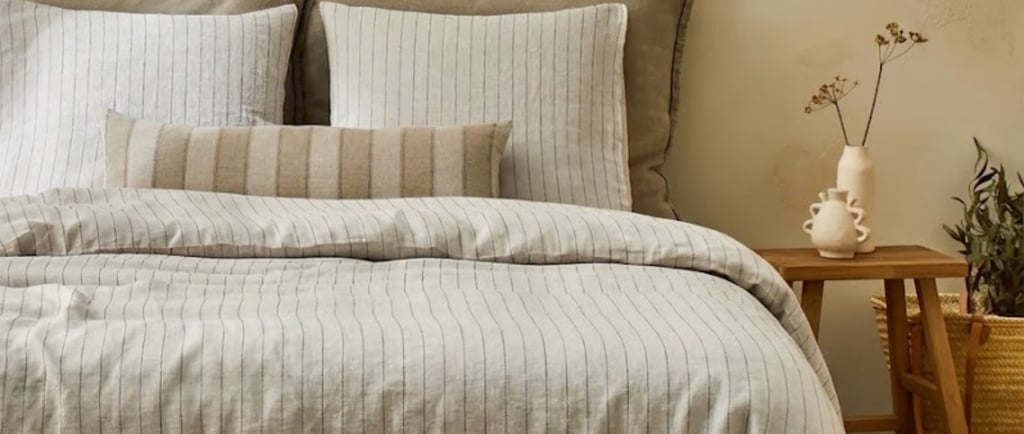

A French Mediterranean bedroom is not designed to impress.
It is designed to withdraw.
This is the most private room in the house, and it is treated accordingly. Light is softened rather than maximised. Materials are chosen for how they feel against the body and how they age over time. Nothing is added to create atmosphere; atmosphere is allowed to settle on its own.
In Mediterranean homes, the bedroom is rarely a place of visual intensity. Its strength lies in what is left out.
Withdrawal before decoration
The bedroom begins with a simple question: what can be removed?
Storage is pared back. Surfaces are kept clear. Furniture is limited to what is necessary for rest and daily rituals. The absence of excess allows the room to feel quieter, slower, and more grounded.
This is not minimalism. It is selection. Each object remains because it contributes to comfort, proportion, or balance.
This reduction is not emptiness, but intention — a way of making space for stillness rather than filling it, a condition explored in The Role of Pause: Why Houses Need Moments of Nothing.
Light that softens
Light in a Mediterranean bedroom behaves differently than in social rooms.
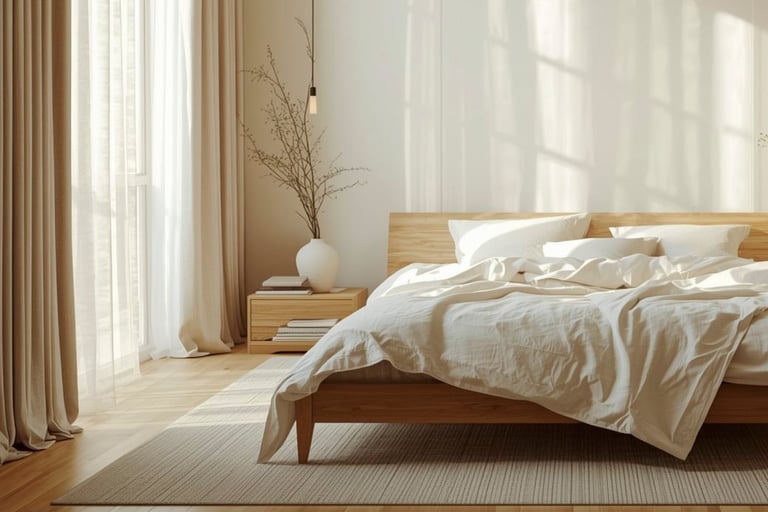
It is filtered rather than celebrated. Curtains remain light but substantial, often linen, allowing daylight to diffuse rather than flood. Openings are respected. Artificial light is layered and low.
The goal is not brightness but continuity. Morning light arrives gently. Evening light recedes without contrast.
This preference for softened light is not aesthetic. It is a response to abundance, and it becomes more specific in Light and Proportion in the Bedroom.
Proportion creates calm
Proportion in the bedroom is felt physically.
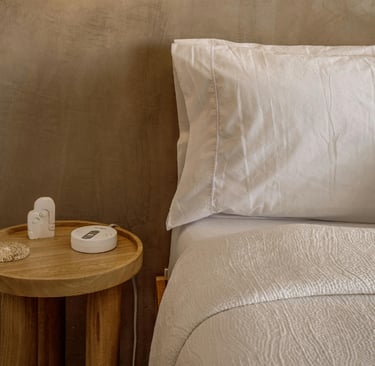
The bed is scaled to the room, never oversized. Circulation space allows movement without friction. Night tables align with the mattress rather than existing as separate elements. Headboards, if present, remain modest and integrated.
When proportions are correct, the room settles. When they are not, decoration cannot compensate.
In the bedroom, that sense of proportion is organised first through the bed itself, a relationship developed further in The Bed as the Only Anchor.
Materials chosen for contact
Materials are selected for contact, not display.
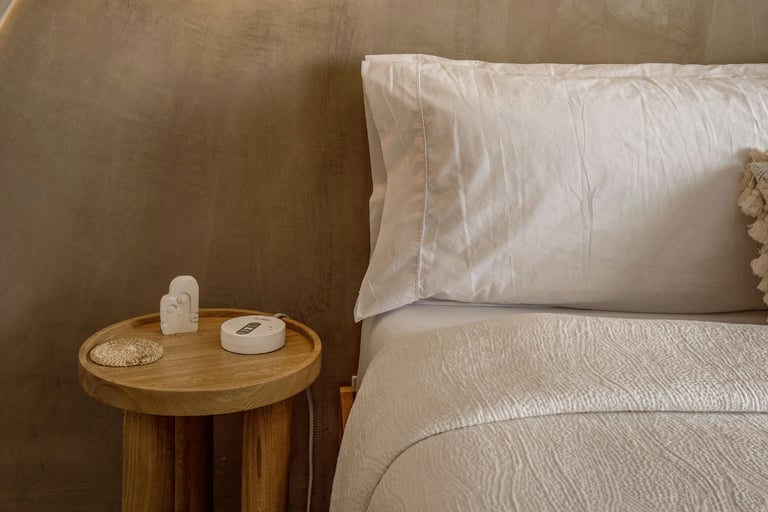
Linen, cotton, wool, lime plaster, wood, and stone appear repeatedly because they soften with use. They regulate temperature. They absorb sound. They age without losing integrity.
Finishes remain matte. Textures are tactile. Nothing reflects unnecessarily.
This approach becomes clearer in Materials for Rest in the Bedroom, where materials are understood through how they are lived with rather than how they appear.
Color as support, not statement
Color is secondary.
It supports rest rather than defining the room. Tones come from natural materials: washed whites, warm stone, soft clay, muted greens. Contrast remains low. Variation comes from texture rather than hue.
The room should remain cohesive even in low light. If color becomes noticeable, it is already too present.
That restraint continues in Color in the Bedroom, where color is treated as a consequence rather than a starting point.
Bedrooms over time
A bedroom changes more slowly than the rooms downstairs, but it does change.
Linen sheets soften with each wash. Wood headboards develop a warmer tone where a shoulder leans against them in the morning. Plaster walls absorb the breath of the room and settle into a slightly deeper version of themselves. None of this is damage. It is the quiet record of how the room has been used.
In rooms designed for impression, this kind of change reads as wear. In a room designed for withdrawal, it reads as belonging. The bedroom becomes less new and more itself.
Nothing in the room is asked to resist time. Materials are chosen because they hold up to it — not by staying the same, but by changing in ways that feel intended.
A room that holds still
A successful French Mediterranean bedroom does not ask for attention. It holds still.
It allows the body to slow down. It absorbs the day rather than reflecting it. Over time, it becomes more personal, not more decorated, shaped quietly by use and habit.
This is not a room that benefits from constant change.
It improves through living.


Contact
© 2025. All rights reserved.
An editorial study of French Mediterranean interiors, shaped by observation, lived experience, and a respect for spaces that age gracefully.