
How to Make a New Build Feel More Mediterranean
Most new builds feel generic — not badly designed, just without depth or character. This is how to change that, starting with light and proportion rather than decoration.
GUIDESRENOVATIONS & CHARACTER
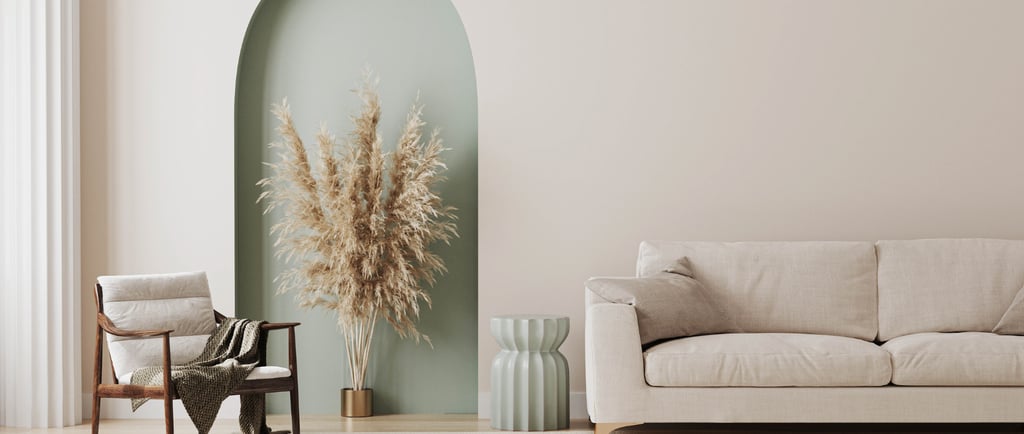
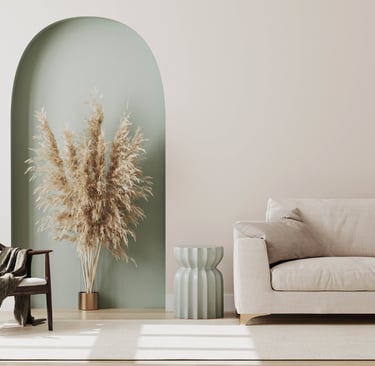
Most new builds feel the same. Not badly designed — just generic.
The ceilings are a standard height, the windows are large and flat, the floors are pale and uniform, and the walls are a developer white that looks fine in photographs and slightly wrong in real life.
If you're drawn to Mediterranean interiors — the weight of old stone, filtered light, rooms that feel settled without trying — you might assume this kind of atmosphere requires an old house. It doesn't. It requires specific decisions about light, material, and proportion. These work in any building.
Most advice starts with decoration. The fixes below start earlier.
Fix the Light First
The most noticeable difference between a new build and a Mediterranean house is not the materials — it is the light.
A new build has large windows with thin frames and no depth to the reveals. Light comes in flat, from the full surface of the glass, and hits everything at once. The room never feels shaded.
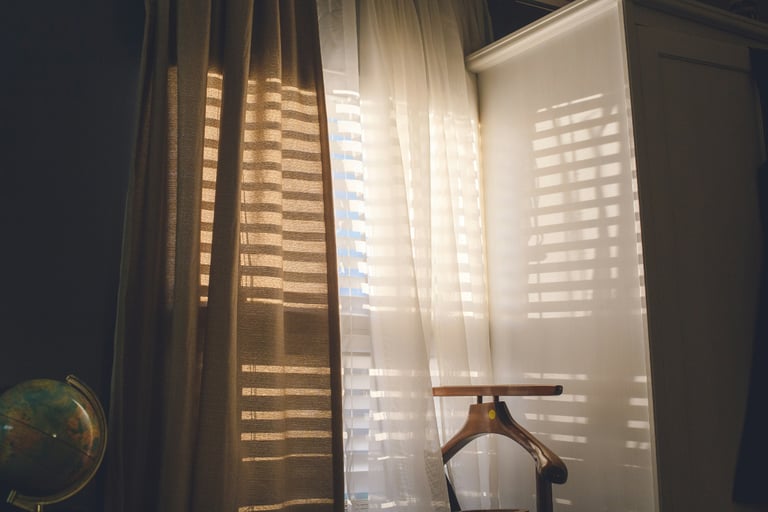
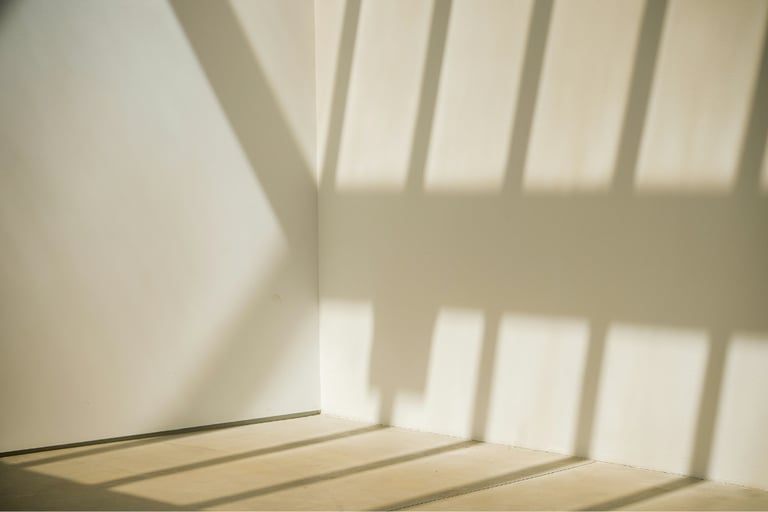
A Mediterranean house uses light differently. Modest openings, deep reveals, shutters that allow light to be angled rather than simply admitted. The room has a lit side and a shaded side, and that distinction changes through the day.
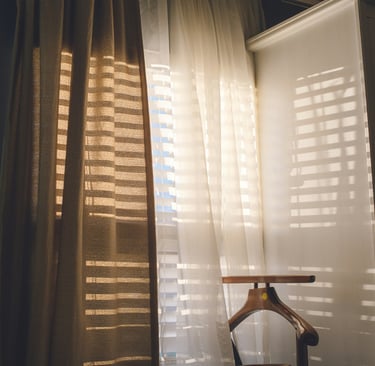
You cannot rebuild the window reveals. But you can control what happens in front of them. Wooden shutters fitted inside the frame — even simple panel shutters — give you the ability to angle the light rather than block it. Linen curtains hung from ceiling to floor filter and soften it. The goal is not to reduce brightness but to give light a direction.
A room where light comes from one side feels entirely different from a room where it comes from everywhere at once.
Start here before anything else. This is the single change that does the most work, and it is not the most expensive one.
For a deeper look at filtered light, read Why Some Houses Are Easy to Live In.
Proportion Before Furniture
New builds typically have ceilings of around 2.4 metres — low by historical standards — and open-plan floor areas that feel wide and flat. The combination makes rooms feel neither intimate nor spacious. Just there.
The furniture reflex is to fill the space. The Mediterranean reflex is the opposite: keep everything low and give the room space to breathe.
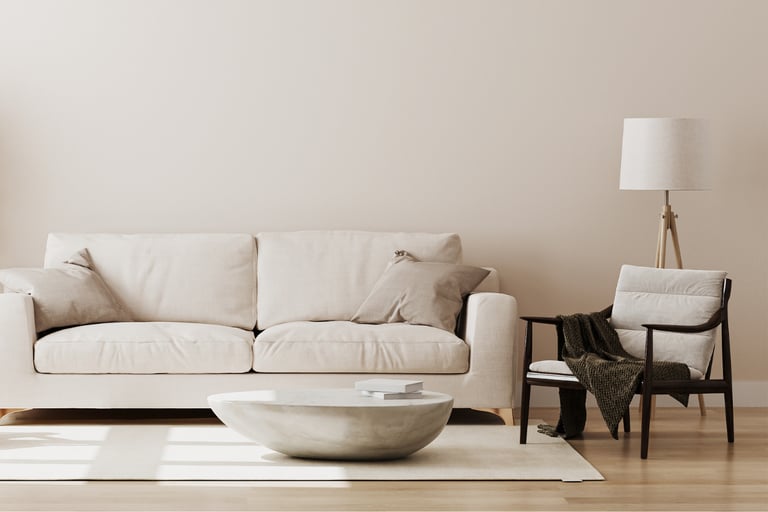
Low furniture makes a low ceiling feel less oppressive. A sofa sitting at 75–80 centimetres rather than 90. A coffee table close to the floor. A bed without a tall headboard. Nothing that draws attention to the ceiling by sitting too close to it.
Avoid tall furniture in standard-height rooms: floor-to-ceiling bookshelves, high kitchen units, open wardrobes that reach the ceiling. These make the room feel contained rather than settled.
If the floor plan is open, zone with rugs and furniture placement rather than partitions. A rug defines the living area. The dining table defines another. Leave real circulation space between them — not for aesthetic reasons, but because a room the body can move through easily feels less pressured than one it has to navigate.
The proportions of a new build are fixed. How you occupy them is not.
The same principle is especially useful in a living room, where open-plan layouts often feel too exposed. For a room-by-room version of this approach, read The French Mediterranean Living Room.
One Material, Then Repeat
New builds arrive with several finishes competing for attention: laminate floor, painted walls, tiled kitchen, carpeted bedroom, gloss cupboard doors. Each is reasonable on its own. Together they produce visual noise that decoration cannot fix — because decoration adds more, and more is not the problem.
The Mediterranean approach is a small number of materials, each with texture and weight, repeated across the house.
Choose one grounding material first. Repeat it. Then add softness.
Start with the walls. Limewash or mineral paint transforms a flat, even surface into one that absorbs light the way plaster does — with slight variation that gives the room depth. This is the most effective change in a new build for the cost involved. Apply it to one wall first. If it works, continue.
Add weight to the floor or a key surface. Stone, terracotta, or wood grounds the room in a way that laminate cannot. It does not need to be expensive. It needs to be real.
Then introduce softness. Linen — for curtains, cushions, or bedding — adds a texture that synthetic fabrics do not have. It creases and settles in a way that reads as lived-in rather than arranged.
Introduce one material properly before adding the next. The goal is continuity: a room where the eye moves through materials that speak to each other, rather than a room where every surface is doing something different.
One Job Per Zone
Open-plan new builds often have rooms that try to hold too many things at once. The living area is also the dining area, the home office, the place where the children play, and the room where the television lives. Every corner is in use. Nothing feels settled.
A Mediterranean house gives each area a single purpose. The dining table is where meals happen. The sitting area is where conversation happens. This is not a decorating principle — it is a decision about how the room is used, and it is the difference between a room that holds still and one that never quite does.
In a new build, you achieve this through furniture placement and restraint. Position the sofa so it faces the room, not the screen. Place the dining table with enough distance from the sofa that each area has its own atmosphere — not just its own function. Remove from view anything that belongs to a different activity.
The harder part is accepting that a room which holds one thing well is more useful than a room that holds everything badly.
What this looks like in practice — where to position the sofa, how much distance to leave between zones — is covered in French Mediterranean Living Room Ideas.
The same principle applies to the bedroom. A room that is only for sleep is easier to make restful than one that doubles as a workspace. Mediterranean Bedroom Ideas covers this in more detail.
Color Follows Material
Developer white is not the problem. Choosing the replacement color in isolation is.
Color in a Mediterranean interior is the last decision, not the first. It responds to the floor, the ceiling, and the quality of the light — not to a paint chart chosen in a showroom.
A warm stone floor suggests warm whites on the walls. A pale grey laminate will fight warm paint and win. This is why colors that look right in other people's houses often look wrong in yours: the material underneath is different.
The rule is simple. Choose the floor or the main material first. Then choose the wall color as a response to that material and to your actual light — not the light in the paint shop, and not the light in the photograph you saved.
Warm whites — those with yellow or red rather than blue undertones — work in most new builds because they absorb light rather than reflect it back flat. Mineral or limewash paint in these tones performs differently from standard emulsion: the surface varies slightly with the light, which gives the room a depth it otherwise lacks.
Test the color on the actual wall at different times of day before committing. The version that looks right at noon will read differently at four in the afternoon, and that is the version you will live with most.
Before Buying Anything, Check the Room in This Order
● Where does the light enter, and is it filtered or flat?
● Which furniture pieces are making the ceiling feel lower?
● Which material appears only once and feels disconnected from the rest of the room?
● Which zone is trying to do too many jobs?
● Does the wall color respond to the floor, the light, and the main materials already in the room?
A new build does not need to be disguised as an old house. It needs a small number of decisions made in the right order.
Light first. Proportion second. One material introduced properly and repeated. Zones that each hold a single purpose. Color chosen last, in response to everything already in the room.
That is where a Mediterranean feeling begins: not with themed decoration, but with light, weight, rhythm, and restraint.
Contact
© 2025. All rights reserved.
An editorial study of French Mediterranean interiors, shaped by observation, lived experience, and a respect for spaces that age gracefully.