
French Mediterranean Living Room Ideas - Calm, Minimal Approach
How a French Mediterranean living room is built — through light, proportion, materials, and restraint. Calm without minimalism, considered without decoration.
LIVING ROOM
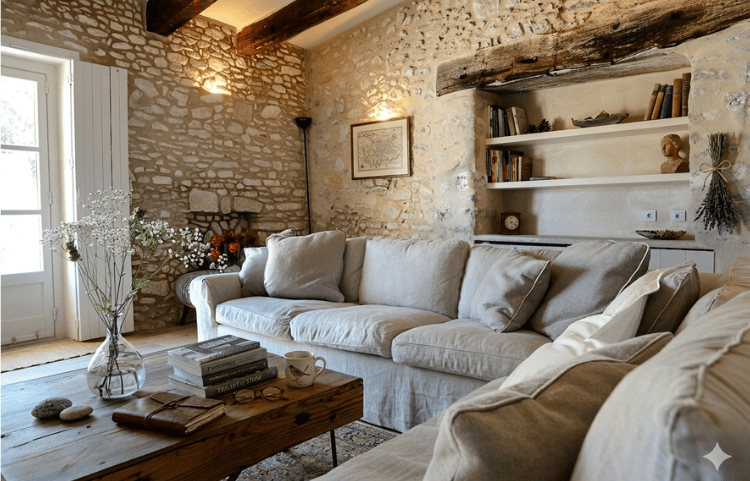
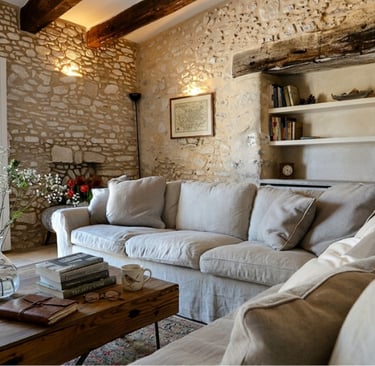
If you search for French Mediterranean living room ideas, most results focus on decoration — arches, textured walls, coastal accents. The rooms that actually feel calm are built differently. They rely less on objects and more on how light, proportion, and material are handled.
A French Mediterranean living room is not defined by what is added, but by what is resolved first. When the structure is clear, the room begins to feel settled without needing to be filled.
What Defines the Room
The atmosphere comes from a few consistent decisions.
Light is treated as a material rather than something added later. Proportion is established before furniture is introduced. Materials are chosen for how they age, not how they impress. Objects are limited, and each one has a place.
When these elements align, the room feels calm without appearing minimal. This logic runs through every space in the French Mediterranean Living Room.
Light Defines the Room
Light should determine how the room is used.
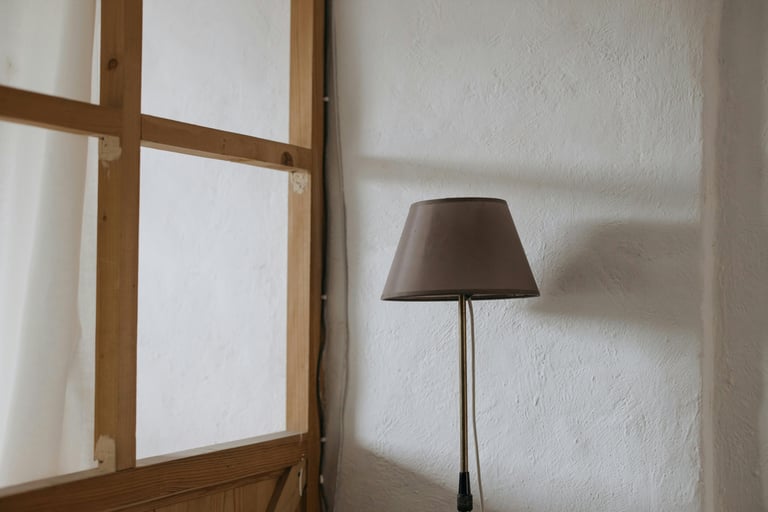
In practical terms, this means keeping sightlines open and avoiding tall obstructions that interrupt its movement. A living room that works with natural light rarely needs strong artificial lighting — only soft, low sources that take over when the sun moves on.
A typical example: a room where daylight moves freely from one side to the other, touching walls, floors, and seating without interruption. Curtains stay light or absent. Furniture sits below window height, so the air at eye level remains undivided.
The way light changes throughout the day is examined in Light Across the Day: Morning, Noon, Evening, where each moment reshapes the same space differently.
Seating, Low and Grounded
Seating defines the room more than decoration.
A low linen sofa in soft off-white or warm neutral, paired with a deep armchair, keeps the room anchored. The emphasis is on depth and comfort rather than silhouette.
When seating rises too high, or becomes sculptural, it interrupts the horizontal flow of the room and begins to dominate it. Tall backs cut the wall in half. Large arms eat into circulation. The room loses its proportion to its furniture.
The goal is presence without attention. This relationship between seating and structure is developed further in Seating Defines the Living Room, where proportion becomes the driver of comfort.
Materials Repeated, Not Mixed
A calm room does not rely on variety. It relies on consistency.
Instead of mixing many finishes, a French Mediterranean living room typically works with a small palette: stone, linen, wood, sometimes ceramic. A plaster wall, a linen sofa, a wooden table, and a wool or natural-fibre rug already create enough variation. Repeating these materials across the room allows it to feel cohesive without adding contrast.
This continuity becomes stronger over time. Linen softens. Wood deepens. Plaster takes on the marks of light. The room is not finished on installation day — it settles. The materials do part of the design work as they age, which is why they should be chosen for what they will become, not what they look like new.
Each material — stone, wood, linen, ceramic — and how it ages, is treated in detail in Living Room Materials and Finishes.
Fewer Objects, More Space
A common mistake is adding more to complete the room.
Calm comes from removing what is unnecessary and placing what remains carefully. A single ceramic lamp, a well-proportioned table, or one artwork placed with space around it carries more weight than several smaller objects competing for attention.
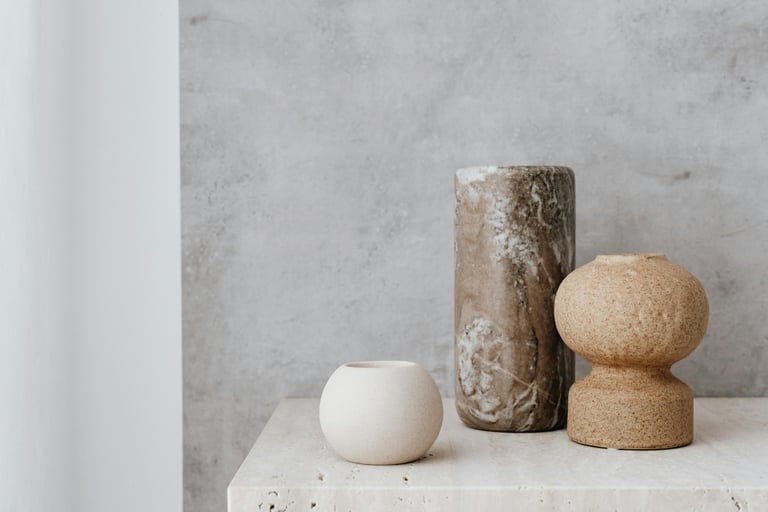
Surfaces should not be fully occupied. A console with one bowl reads as composed. The same console with five objects reads as a display.
A finished room is not always a calm room. Leaving space unfilled allows the interior to breathe — it gives light room to move and prevents the space from becoming fixed too early. Slight emptiness also makes the room adaptable. It can shift with seasons, with new objects, with how the family lives, without needing to be redesigned.
A room finished too completely tends to age into rigidity. A room left slightly open continues to settle.
Color, Always Last
Color is rarely the starting point.
Most rooms rely on tonal variation rather than contrast: warm whites, soft stone tones, muted earth colors. These shades reflect light gently and allow materials to remain visible. A room might combine plaster walls, a sand-coloured sofa, and slightly darker wood tones without introducing sharp differences.
When color leads, the room feels constructed. When it follows material and light, it disappears into the atmosphere.
A French Mediterranean living room is not arranged. It is resolved — and once that is in place, very little else is required.
The full palette and the reasoning behind it appear in Color in the Living Room.
Common Questions
What defines this style?
Light, proportion, materials, restraint, and color used last. Decoration arrives after structure, not before. The atmosphere is calm because the underlying decisions are.
Which colors work best?
Warm whites, soft stone tones, muted earth colors. Tonal variation rather than contrast. Color follows materials and light, never leads them.
Coastal or Mediterranean?
Coastal interiors lean on lightness and accents — blues, whites, woven textures. French Mediterranean interiors lean on weight, material continuity, and how light is held by walls and floors. The mood is grounded rather than airy.
Contact
© 2025. All rights reserved.
An editorial study of French Mediterranean interiors, shaped by observation, lived experience, and a respect for spaces that age gracefully.