
Mediterranean Bedroom Ideas (A Restful Approach)
Most Mediterranean bedroom ideas focus on what to add. This article starts with what makes a bedroom actually restful — light control, proportion, and materials chosen for contact, not appearance.
BEDROOM


Most search results for Mediterranean bedroom ideas focus on decoration — arched niches, terracotta tiles, linen in pale blue. The rooms that actually feel restful are built differently.
If your bedroom looks right but never quite feels calm — even after new bedding, different colours, or rearranged furniture — the issue is usually not what is in the room. It is how the room handles light, proportion, and material before anything decorative is added.
The French Mediterranean Bedroom is not a style. It is a logic: a room built to allow withdrawal. That logic starts with structure, not objects.
Light That Withdraws
In a restful bedroom, light is not something to maximise. It is something to control.
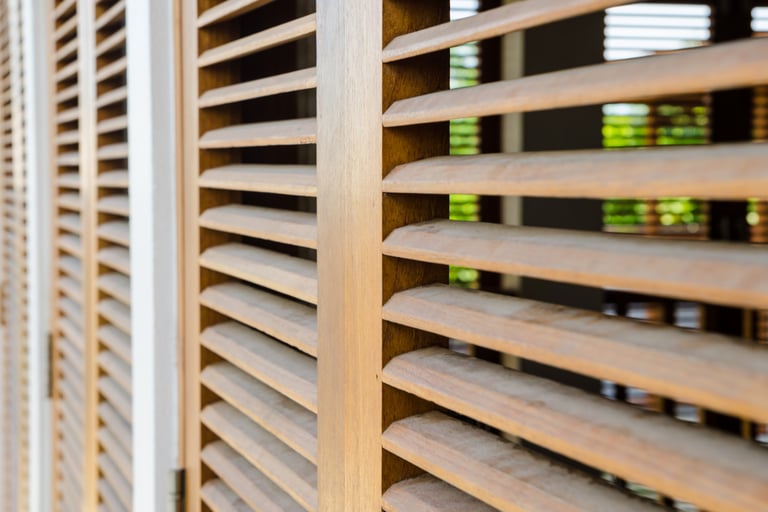
Mediterranean bedrooms are traditionally built with modest openings — windows placed to let light enter from one direction in the morning and soften by afternoon. Shutters or linen curtains filter it further, not to dim the room but to remove its sharpness.
The result is a room that relaxes as the day progresses rather than one that stays uniformly bright and alert. Bright light holds the body awake; diffused light allows it to settle. This is not a detail. It is the first decision the room makes.
Why southern houses are designed around filtered light rather than maximum exposure is developed in Why Southern Homes Prefer Filtered Light.
Proportion Before Furniture
A bedroom that is wrong in proportion will never feel calm regardless of what is placed inside it.
In French Mediterranean houses, ceilings tend to be high and floor plans relatively tight. This is not a limitation — it is a relationship. The eye rises rather than wanders. The body occupies a space that feels held rather than exposed.
Before choosing furniture, consider the relationship between ceiling height and floor area. If the room feels too wide for its height, a low, grounded bed placed against a solid wall does more to settle it than any object or colour. If the ceiling is low, keep the room sparse — one bed, one surface, nothing that competes vertically.
The specific relationship between light and proportion in the bedroom is developed in Light & Proportion in the Bedroom.
Materials for Contact
Mediterranean bedrooms do not rely on layering for warmth. They rely on materials chosen for how they feel against the body.
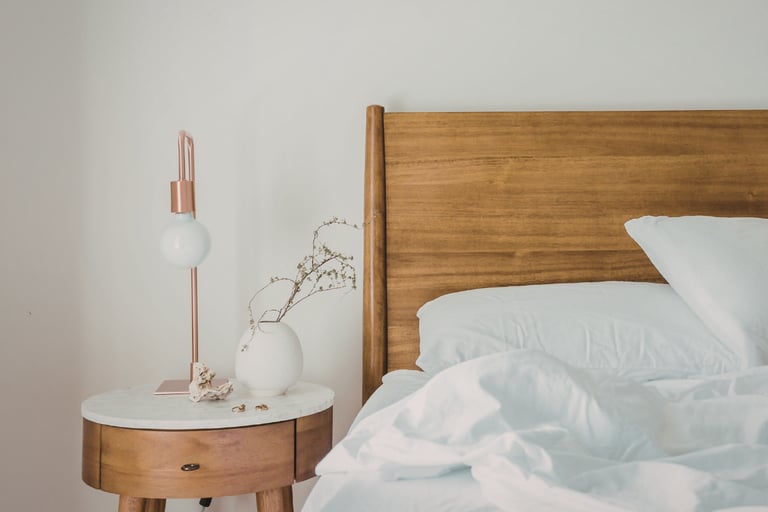
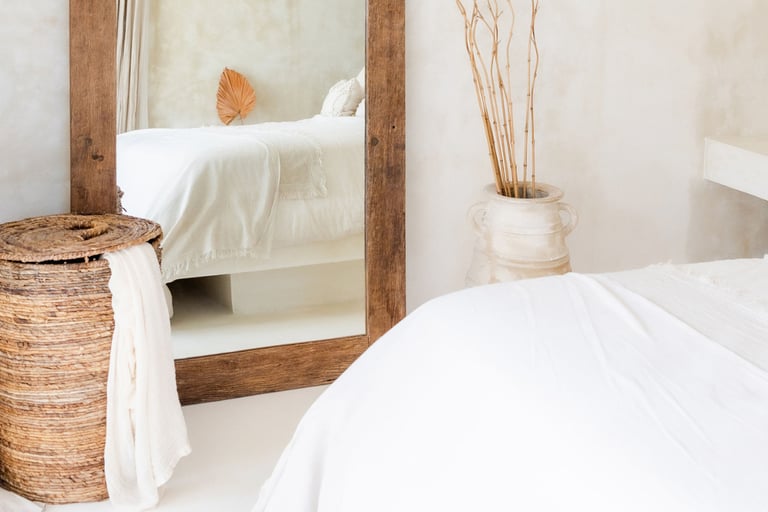
Linen sheets soften with each wash rather than deteriorating. A wood headboard develops warmth where shoulders lean against it in the morning. Plaster walls absorb sound, regulate humidity, and hold a stable temperature through the night. These are not aesthetic choices. They are functional ones that produce a specific experience of rest.
Hard, reflective, or synthetic surfaces do the opposite. They stay the same regardless of use — which means they never become anything.
How these materials work and how to choose between them is covered in Materials for Rest in the Bedroom.
Rhythm of Rest
A bedroom that holds only one function is easier to make restful than one divided between sleep, work, and storage.
In French Mediterranean houses, the bedroom is treated as a room with a single purpose. A chair for dressing. A surface for a glass of water. Nothing that asks the eye to plan, organise, or prepare. Every object that introduces another function — a desk, a screen, open shelving with visible items — introduces a competing register. The room cannot hold still.
This is not minimalism as an aesthetic. It is a deliberate decision about what a bedroom is for.
Color That Recedes
Color follows material and light in a restful bedroom. It does not lead.
Warm whites, stone tones, and muted earth colours work not because they are fashionable neutrals but because they allow the eye to stop. In strong Mediterranean light, even pale colours read with full presence. In the diffused light of a bedroom, they become quiet without becoming cold.
When colour is chosen first and materials fitted around it, the room usually looks assembled. When colour is the last decision — selected to support what is already there — it disappears into the room. That disappearance is the point.
Mediterranean bedroom decor is not a look to recreate. It is a logic to apply: control light before adding objects, establish proportion before choosing furniture, select materials for how they feel rather than how they appear, and give the room a single purpose.
When those decisions are made first, the room arrives at calm on its own.
Contact
© 2025. All rights reserved.
An editorial study of French Mediterranean interiors, shaped by observation, lived experience, and a respect for spaces that age gracefully.