
What Defines a French Mediterranean Living Room
Light, proportion, low seating, materials that age. What makes a French Mediterranean living room read as calm rather than arranged — a quiet structure.
LIVING ROOM
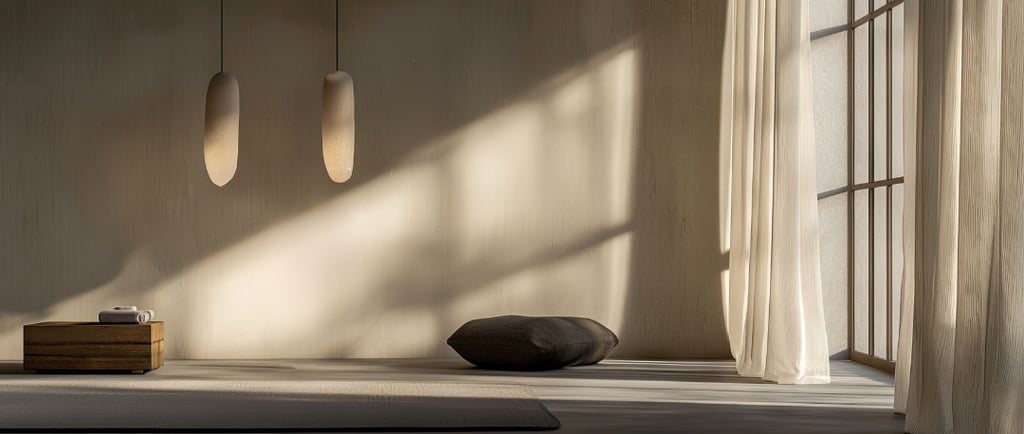
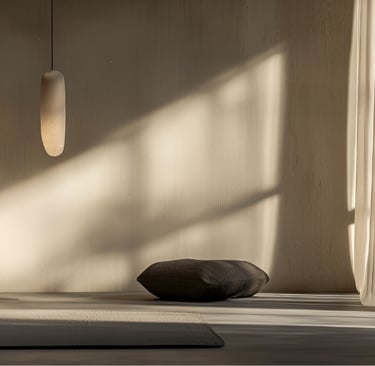
A French Mediterranean living room isn’t arranged to be impressive.
It comes together slowly. Light leads. Materials follow. Furniture is chosen for how it sits in the space, not for how it photographs.
Nothing here tries to stand out. The room works because certain things are left out.
Seating stays low. Finishes remain matte. Contrast is softened until it settles. Over time, the room grows quieter, not busier.
This is not a space that chases change. It holds its ground.
Light and proportion
Light comes first.
In the south of France, daylight fills the room for most of the day. It doesn’t flatter shortcuts. Gloss shows immediately. Sharp contrast feels abrupt.
Rooms that last rely on proportion instead.
Low furniture, wide forms, and deliberate spacing give the room weight without heaviness. Pieces that are too tall, too thin, or too sculptural rarely settle. They remain slightly out of place.
If the proportions are right, very little else is needed. This relationship between light and placement is explored further in Light and Proportion in the Living Room.
Materials and finishes
Materials matter because they carry time.
Stone, solid wood, linen, ceramic. These surfaces do not try to remain new. They wear in. Marks soften. Color deepens.
Synthetic substitutes tend to do the opposite. They hold their appearance while losing their place in the room.
In a Mediterranean living room, durability is not technical. It is visual. This becomes clearer in Materials and Finishes That Last in the Living Room, where materials are understood through how they age rather than how they appear initially.
Seating
Seating defines the room.
Sofas sit low and feel generous without announcing themselves. Depth matters more than silhouette. Comfort should be understood the moment you sit down.
Furniture designed to make a statement often works against the architecture. If a sofa looks better than it feels, it rarely belongs.
This is a room that is used. Seating needs to accept that.
How seating shapes the room — proportion before silhouette — is developed in Seating in the Living Room.
Color in southern light
Color is noticed last.
In steady Mediterranean light, color either settles into the room or begins to compete with it. There is very little middle ground.
Walls, large upholstered pieces, and architectural elements remain quiet. Darker tones are used for weight rather than contrast. Nothing is introduced to create interest.
When color is right, it barely asks for attention. Its role becomes clearer in Color in a French Mediterranean Living Room, where color is treated as a response rather than a starting point.
What stays the same
A French Mediterranean living room is not finished on the day the furniture arrives.
It changes slowly, in directions the materials were already prepared for.
Linen softens. Wood deepens. Plaster takes on a slight unevenness around the windows.
The room becomes more itself, not less.
This is part of why these rooms feel resolved long after they are made.
The decisions that shaped them — low seating, matte finishes, materials chosen for how they wear — anticipate time rather than resist it.
Nothing has to be touched up.
Nothing has to be replaced because it has lost its newness.
What stays the same is the structure: the proportions, the placement, the relationship between light and surface.
What changes is the surface itself.
And that change is welcome.
On selection
Not everything well made belongs here.
Each piece must earn its place through material, proportion, and use. If it requires explanation, it is usually wrong.
This kind of clarity does not come from reduction alone, but from alignment — a condition the Journal essay The Comfort of Understatement examines in more detail.
If this feels strict, that is deliberate.
This kind of room does not need more. It needs less, chosen carefully.




Contact
© 2025. All rights reserved.
An editorial study of French Mediterranean interiors, shaped by observation, lived experience, and a respect for spaces that age gracefully.