
Light & Rhythm in the Kitchen
How a Mediterranean kitchen layers daylight and task light without dramatising either — and why steady light is what keeps the room calm under daily use.
KITCHEN
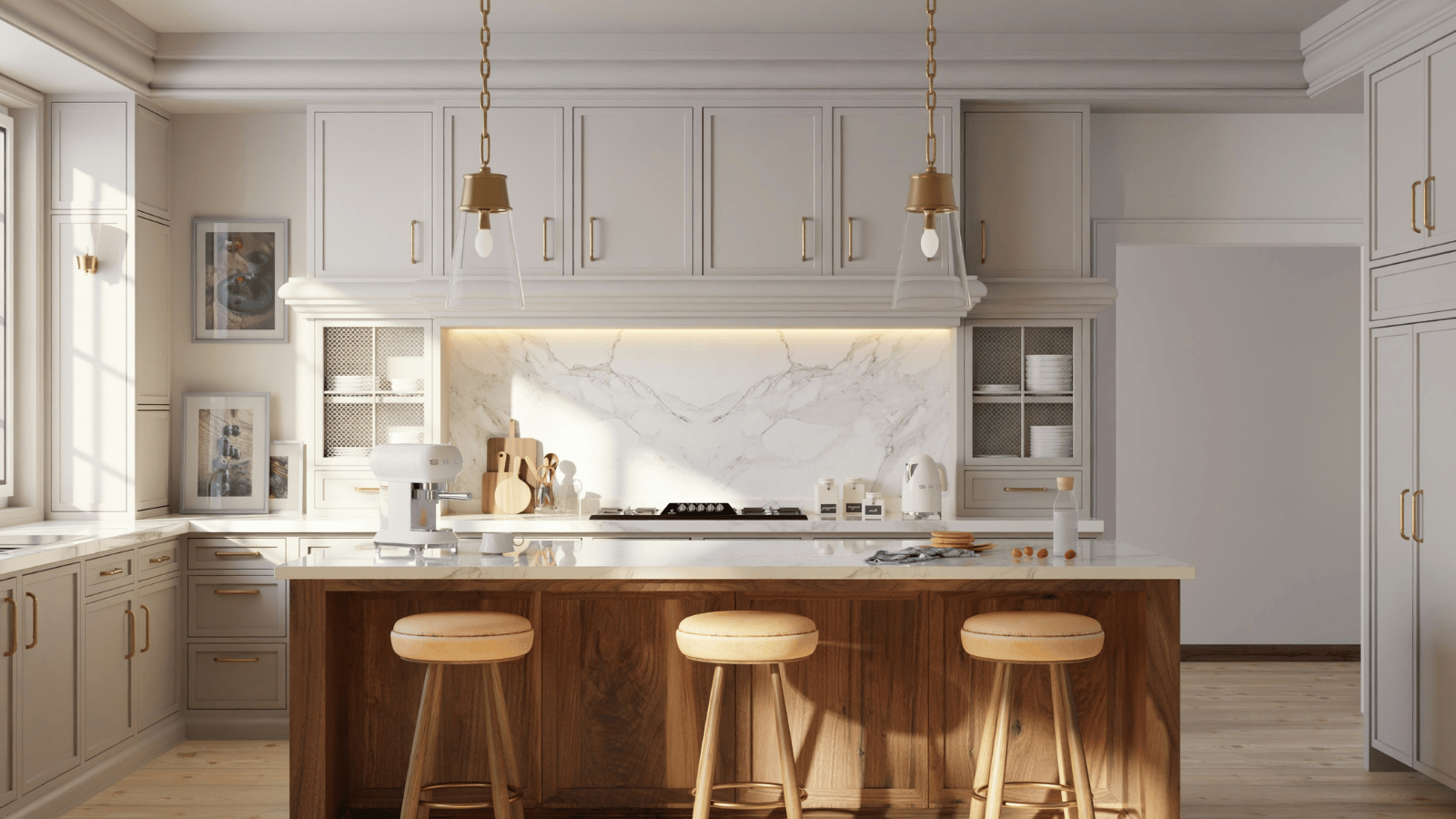
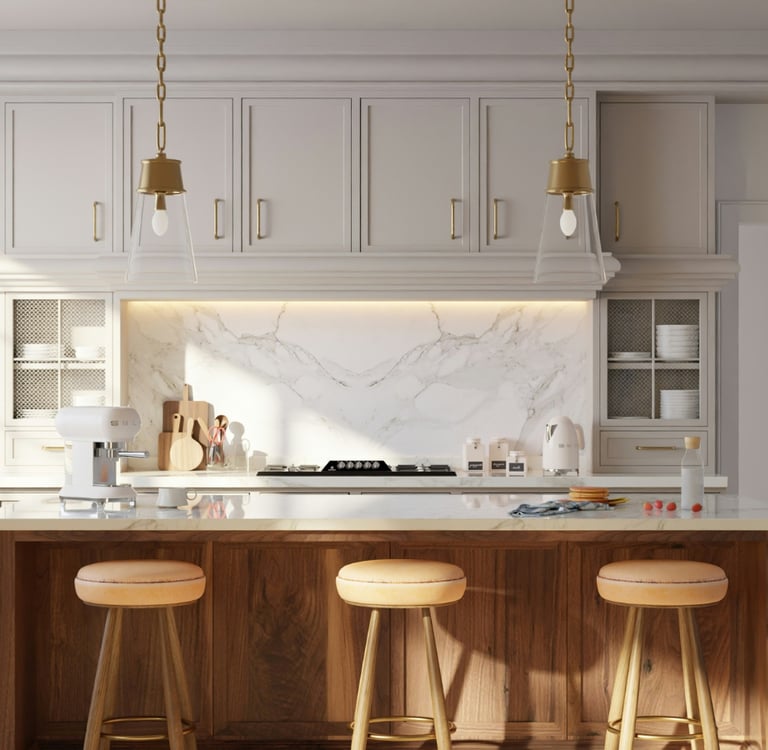
Light and rhythm define how the kitchen is used.
In a French Mediterranean interior, the kitchen is active throughout the day. Its success depends on how well it supports repeated tasks without becoming visually demanding. Light must support work. Rhythm must remain steady.
When either is misjudged, the room becomes tiring. When both are resolved, the kitchen remains calm despite constant use.
Light that follows the day
Kitchen light changes continuously.
Morning light arrives low and directional. Midday light becomes stronger and more direct. Evening light recedes and requires support. The room must accommodate these shifts without changing its character.
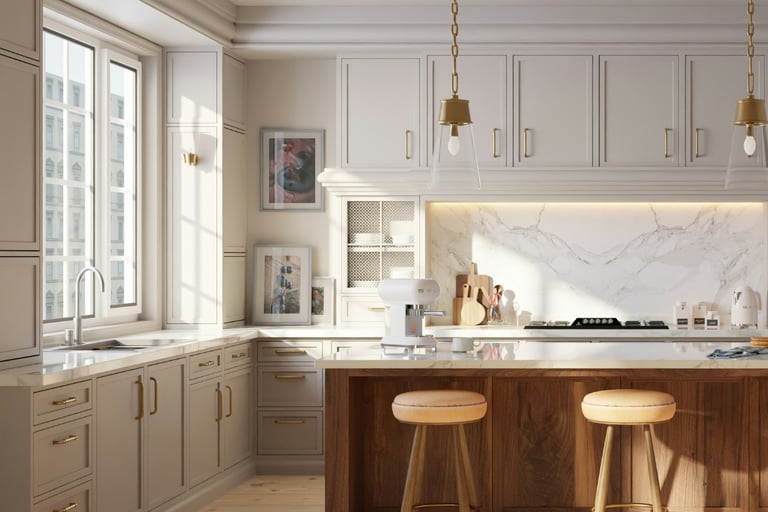
Openings are positioned where light supports preparation and cleaning. Where glare interferes, light is filtered or redirected. Contrast remains controlled so surfaces stay legible at all times.
This approach reflects a broader logic in southern architecture, where light is moderated rather than maximised, as explored in Why Southern Homes Prefer Filtered Light.
Even light for repeated tasks
Kitchen work depends on consistency.
Surfaces must remain visible without sharp shadow. Artificial light fills in gently rather than replacing daylight. Sources are positioned to support counters, sinks, and preparation areas.
Central lighting remains secondary. Light appears where hands work and disappears elsewhere.
This allows routine to unfold without interruption.
Rhythm over composition
The kitchen is not arranged for stillness.
It is arranged for movement that repeats: reaching, washing, preparing, returning. The layout supports these actions without detour or hesitation.
Circulation remains direct. Work zones follow a clear sequence. The room does not need to be reinterpreted each time it is used.
Light Across the Day in a Mediterranean House follows that same rhythm of daily habit through the whole house, traced from morning to evening.
Light reveals use
Light in the kitchen does not conceal wear.
Surfaces show marks. Materials shift. Patina develops. This visibility is accepted rather than corrected.
Reflective finishes exaggerate wear and introduce tension. Softer light allows materials to age without disruption.
This relationship becomes clearer when work surfaces are considered as the structure of the room rather than as secondary elements, as developed in Kitchen Work Surfaces as Structure.
Continuity through the day
A well-lit kitchen remains stable.
Morning does not feel abrupt. Evening does not feel heavy. Artificial light extends use without altering atmosphere.
This continuity supports the rhythm of the room. The kitchen remains usable without becoming demanding.
Light does not decorate the kitchen. It supports repetition.
Two kinds of light
A kitchen needs two kinds of light, and most rooms only get one right.
The first is the broad daylight that fills the room. It comes through windows, bounces off walls, and reads the room as a whole. It is what determines whether the kitchen feels open or closed, warm or cool, light or heavy.
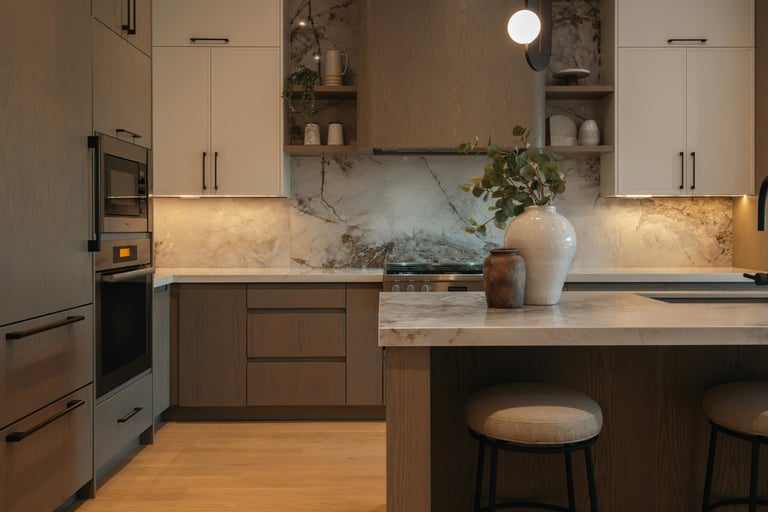
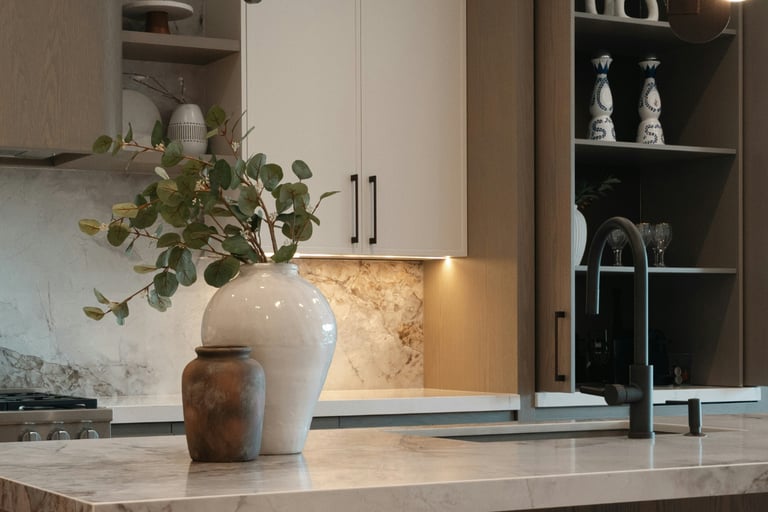
The second is task light — the small, focused, often artificial light that falls on the counter, the cooktop, the sink. It is what the hands work by. It does not need to be bright. It needs to be honest. A pendant directly over a preparation surface, a recessed source under an upper cabinet, a wall sconce beside the cooktop — each one resolves a specific working moment without lighting the rest of the room.
Kitchens that confuse these two — flooding the entire room with task-level brightness, or trying to cook by ambient daylight alone — become tiring within an hour of use. Kitchens that keep them distinct settle into rhythm.
A room that keeps pace
When light and rhythm are resolved early, the kitchen settles.
Work becomes natural. Movement remains efficient. The room absorbs activity without becoming busy.
This quiet responsiveness allows the kitchen to function as intended: a space that supports daily life, then recedes.
Contact
© 2025. All rights reserved.
An editorial study of French Mediterranean interiors, shaped by observation, lived experience, and a respect for spaces that age gracefully.