
Kitchen Work Surfaces as Structure
Why a Mediterranean kitchen is built from the counter outward, not from the furniture inward. How work surfaces structure light, movement, and material.
KITCHEN
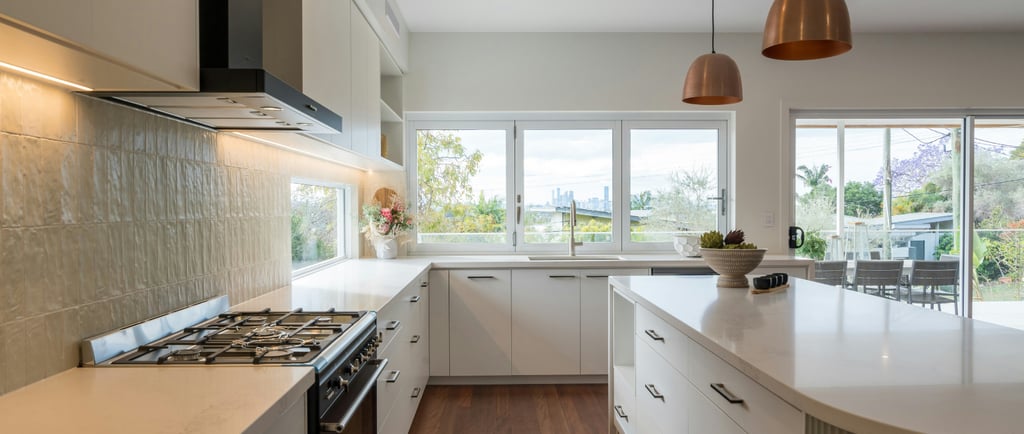
In many houses, the kitchen table becomes the quiet center of daily life. It is where mornings begin, where small conversations happen, and where routine settles into place.
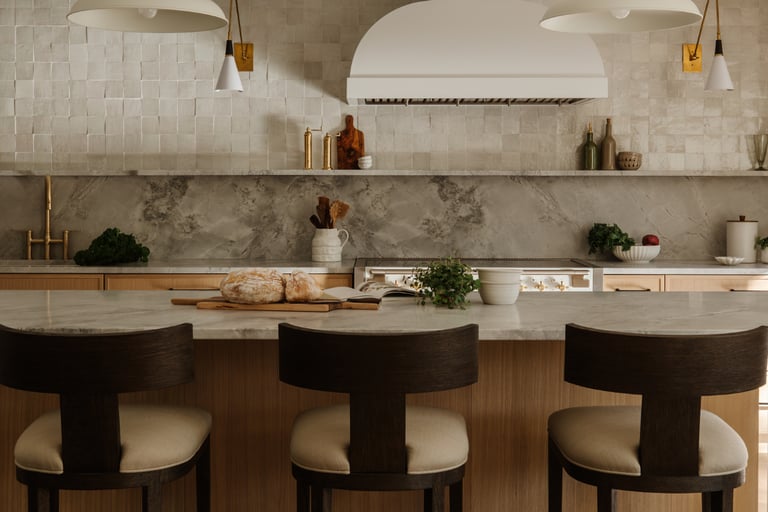
In a French Mediterranean kitchen, work surfaces define the room more than furniture ever could.
Counters are not accessories. They are the structure around which movement, light, and use are organised. When work surfaces are misjudged, the kitchen feels fragmented. When they are resolved early, the room becomes clear and efficient — a logic introduced in The French Mediterranean Kitchen.
Surfaces before layout
The kitchen is shaped from the surface outward.
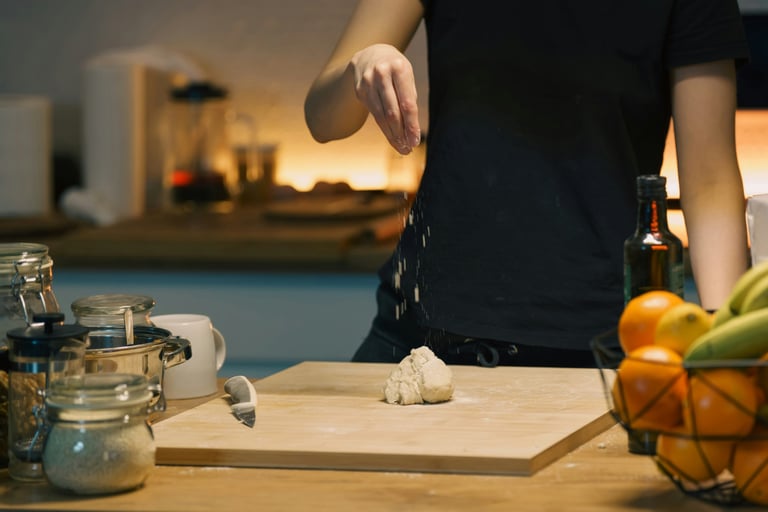
Before cabinets, before seating, before appliances, the question is simple: where does the work happen? Preparation, washing, placing, returning. These actions repeat daily, and the surfaces that support them must be continuous and legible.
Fragmented counters interrupt rhythm. Excess breaks create hesitation. A clear surface allows work to flow without thought.
This relationship between surface and movement becomes clearer when surfaces are understood as a continuous condition across the room, a logic developed in Materials That Repeat.
Continuity over complexity
Mediterranean kitchens favour continuity.
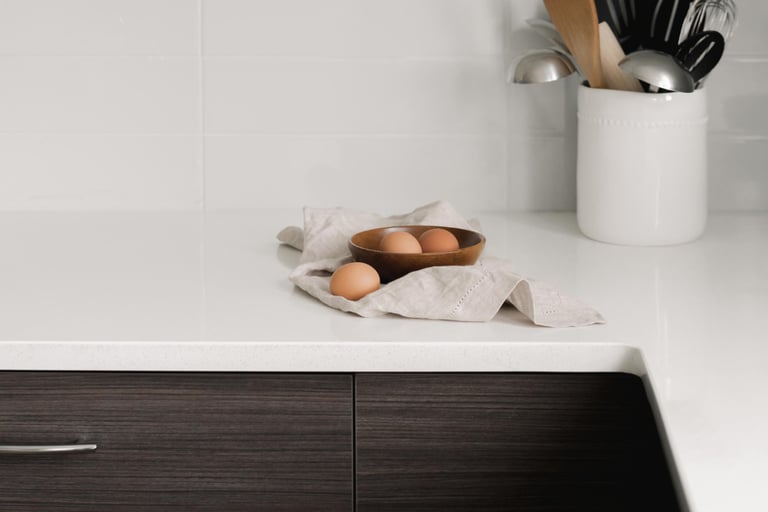
Long, uninterrupted work surfaces support repetition and reduce visual noise. Corners are resolved simply. Depth is consistent. Edges remain calm.
Complex layouts promise efficiency but often introduce friction. Too many levels, materials, or junctions make the room feel busy even when empty.
A continuous surface feels generous without being excessive.
The role of the island
When present, the island extends work rather than asserting itself.
It aligns with existing counters instead of standing apart. Its scale is measured so circulation remains clear. Seating, if any, remains secondary to function.
Islands that dominate the room shift attention away from work and toward display. In a restrained kitchen, no surface competes for focus.
The island belongs only if it supports the rhythm of use.
Material consistency
Work surfaces belong to the same material language as the rest of the kitchen.
Stone remains matte. Wood is used sparingly and protected. Lime-based finishes absorb light and soften transitions. Material changes are limited and deliberate.
When too many materials meet at the counter, the surface becomes decorative. When materials remain consistent, the surface feels structural.
Materials for Contact in the Bathroom takes the same relationship between material and use into a different room with different demands.
Height and proportion
The height of a work surface shapes how the body moves.
Counters that are too high feel distant. Too low, they strain the body. The correct height allows hands to work naturally and shoulders to relax.
Depth matters as well. Surfaces should be deep enough for comfortable work without pushing movement into circulation paths.
There is no universal correct height — there is only the right height for the person who cooks. A counter measured to a household where the cook is 1.65 m will compress the shoulders of someone at 1.85 m and stretch the wrists of someone at 1.55 m. The difference is felt within minutes of working.
In a French Mediterranean kitchen, where a single counter often runs uninterrupted across most of the working wall, this is a decision worth getting right at the build stage. Adjusting it later means tearing out stone, which no one does. Better to spend an afternoon measuring the actual reach of the cook than to inherit a generic 90 cm and quietly resent it for fifteen years.
Proportion here is practical, not visual. When it is right, it disappears into use.
Fewer surfaces, better placed
A restrained kitchen does not multiply surfaces.
One primary work surface, supported by secondary ones where needed, is often enough. Additional counters rarely improve function. They dilute it.
When surfaces are fewer and clearly placed, the room remains calm even during active use.
This clarity supports the balance between light and movement, as developed in Light and Rhythm in the Kitchen.
Structure that supports routine
Well-considered work surfaces allow routine to unfold without interruption.
Objects land where expected. Movements repeat without adjustment. The kitchen becomes predictable in the best sense.
When surfaces are treated as structure rather than furniture, the kitchen stops asking for attention and begins to work quietly.
That is when it becomes truly functional.
Contact
© 2025. All rights reserved.
An editorial study of French Mediterranean interiors, shaped by observation, lived experience, and a respect for spaces that age gracefully.