
The French Mediterranean Terrace & Garden
Why a Mediterranean terrace or garden is an extension of the house, not a separate space. Shade, materials, restraint, time — the logic that settles it.
TERRACE & GARDEN
A French Mediterranean terrace or garden is not a separate space.
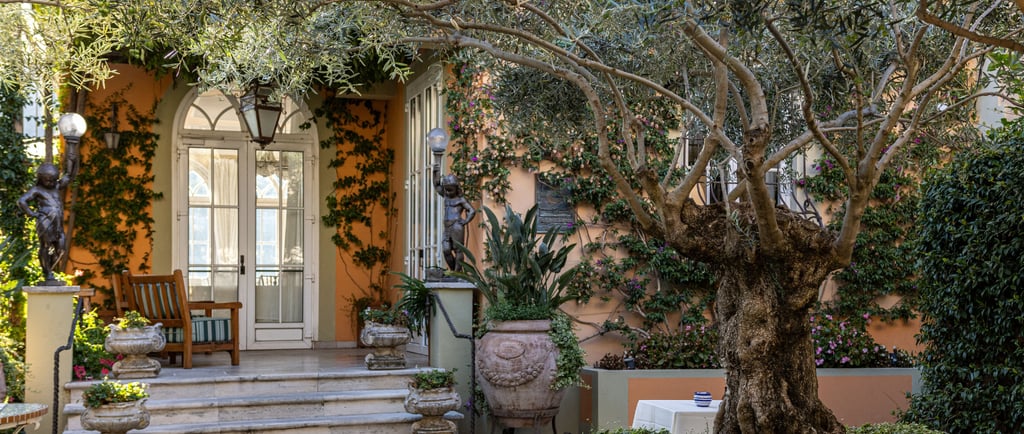
It extends the house outward, shaped by light, enclosure, and daily use rather than decoration. Its role is not to impress, but to support outdoor living in a way that feels natural and continuous.
Furniture remains minimal. Materials are durable. Shade is as important as sun. Atmosphere is not created—it emerges over time.
Shaped by Climate
Mediterranean terraces and gardens respond first to climate.
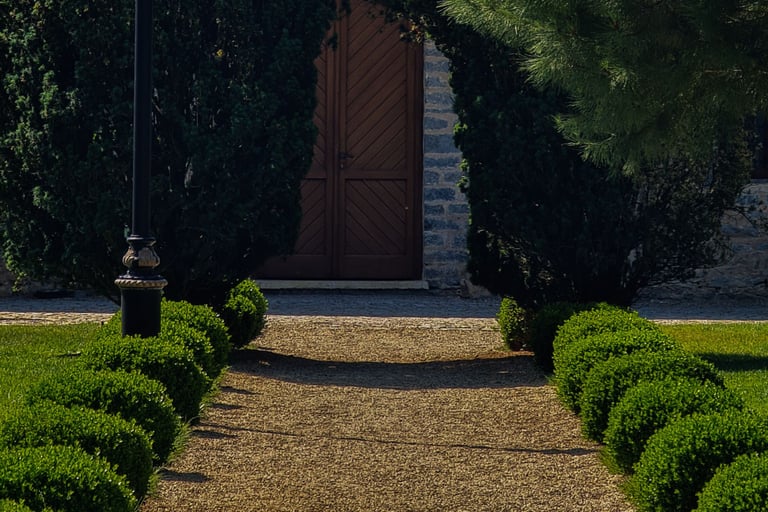
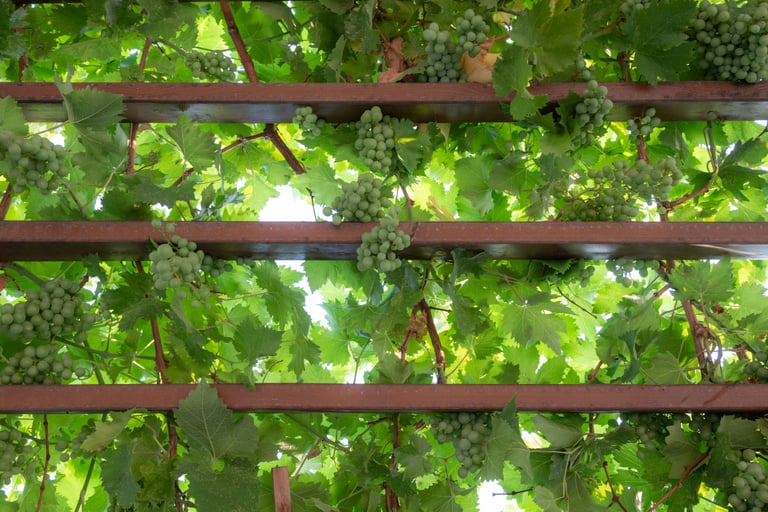
Sun exposure, wind, and seasonal heat determine how the space is used. Shade is planned early, often through pergolas, trees, or adjacent walls. Ground surfaces such as stone or gravel are chosen to absorb heat rather than reflect it.
When outdoor spaces ignore climate, they remain decorative. When they respond to it, they become usable.
The same climate logic determines what a terrace can hold during August and what it can hold during November. A south-facing terrace without built shade is unusable for three months of the year — and then perfectly comfortable for the other nine. A north-facing one reverses the calculation. The space is not designed for a single ideal day but for the full range of conditions it will actually meet.
Climate as the First Designer covers this principle for the building as a whole — climate before composition, exposure before layout.
Extending the House
The terrace or garden follows the logic of the interior.
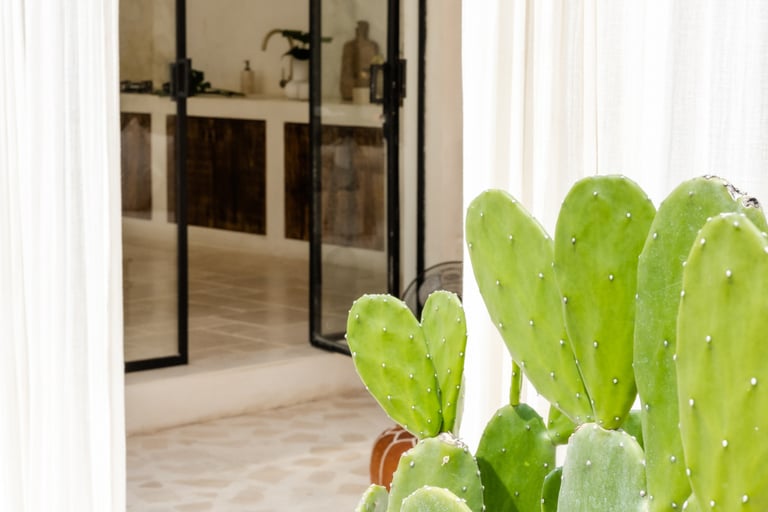
Stone flooring may continue outside. Lime-washed walls reappear. Thresholds soften rather than mark a clear boundary. The transition between inside and outside becomes gradual.
This continuity allows the outdoor space to feel inhabited rather than arranged — Materials for Work in the Kitchen carries the same material logic inside the house.
The most resolved version of this in-between is the loggia — the focus of The Loggia and the Space That Belongs to Both Worlds.
Use Before Layout
A Mediterranean terrace is organised around use, not furniture.
Where does morning light fall? Where is shade most comfortable in the afternoon? Where does the air move in the evening?
These conditions determine placement.
A table sits where meals naturally happen. Seating follows shade rather than symmetry. Circulation remains open.
The space is shaped by habit before arrangement.
Fewer Elements
Outdoor spaces benefit from restraint.
Too much furniture fragments the terrace. Too many objects require constant maintenance. A limited number of elements makes the space feel more generous.
Built features often replace movable ones. A low wall becomes seating. Steps act as informal gathering points. The terrace reads as part of the architecture rather than as a decorated exterior.
Fixtures as Architecture in the Bathroom takes the same idea inside — built elements doing the work that movable ones cannot.
Surfaces and Ground
The ground defines the space as much as walls.
Stone, compacted gravel, or simple paving create continuity and allow water, light, and movement to pass naturally. Highly finished or decorative surfaces tend to break this relationship.
Underfoot, the material should feel stable, not precious.
Over time, wear integrates into the surface rather than standing out.
Time and Growth
Outdoor spaces change continuously.
Stone softens. Wood fades. Plants grow unevenly. Shade shifts across the day and across seasons.
These changes are not corrected. They are expected.
What is true for materials is also true for what grows in the space. A young olive tree placed too close to a wall in year one becomes a structural element by year ten — without anyone having moved it. A jasmine vine that takes three seasons to cover a pergola is doing what no built shade can do, which is to soften light without removing it.
This kind of slow change cannot be designed in. It can only be allowed.
A Mediterranean garden improves through use and time rather than maintenance alone. It settles into place alongside the house.
A Space That Disappears
A successful terrace or garden does not draw attention to itself.
It is entered without preparation and used without adjustment. Meals extend naturally outdoors. Moments of rest happen without planning.
The space does not compete with the house.
It completes it.
Contact
© 2025. All rights reserved.
An editorial study of French Mediterranean interiors, shaped by observation, lived experience, and a respect for spaces that age gracefully.