
Fixtures as Architecture in the Bathroom
Why a Mediterranean bathroom treats basins, baths and showers as part of the architecture — not as added objects — and how that decision settles the room.
BATHROOM
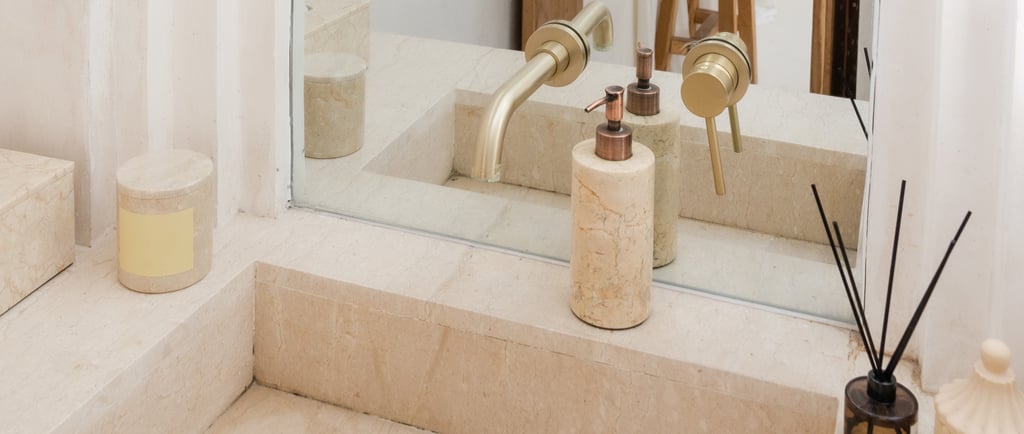
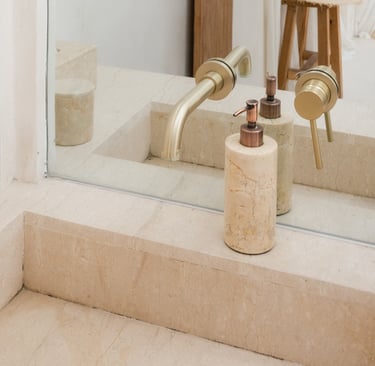
In a French Mediterranean bathroom, fixtures are not treated as objects.
They are treated as part of the room itself.
Basins, baths, and showers are positioned early, considered alongside walls, light, and circulation. When they are added later or chosen independently, the bathroom feels unresolved. When they are integrated, the room settles — a principle introduced in The French Mediterranean Bathroom.
Built rather than placed
Fixtures belong to the architecture.
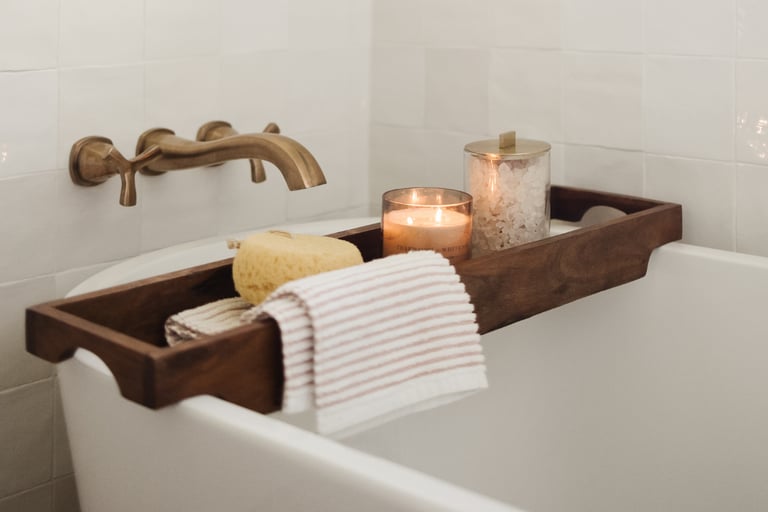
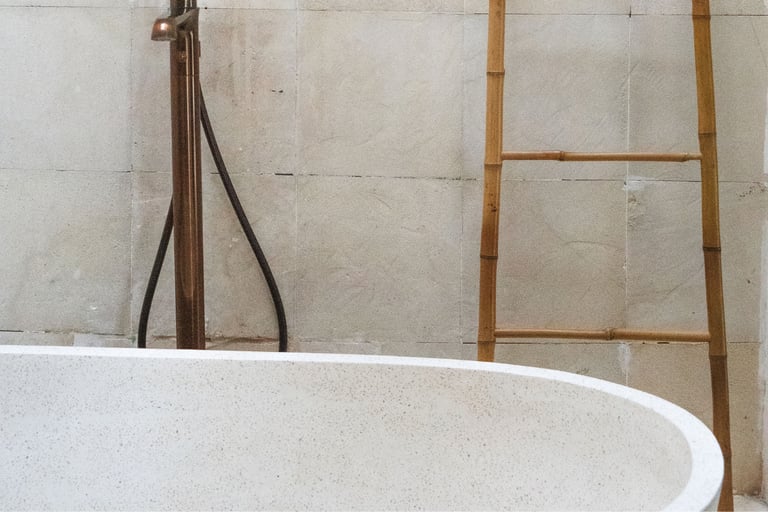
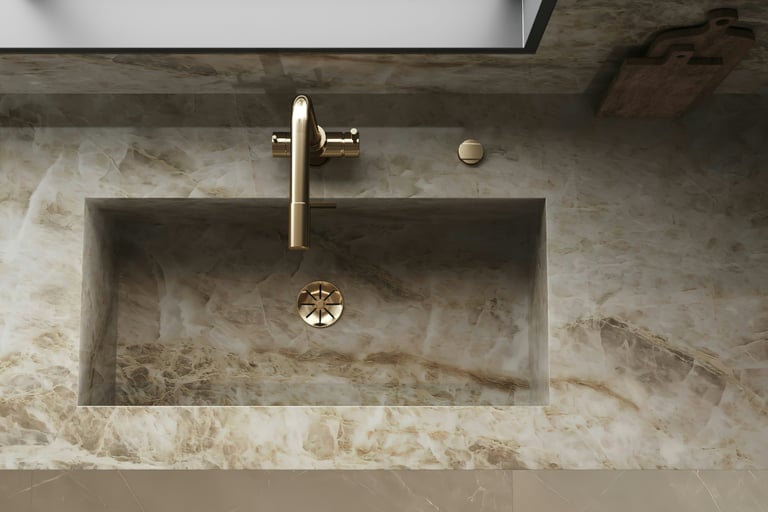
Basins are often integrated into walls or supported by masonry rather than placed on furniture. Baths are recessed or framed. Showers are defined by structure rather than enclosure.
This reduces visual noise. The room reads as a whole rather than a collection of elements. Nothing feels temporary.
What makes a fixture feel built rather than placed is rarely the fixture itself. It is the masonry around it.
A basin set into a thick plastered counter reads as part of the wall. The same basin set on a freestanding metal frame reads as furniture. A bath recessed into a stone surround belongs to the room. The same bath standing on four feet announces itself. The difference is not the object — it is whether the architecture has been asked to receive it.
Fixtures that feel built in remain calm over time.
Fewer fixtures, clearly resolved
A restrained bathroom contains fewer elements, each carefully positioned.
One basin is often enough. One shower, clearly defined. A bath only when space allows it to sit without compressing circulation.
When too many fixtures compete, the room becomes restless. When each element has space, use becomes intuitive.
Clarity matters more than choice.
Placement before form
Where a fixture sits matters more than how it looks.
Basins are positioned where light is stable. Showers are placed where enclosure feels protective. Baths align with walls rather than acting as central features.
Fixtures respond to the room’s proportions instead of competing with them.
This relationship between placement, light, and enclosure is developed further in Light and Enclosure in the Bathroom.
Continuity of materials
Fixtures belong to the same material language as the room.
Stone basins extend stone floors. Plaster surrounds soften transitions. Wood appears only where water exposure is controlled.
Material continuity prevents fragmentation. The room remains cohesive even with very little in it.
When the basin material extends a wall or floor, the eye does not register a separate object — it registers a continuous surface that happens to hold water. This kind of integration removes most of the visual noise that bathrooms accumulate.
The opposite is also true. A fixture made in a foreign material — a polished metal basin against plaster, a glass shower screen against stone — always reads as an interruption, no matter how well the rest of the room is resolved.
This logic follows the same approach seen in Materials for Contact in the Bathroom, where materials are understood through use rather than appearance.
Avoiding emphasis
Fixtures should not announce themselves.
Freestanding basins, sculptural tubs, or oversized fittings draw attention away from the space. They introduce hierarchy where none is needed.
In a French Mediterranean bathroom, emphasis belongs to the room, not the fixture.
When fixtures dominate, the room feels designed. When they recede, the room feels resolved.
Architecture that supports routine
A well-designed bathroom supports repetition without variation.
Fixtures remain where the body expects them. Use becomes habitual. Nothing requires adjustment.
This quiet reliability reflects a broader logic where routine shapes architecture rather than the other way around — a condition developed in A House Shaped by Use.
A room that works without effort
When fixtures are treated as architecture, the bathroom becomes calm through use rather than design.
The room supports care without interruption. It remains stable regardless of time or frequency of use.
Nothing stands out.
Everything holds.
Contact
© 2025. All rights reserved.
An editorial study of French Mediterranean interiors, shaped by observation, lived experience, and a respect for spaces that age gracefully.