
Materials for Work in the Kitchen
Stone, wood, lime. How a French Mediterranean kitchen is built from materials chosen for repeated use — surfaces that age under heat, water, and daily movement.
KITCHEN
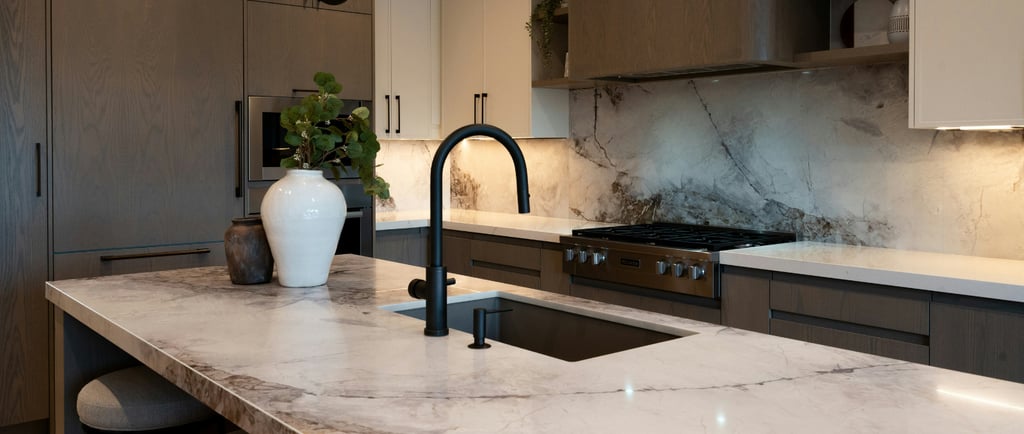
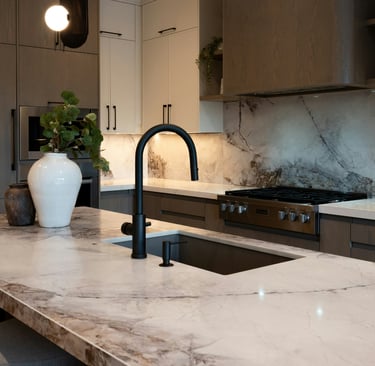
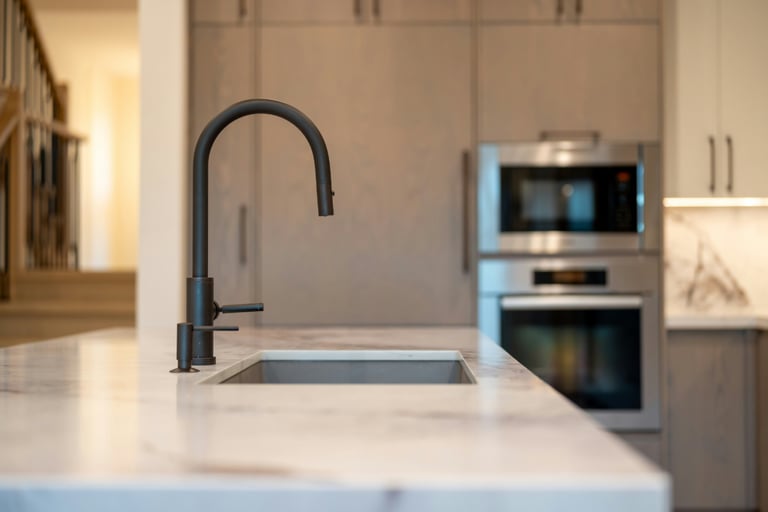
The kitchen depends on materials more than any other room.
Surfaces are touched constantly. Heat, water, and movement leave traces. In a French Mediterranean kitchen, materials are chosen for how they tolerate this repetition without tension.
Stone, wood, and lime endure because they accept use rather than resist it — a material logic introduced in The French Mediterranean Kitchen.
Stone that absorbs use
Stone provides stability in the kitchen.
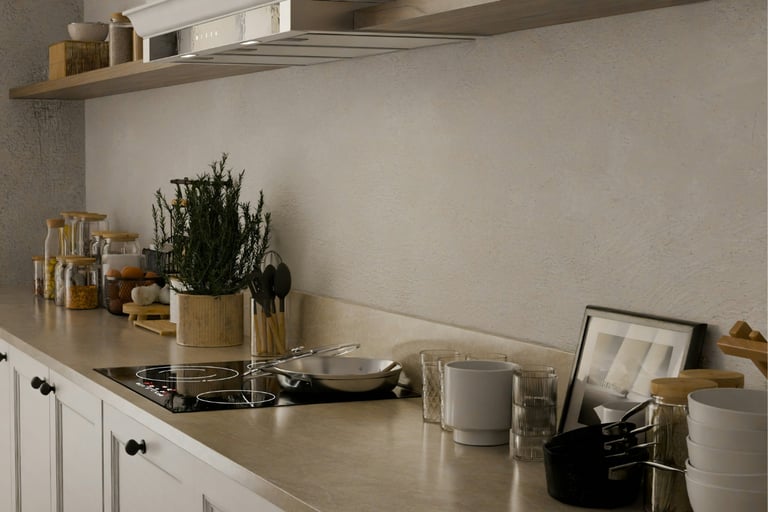
Used for worktops, floors, or built elements, it carries weight without asserting itself. Its surface remains legible under changing light and frequent contact. Small marks do not disrupt it. They belong.
Highly polished stone is avoided. Matte or honed finishes soften reflection and reduce glare, allowing the kitchen to remain calm even when active.
Stone grounds the room, giving work a sense of permanence.
Wood with restraint
Wood appears in the kitchen with intention.
Cabinet fronts, shelving, or structural elements introduce warmth and continuity with the rest of the house. Finishes remain natural. Grain is visible. Edges are softened through use rather than sealed against it.
Wood is not asked to perform where heat or water dominate. Its placement is measured and protected. When used correctly, it balances the mineral weight of stone without adding visual noise.
This balance becomes clearer when surfaces are understood as structure rather than decoration, as developed in Kitchen Work Surfaces as Structure.
Lime as a working surface
Lime plaster plays a quiet but important role in Mediterranean kitchens.
Unlike paint or hard finishes, lime absorbs light and softens sound. Walls remain breathable. Small imperfections are accepted, allowing the space to age without constant correction.
Lime surfaces do not resist the kitchen’s activity. They adapt to it. This flexibility prevents the room from feeling rigid or overly finished.
Lime supports continuity between surfaces without drawing attention to itself.
Materials that show time
In a French Mediterranean kitchen, aging is expected.
Stone darkens slightly. Wood deepens. Lime settles. These changes do not diminish the room. They give it coherence over time.
Materials chosen for durability reduce the need for replacement. The kitchen remains steady rather than cyclical.
Light & Rhythm in the Kitchen returns to this — the daily rhythm of the kitchen is what makes the slow change in materials visible at all.
Avoiding surface contrast
Strong material contrast disrupts the kitchen.
Glossy finishes, reflective metals, and synthetic surfaces amplify wear and introduce visual tension. They draw attention to damage rather than absorbing it.
In a restrained kitchen, materials remain closely related. Differences are subtle. Texture replaces contrast. The room reads as a whole rather than as layered surfaces.
This coherence allows the kitchen to remain calm even at peak use.
Heat at the surface
Heat is what separates kitchen materials from materials anywhere else in the house.
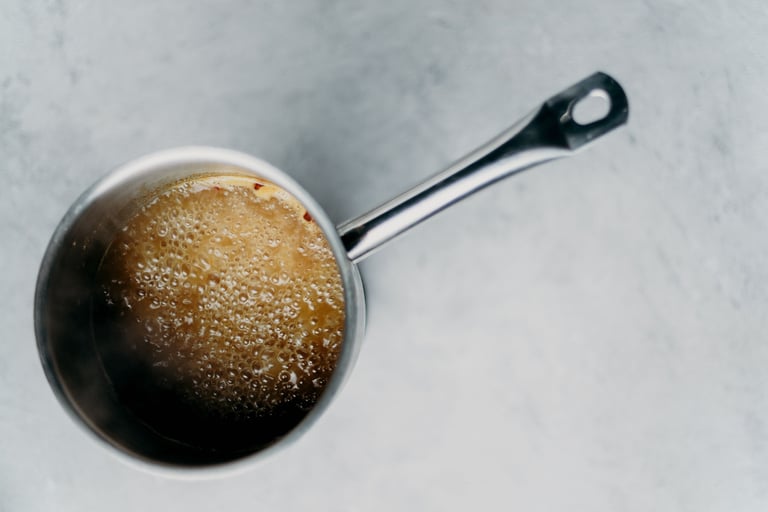
A pan lifted straight off a flame and set on the counter. A roasting tray sliding out of the oven onto a side surface. Boiling water spilled, hot oil splashed, a kettle resting where it shouldn't. These are not occasional events. They are the daily climate of the working surface.
Stone tolerates this without flinching. Honed limestone, marble, or granite absorbs sudden heat across its mass and shows nothing. Lime plaster on a back-wall does the same. Wood does not — and is the reason wood appears in cabinetry, shelving, and trim in a Mediterranean kitchen, but rarely on the working counter itself.
Synthetic surfaces and engineered composites often promise heat resistance and rarely deliver it. A ring under a hot pan, a discoloured patch beside the cooktop — these are the small failures that mark the difference between a counter chosen for the showroom and one chosen for the kitchen.
Work before appearance
Materials in the kitchen are chosen for work first.
How they respond to touch. How they handle repetition. How they change over time. Appearance follows these considerations, never the reverse.
When materials are selected for endurance rather than effect, the kitchen settles into daily life without effort. The marks left by that use are not damage — they are what What Patina Means in a Well-Made House examines as the record of long contact between surface and life.
That quiet durability is what allows the room to endure.
Contact
© 2025. All rights reserved.
An editorial study of French Mediterranean interiors, shaped by observation, lived experience, and a respect for spaces that age gracefully.