
How to Clean and Seal Terracotta Floor Tiles
Learn how to clean and seal terracotta floor tiles without damaging their colour or patina, including unsealed floors, stains, old tiles and resealing.
GUIDESMATERIALS & MAINTENANCE
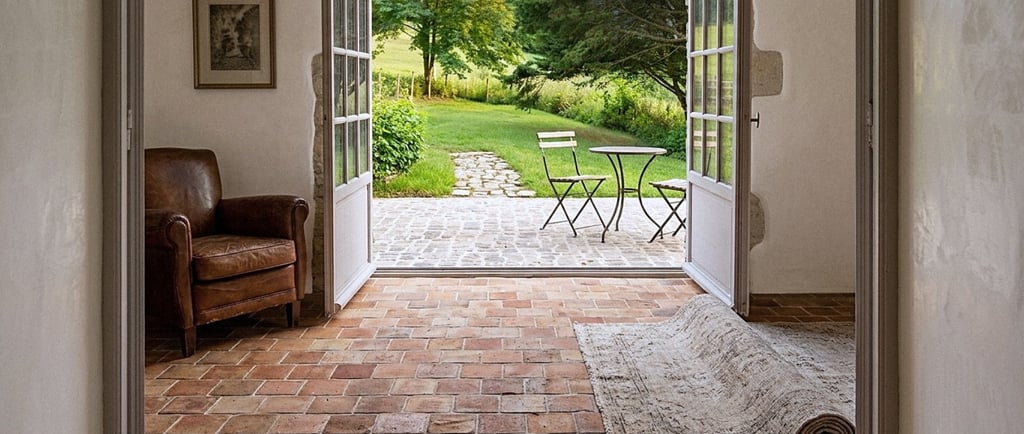
A terracotta floor rarely fails all at once. It dulls.
A patch near the sink begins to darken. A pale bloom appears along a grout line and returns after it has been wiped away. The warm surface becomes flat beneath a film of dirt, old wax or unsuitable cleaning product.
The instinct is often to scrub harder or apply a heavier coat of sealer. Both can make the problem worse.
Terracotta is fired clay. It is naturally porous, and most problems begin with how the tile absorbs and releases moisture. The aim is not to make the floor look new. Terracotta is meant to deepen, soften and change as it is used.
The task is simpler than it first appears: clean it without stripping away its character, seal it according to the floor you actually have, and then leave it mostly alone.
Know Your Floor
Not all terracotta floors behave in the same way.
Handmade tomettes are usually more irregular and porous than machine-pressed tiles. A reclaimed floor may contain tiles of different ages, densities and previous treatments. New terracotta may have been installed over a modern damp-proof layer, while an old floor may have been laid directly onto earth or a breathable base.
Before applying any product, consider:
• The approximate age of the floor
• Whether the tiles are handmade or machine-made
• Whether they are new or reclaimed
• Whether the floor is indoors or exposed to the weather
• Whether moisture may be rising from below
• Whether the surface has already been sealed, waxed or treated
These differences determine how quickly the tile absorbs moisture and which treatments it can safely accept.
Keeping the same floor through several rooms can create the material continuity explored in What Makes a French Mediterranean Home Feel Calm. That continuity is worth preserving, but it also means the treatment must suit the entire floor rather than one convenient test area.
Is It Sealed?
Nothing else makes sense until you understand how much protection remains on the surface.
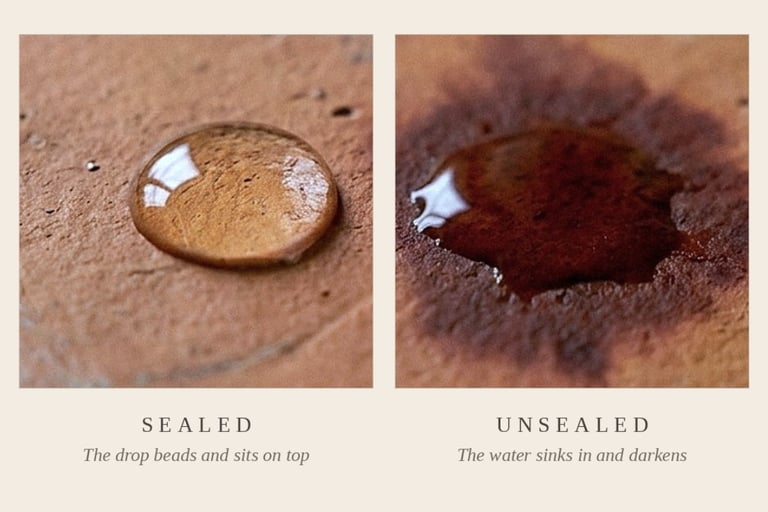
Place a few drops of clean water in an inconspicuous area and watch what happens. If the water beads and remains on the surface, the tile probably still has some protection. If it darkens the tile and disappears quickly, that area is absorbing moisture.
This is an indication, not a complete diagnosis. Dirt, grease or residue can sometimes affect how water behaves.
Test several areas. A floor may still be protected along the edges while the busiest walking routes have worn open. The space beneath a rug may behave differently from the area beside a sink or doorway.
Routine Cleaning
On a sealed terracotta floor, less is usually more.
Begin by sweeping or vacuuming away grit. Fine particles are abrasive and can gradually scratch a waxed or coated surface when they are dragged across it.
Mop with warm water and a small amount of pH-neutral cleaner suitable for terracotta, natural stone or porous clay tiles. Avoid strongly alkaline detergents and products that leave a glossy residue.
Warm water alone is often enough for light maintenance.
Wring the mop out thoroughly and change the water as it becomes dirty. Washing an entire floor with one grey bucket simply moves the dirt from one area to another and allows it to dry back onto the surface.
Do not flood the floor. More water does not mean a deeper clean.
Unsealed Terracotta
Unsealed terracotta absorbs whatever is placed on it, including water, detergent and colour from the cleaning product itself.
Use as little liquid as possible. A damp mop wrung out firmly is safer than a wet one. Work in small sections and remove any remaining moisture rather than allowing puddles to sit.
Avoid soaps and detergents that leave a film. Porous clay can hold onto this residue, creating a dull surface that becomes increasingly difficult to clean.
A newly installed floor that has never been sealed should not be repeatedly washed in an attempt to improve its appearance. Clean away installation residue using the method recommended by the tile and adhesive manufacturers, rinse carefully and allow the entire floor to dry before moving on to sealing.
The Vinegar Question
Can you clean terracotta with vinegar?
For routine cleaning, no.
Household vinegar, lemon juice, limescale remover and other acidic products can affect the clay, grout and existing surface treatment. They may lighten patches, etch the surface or remove protection unevenly.
Specialist acidic products are sometimes used to remove cement residue or mineral deposits from compatible unglazed tiles. That is a separate technical process. The product must be approved for the particular tile, diluted correctly and tested in an inconspicuous area.
Do not treat household vinegar as a harmless natural cleaner simply because it is common in the kitchen.
Removing Stains
Different marks require different methods. There is no single product that safely removes every stain from terracotta.
Grease and oil
Grease is a common problem on kitchen floors. Terracotta brings warmth and continuity to the room, but its porosity means spills need to be addressed quickly. Mediterranean Kitchen Ideas: Natural Materials and Simple Layouts looks at where the material works within the wider kitchen. Here, the issue is preventing grease from being driven further into the clay.
Blot fresh oil rather than rubbing it. On an older stain, a compatible absorbent poultice may draw oil out more effectively than surface scrubbing.
Use a poultice or stain remover intended for terracotta, test it first and follow the stated dwell time. Homemade chemical mixtures can discolour the tile or leave a permanent halo.
Wine and coffee
Blot fresh spills immediately with a clean, absorbent cloth. Do not scrub in circles, as this spreads the liquid across a larger area.
Clean the remaining mark with a pH-neutral product suitable for the existing finish. A stain on an unsealed tile may need several careful treatments rather than one aggressive attempt.
Old residue
Dark, sticky or grey surfaces are often caused by layers of old wax, soap or incompatible maintenance products rather than dirt within the clay itself.
Adding another product over the top rarely solves the problem. The existing finish may need to be identified and professionally stripped before the floor can be cleaned properly.
Efflorescence
A white powdery bloom is usually efflorescence: mineral salts carried towards the surface as moisture evaporates.
On a newly laid floor, begin by brushing the dry deposit away and allowing the floor to continue drying. Avoid repeatedly mopping the salts back into the tile.
If the bloom keeps returning, investigate the source of the moisture before applying a sealer. Persistent efflorescence may indicate rising damp, poor drainage, moisture within the bedding layer or a leak.
It is a moisture problem, not simply a cleaning problem.
Sealing over an actively damp floor can trap moisture and make the symptoms worse.
Before Sealing
Whatever is on the floor when the sealer is applied may become trapped beneath it.
Dust, detergent film, old wax, loose salt and damp patches can all leave permanent marks under a new treatment. Once sealed in, they cannot simply be wiped away.
Clean the floor thoroughly, remove all residue and allow it to dry completely.
Drying time depends on the porosity of the tile, room temperature, ventilation, substrate and recent weather. On old, highly absorbent or ground-floor tiles, this may take several days rather than a few hours.
Follow the sealer manufacturer’s drying requirements. When there is any suspicion of moisture rising from below, seek specialist advice before proceeding.
The surface may feel dry while moisture remains within the tile or bedding layer.
Choosing a Sealer
There is no single correct sealer for every terracotta floor. There is only a sealer that is compatible with the particular tile, substrate, location and finish you want.
Penetrating sealers
Penetrating or impregnating sealers soak into the tile rather than forming a visible film over it.
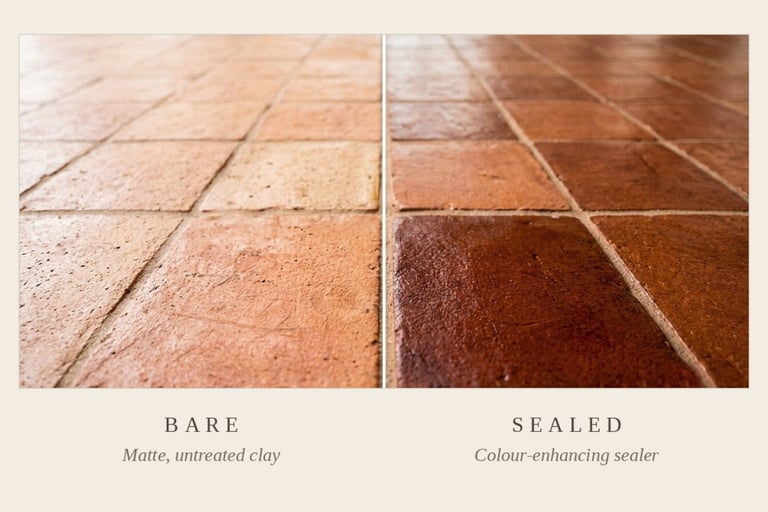
They can protect against water and staining while leaving the surface matte and close to its untreated appearance. They are often the most appropriate choice when you want to preserve a pale, dry-looking finish.
Some penetrating sealers are breathable, but the manufacturer’s technical information still needs to be checked. “Natural finish” and “breathable” are not interchangeable claims.
Colour-enhancing sealers
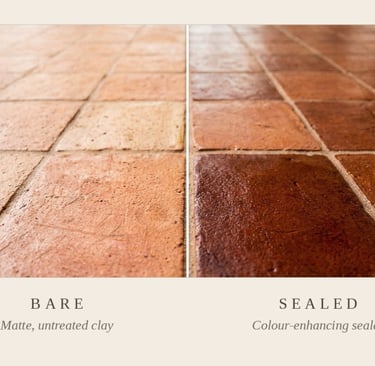
Colour-enhancing sealers deepen the reds, ochres and browns of the clay. The result can resemble the colour of the tile when it is damp.
This can be beautiful, but it is a permanent visual decision. Test the product on a spare tile or hidden corner first. A finish that looks rich on one tile can become unexpectedly dark across an entire room.
Topical coatings
Topical coatings form a film over the surface and usually create more sheen.
They may offer strong stain protection, but they can wear unevenly in busy areas. They may also peel or turn cloudy if they are incompatible with the existing finish or if moisture is moving through the floor.
A glossy finish can also change the way light behaves across the room, exaggerating every dip and irregularity in the tile.
Waxed finishes
Waxed systems are still used on some new terracotta floors to create a richer and more traditional appearance.
They require regular buffing and careful maintenance. Wax can build up, attract dirt and become slippery if too much is applied.
Linseed oil has also been used historically as part of oil-and-wax systems, but it should not be treated as a safe general solution. It can yellow, collect dirt and darken old tiles over time.
On reclaimed tomettes, historic floors or tiles laid without a modern damp-proof layer, seek specialist advice before applying oil or heavy wax.
Terracotta does not need to be “fed.” It needs a compatible form of protection that does not interfere with the way the floor manages moisture.
When to Reseal
There is no universal resealing interval.
Watch how the floor behaves instead.
Protection may be wearing thin when:
• Water stops beading and darkens the tile quickly
• Spills absorb faster than they used to
• Busy walking routes appear dry beside better-protected edges
• Cleaning becomes more difficult in particular areas
• The finish looks patchy rather than evenly aged
If the existing product is known and the manufacturer allows recoating, a thorough clean followed by another compatible coat may be enough.
An unknown finish, heavy wax build-up or an incompatible topical coating may need to be removed first.
Never layer a new product over an old one simply because both are described as suitable for terracotta. Compatibility matters more than the wording on the front of the container.
Outdoor Terracotta
Outdoor terracotta has more to contend with than an interior floor.
Rain, sun, frost, drainage and moisture from the ground all affect how the tile ages. Outdoor terracotta faces the same exposure that shapes the rest of the terrace. Why Your Terrace Feels Exposed Instead of Relaxing looks at sun, weather and material choice from the point of view of comfort. Those conditions also determine how the floor performs.
Before discussing sealers, confirm that the tile itself is suitable for exterior use and for local frost conditions.
A treatment can reduce water absorption. It cannot turn an indoor terracotta tile into a frost-proof outdoor product.
The terrace must also drain properly so that water does not remain within the tile or bedding layer. Sealing a floor that is drawing moisture from below may trap damp and encourage blistering, cloudiness or repeated salt deposits.
Exterior floors usually need a compatible, breathable penetrating treatment rather than a sealed surface film. Product instructions must specifically permit outdoor use.
Restoring Old Floors
Some terracotta floors need more than cleaning and another coat of protection.
Dark wax build-up, sticky residue, deep staining, salt damage or an important historic tomette floor may require proper stripping and restoration.
Replacing the floor should not be the automatic response. How to Modernize a Mediterranean House Without Losing Its Character explains why a tired original material is often the part most worth keeping.
Stripping terracotta is slow and easy to overdo. Aggressive machinery, strong chemicals or repeated abrasion can remove the surface character along with the dirt.
A specialist is worth considering when:
• The existing finish cannot be identified
• The floor has several layers of wax or coating
• Tiles are flaking or breaking down
• Salt deposits return continually
• Moisture is rising through the floor
• The tiles are reclaimed, handmade or historically important
• Previous cleaning attempts have created pale or dark patches
One careful assessment is cheaper than replacing a floor damaged by the wrong treatment.
Before You Buy
Before buying cleaner, stripper or sealer, check:
• Whether the floor is sealed, waxed or bare
• Whether different areas behave differently
• Whether the tile is old, new, handmade or machine-made
• Whether the floor is fully dry
• Whether moisture may be rising from below
• Whether the cleaner is pH-neutral and suitable for terracotta
• Whether the existing finish is compatible with the new product
• Whether you want a natural matte or colour-enhanced appearance
• Whether the floor is indoors or exposed to weather
• Whether the tile itself is rated for exterior conditions
• Whether the product has been tested on a spare tile or hidden area
Do not buy a treatment because a photograph on the label resembles your floor. Start with the condition and construction of the floor itself.
What You Are Doing
A terracotta floor is not meant to look new. It is meant to look kept.
Clean it gently, seal it according to what it honestly is, and the wear that comes from years of being walked on will read as age rather than neglect.
The task is not to return the floor to an immaculate original state it may never have had. It is to care for it steadily enough that it can continue ageing well.


Contact
© 2025. All rights reserved.
An editorial study of French Mediterranean interiors, shaped by observation, lived experience, and a respect for spaces that age gracefully.