
Color in the Dining Room
Color comes last in a French Mediterranean dining room. Why warm whites, muted olive, soft terracotta hold under southern light — and what consistently fails.
DINING ROOM
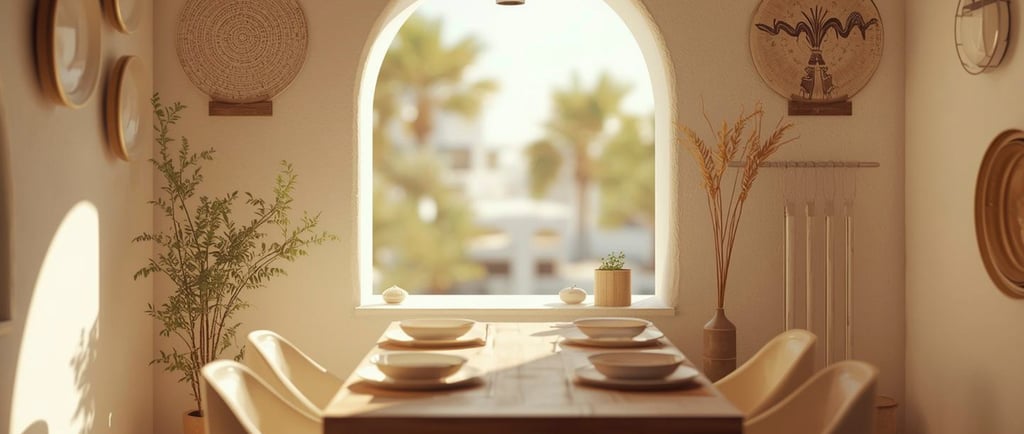
Color is introduced only once the dining room is structurally resolved.
Light, proportion, materials, and seating establish the room’s balance. Color responds to that balance. In a French Mediterranean dining room, color does not decorate. It supports weight, warmth, and calm under steady southern light.
When color is right, it is barely noticed.
Southern light and color behavior
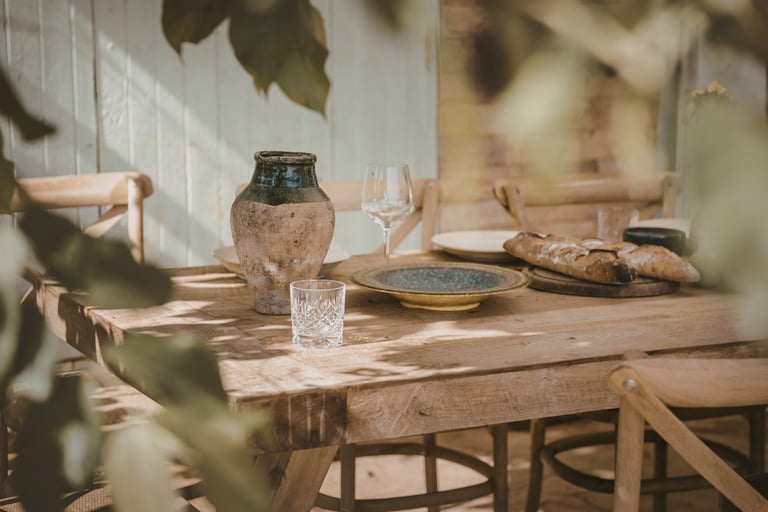
Mediterranean light is consistent and revealing.
It flattens overly bright tones and exaggerates contrast. Colors that feel subtle in other settings can become dominant here. This is why restraint matters more than variation.
Colors must remain stable on surfaces over long periods of time.
Base tones: reflect without glare
The foundation of the palette belongs to walls, ceilings, and larger surfaces.
Soft mineral tones work best:
linen
warm stone
pale sand
These shades reflect daylight gently and keep the room open. Pure white tends to appear sharp and rarely settles well in Mediterranean interiors.
The base should recede rather than announce itself.
Grounding and depth tones
Grounding tones introduce stability.
Muted olives, warm browns, and softened earth tones are typically used on:
dining chairs
sideboards
selected wood elements
These tones anchor the room without shifting attention away from the table.
Charcoal, deep brown, and near-black tones extend the same logic. They replace true black in furniture frames or architectural details, providing definition without disrupting the calm.
Used sparingly, they help structure the room. If any of this becomes noticeable, it has already gone too far.
Supporting tones: warmth in moderation
Supporting tones connect light and shadow.
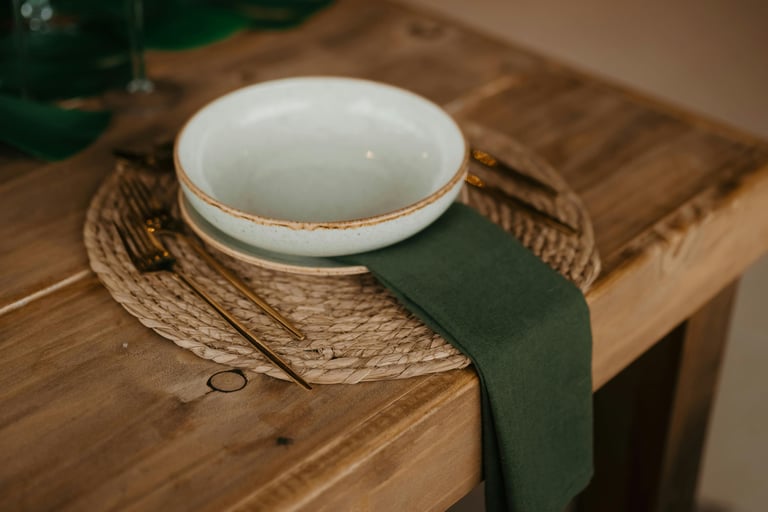
Soft clay, muted terracotta, or sand tones appear in:
ceramics
textiles
smaller elements
They introduce warmth without becoming accents. Color here should feel inherent to the room rather than applied.
What is intentionally excluded
Certain colors rarely work under Mediterranean light:
high contrast palettes
cool greys
trend-driven shades
strong saturation
These tones tend to dominate rather than support. Under constant light, they lose balance quickly.
A room that depends on color for interest rarely endures.
Color across the seasons
Southern light changes more across the year than people expect. In June, it is high, white, and almost colourless. In November, it falls lower and warmer, picking up the orange edge of late afternoon.
The same wall reads differently from one season to the next. The same table linen appears almost pink in winter light and almost grey in summer.
Colours chosen for steady Mediterranean conditions are the ones that survive this shift. Warm whites do not turn cold under summer light. Muted olive does not flatten in winter. Soft terracotta deepens rather than fading.
The room does not require seasonal adjustments because the palette was already prepared for what the year does to it.
This is why colours selected on a screen, or on a sample chip in a showroom, often fail in the room. The wall absorbs whatever light is in the air. The palette is judged by all the light it will live under, not the one moment it was first viewed in.
Color as response
Color only makes sense once the structure of the room is resolved.
Light determines how surfaces are perceived and where color is exposed, as explored in Light and Proportion in the Dining Room. Materials define how color is absorbed, reflected, and aged over time, a relationship developed in Materials and Finishes in the Dining Room. Seating establishes the weight and scale that color must respond to, as outlined in Seating in the Dining Room.
When these conditions are clear, color choices become limited and precise.
Every colour must sit comfortably in southern light, support material and form, and remain stable over time. Colour here is the consequence of the materials beneath it, not a layer applied on top.
If a colour requires justification, it usually does not belong.
The principle that colour follows material rather than leading it is developed in The Difference Between Natural and Neutral.
Contact
© 2025. All rights reserved.
An editorial study of French Mediterranean interiors, shaped by observation, lived experience, and a respect for spaces that age gracefully.