
Materials and Finishes in the Dining Room
Stone, wood, linen, ceramic. The materials a French Mediterranean dining room is built on — chosen for how they age under daily use, not for how they appear new.
DINING ROOM
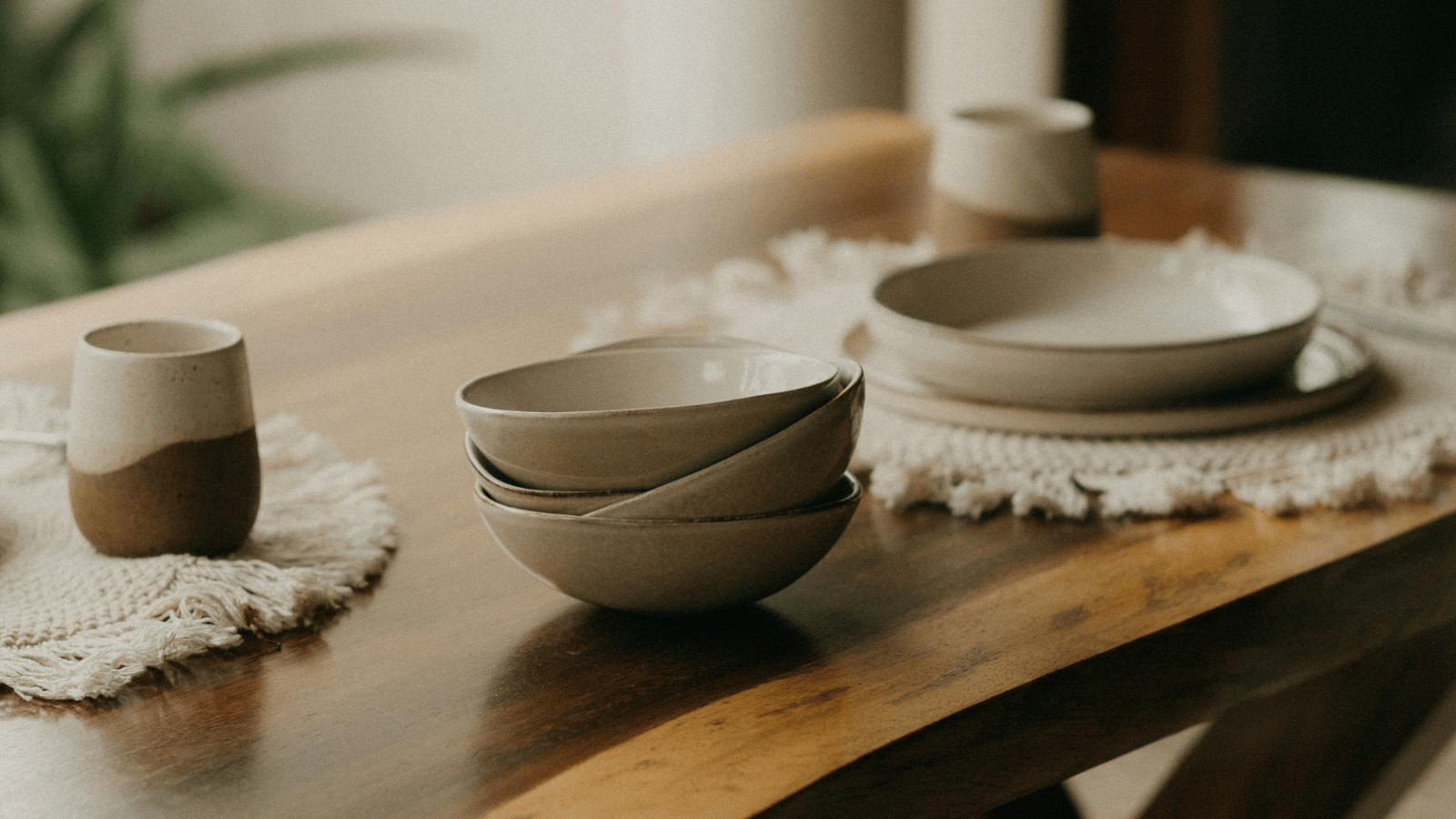
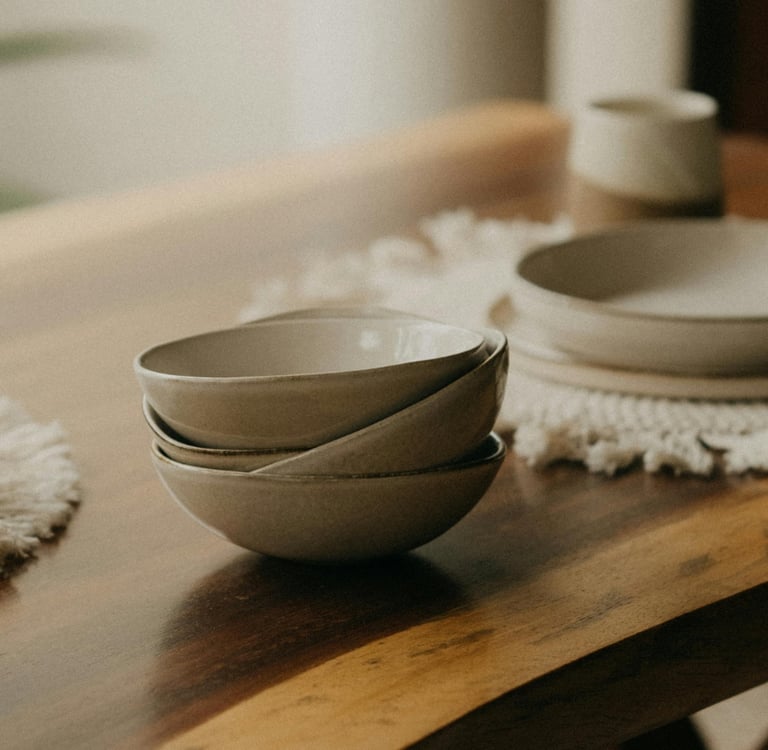
Materials define a dining room as much as light and proportion.
In a French Mediterranean interior, light reveals surfaces continuously. Each material either supports the space or begins to undermine it over time. Choosing carefully allows the room to remain grounded, calm, and enduring.
Materials chosen for how they age
A Mediterranean dining room is meant to be used, not preserved.
The materials that succeed are those that absorb wear and settle naturally:
solid wood
stone
linen
wool
ceramic
These materials respond to light, develop character through use, and maintain visual balance. Synthetic substitutes or highly processed finishes resist change, drawing attention in the wrong way and aging poorly.
If a material only looks good when untouched, it rarely belongs.
Stone: anchoring the space
Stone provides weight without dominating.
Flooring, tabletops, or architectural details in matte or softly honed stone anchor the room. They work with light rather than against it. Glossy stone reflects too aggressively and begins to compete with the rest of the space.
Stone does not decorate the room. It stabilises it.
Wood: warmth and continuity
Wood introduces warmth and continuity.
solid wood with visible grain ages gradually
lighter tones feel sun-washed
darker tones add depth when used with restraint
Highly processed or synthetic finishes resist natural change. They introduce tension into a room that is meant to settle over time.
Wood should feel inherent, not styled.
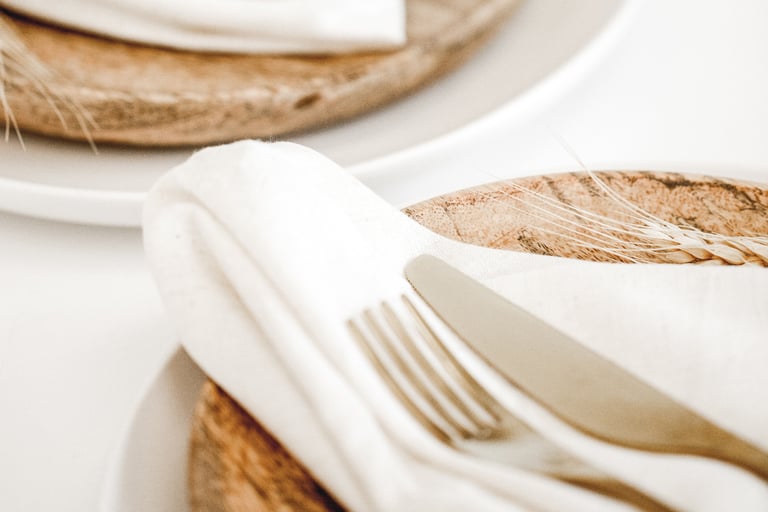
Textiles: linen and wool
Textiles are tactile first, decorative second.
linen and wool soften seating and surfaces without competing with light
patterns remain minimal or absent
texture adds depth up close while remaining quiet from a distance
If a textile draws attention from across the room, it is doing too much.
Ceramic: variation as balance
Ceramic works because it holds variation.
Hand-formed or slightly irregular pieces sit naturally in the room. They catch light without reflecting it sharply, adding presence without interruption.
Uniform, glossy ceramics tend to feel applied rather than integrated.
Ceramic should feel placed, not displayed.
What to avoid
Some materials consistently fail in Mediterranean dining rooms:
synthetic imitations of natural materials
lightweight composites
finishes that resist aging
Durability here is visual as much as physical. A material belongs if it settles into the room rather than resisting it.
The same logic chooses the finishes themselves. Matte and softly honed surfaces, natural oils and waxes, surfaces that show age gradually — these reinforce the calm the room is built on. High-gloss coatings, synthetic sheens, and finishes chosen for immediate effect work against it.
Soft finishes absorb both light and time, allowing the room to remain stable.
Materials under daily use
A dining room is one of the most used rooms in the house. Surfaces are touched, wiped, leaned on, dragged against — every day, often several times a day.
Materials that thrive under this kind of use are the ones that absorb wear without showing damage. Stone develops a softer hand along the table edge. Wood deepens where elbows rest. Linen relaxes its first stiffness and begins to fall the way it will fall for the rest of its life.
Materials that resist wear do the opposite. Lacquered surfaces show every nick. Synthetic finishes record stains they cannot reabsorb.
The dining room ages well or it ages badly — the choice is made the day the materials are selected.
How materials record use rather than resisting it is developed in What Patina Means in a Well-Made House.
Selection principle
Material choices only make sense in relation to the room as a whole. Light determines how surfaces are perceived and where they are exposed. Seating introduces areas of contact and softness, requiring materials that respond to use rather than resist it. Colour does not lead these decisions — it follows them, adjusting to the interaction between surface and light.
Not every material belongs.
Each choice must:
age gracefully
support proportion and function
integrate seamlessly with light and seating
This logic extends beyond individual materials. It reflects a broader approach in which restraint allows elements to work together without tension, a principle explored in The Comfort of Understatement.
These relationships are developed in Light and Proportion in the Dining Room, Seating in the Dining Room, and Color in the Dining Room.
If a finish or surface requires justification, it likely does not belong.


Contact
© 2025. All rights reserved.
An editorial study of French Mediterranean interiors, shaped by observation, lived experience, and a respect for spaces that age gracefully.