
Seating in the Dining Room
Dining chairs as proportion before style. Why low, grounded forms — and materials that age well — decide whether a Mediterranean dining room is used or only seen.
DINING ROOM
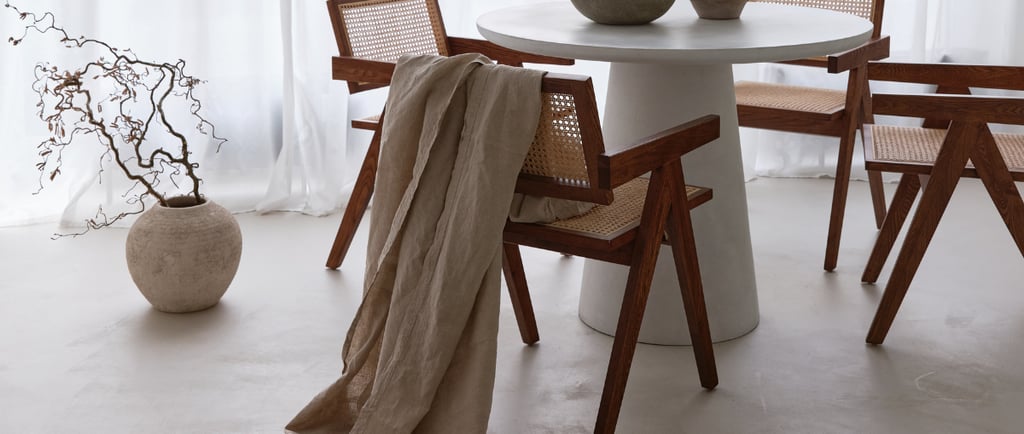
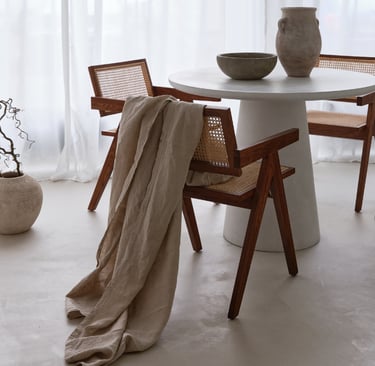
Seating determines whether a dining room is used or merely admired.
In a French Mediterranean dining room, chairs are not chosen to decorate the space. They are chosen to support proportion, materials, and long meals. Comfort is immediate. Presence is quiet. Nothing competes with the table or the light.
If seating is wrong, the room never settles.
Start with the table
Seating is always chosen in relation to the table.
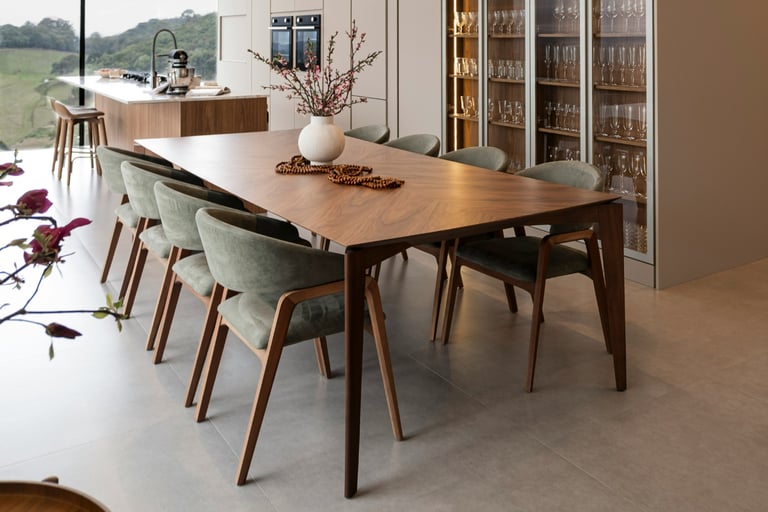
Chair height, width, and weight must respond to the table’s scale and material. A heavy table requires chairs with visual substance. A lighter table needs seating that does not overpower it.
Chairs selected independently of the table often feel mismatched, even when each piece is well made.
Proportion comes before style.
Low, grounded forms
Dining chairs in Mediterranean interiors sit lower than expected.
Lower profiles keep the room horizontal and prevent seating from interrupting the movement of light. High-backed or overly tall chairs dominate the space and pull attention upward, breaking the room’s balance.
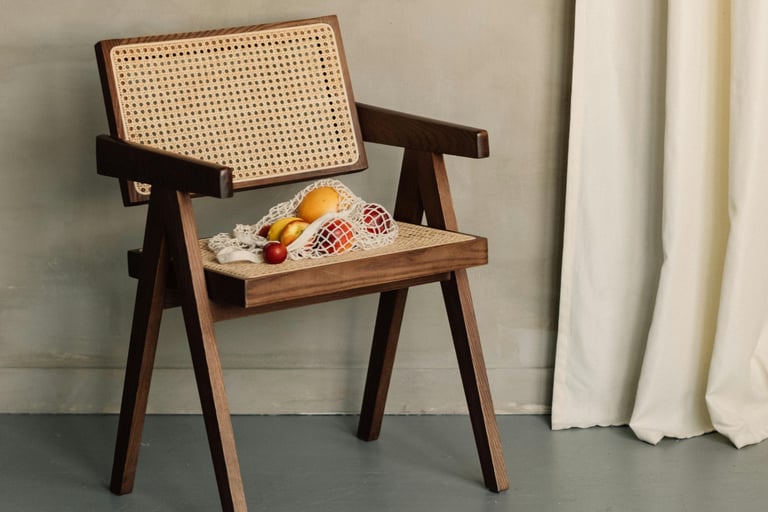
Armless chairs are often more appropriate. When arms are used, they should feel integrated rather than assertive.
Comfort here is non-negotiable, but it should not be visible at first glance. Overly padded or sculptural chairs tend to look heavy and perform poorly over time.
If a chair appears impressive before you sit down, it usually does not belong.
Materials that belong at the table
Seating materials must respond to both light and use.
What works:
solid wood frames
linen or wool upholstery
leather that softens with age
What rarely works:
synthetic fabrics
glossy finishes
materials chosen for effect rather than durability
Dining chairs are handled daily. Materials must age well and feel natural under constant contact. Their role within the room becomes clearer when considered alongside Materials and Finishes in the Dining Room, where surfaces are understood through use rather than appearance.
Arrangement and spacing
How chairs sit around the table matters as much as their design.
There should be enough space for movement without the room feeling empty. Chairs should align naturally with the table and surrounding furniture. Overcrowding creates tension; too much distance feels unresolved.
Balance is quiet. If it draws attention, it is off.
What consistently fails
Certain seating choices rarely work in this context:
sculptural or statement chairs
tall, narrow forms
pieces chosen to “add interest”
Dining rooms do not need interest. They need stability.
The same logic applies to mixing chair styles in one room. Mixing is possible, but only with restraint — differences should come from material or subtle variation, not shape or silhouette.
A room that mixes too many forms loses coherence quickly under steady light. If mixing requires explanation, it is usually too much.
Wear at the table
Dining chairs are handled more than any other seat in the house. They are pulled in, pushed back, leaned on, dragged across stone. Every contact leaves a small mark.
Chairs chosen to absorb this wear settle into the room more deeply over time. Wood frames develop a soft sheen along the top rail where hands have rested. Linen seats relax into the shape of repeated use. Leather darkens slightly along the front edge where the back of the knee meets the seat.
Synthetic fabrics and high-gloss frames record the same use without absorbing it. They show stains, scuffs, faint discolorations — and these read as damage rather than patina. The chair starts to feel out of place in a room that is otherwise getting better with time.
How materials are chosen for use rather than for appearance is developed in What Patina Means in a Well-Made House.
Seating as the bridge
Seating connects the different conditions of the room.
It responds to light and proportion. It relies on materials. It prepares the space for color without drawing attention to itself.
When seating is resolved, the rest of the room becomes easier to read. The relationship between light and placement becomes more apparent, as explored in Light and Proportion in the Dining Room. Color, in turn, adjusts to these conditions rather than leading them, as developed in Color in a French Mediterranean Dining Room.
At that point, the room no longer needs to be corrected. It begins to hold together on its own.
Contact
© 2025. All rights reserved.
An editorial study of French Mediterranean interiors, shaped by observation, lived experience, and a respect for spaces that age gracefully.