
Light and Proportion in the Dining Room
Why Mediterranean dining rooms are built for steady light, not dramatic light. How proportion — table to chair to space — holds the room together at every hour.
DINING ROOM
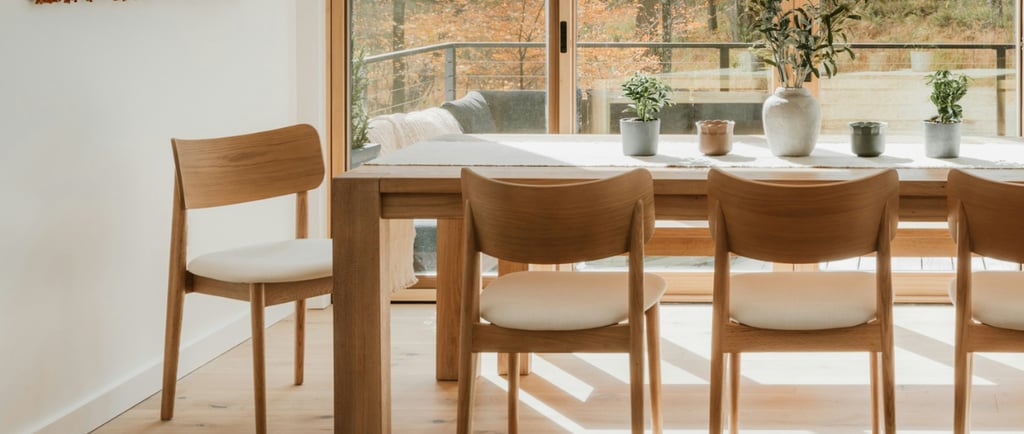
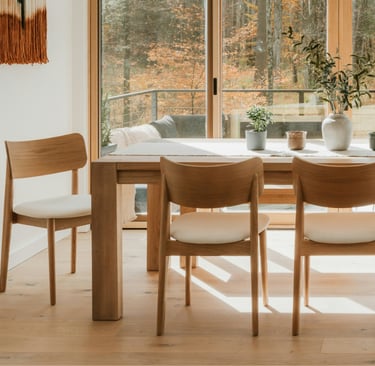
Light comes first.
In a French Mediterranean dining room, southern light is steady and revealing. It spreads across walls, floors, and surfaces for most of the day. Glossy finishes glare. Sharp contrasts dominate. Anything unnecessary becomes immediately visible.
This is why the room cannot be approached as a collection of objects. It must be understood as a whole, where structure precedes decoration, as introduced in What Defines a French Mediterranean Dining Room.
Rooms that endure are built around proportion, not effect. Light determines where furniture sits, how wide pieces must be, and how space is allowed to move.
Southern light and its effects
Mediterranean light is different from northern or artificial light. It is constant and unyielding.
Because of this, surfaces and objects are tested continuously, not occasionally.
Glossy finishes reflect too aggressively.
High contrast becomes harsh rather than defined.
Small decorative gestures disappear under exposure.
What remains is what can hold light without reacting to it. Materials that absorb rather than reflect, and furniture that settles into space rather than projecting outward, tend to remain stable over time. This relationship between light and surface is explored more closely in Materials and Finishes in the Dining Room.
A dining room that works in southern light does not shift throughout the day. It remains calm at noon and in the evening because it was resolved under the strongest conditions.
Proportion creates balance
Proportion matters more than style because light makes imbalance visible.
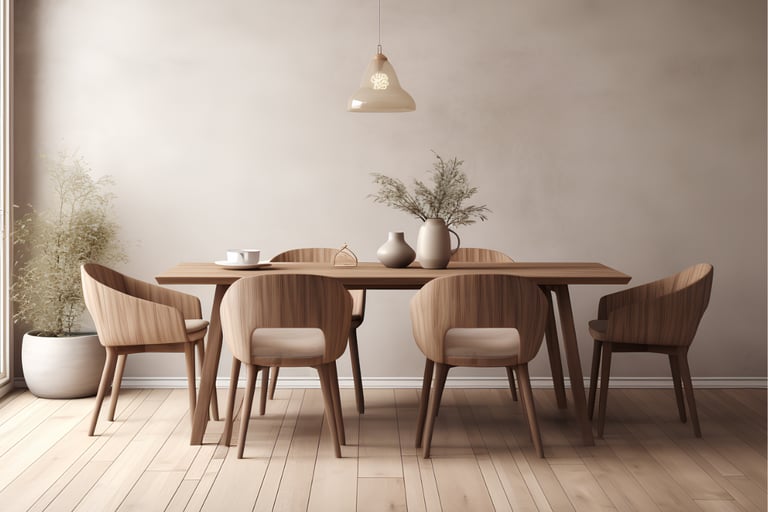
Tables must feel anchored without overwhelming the room. Chairs must align with both the table and the surrounding space. Secondary pieces must sit within the same horizontal logic.
When these relationships are unclear, the room begins to fragment. Objects feel placed rather than held together.
This is not corrected through adjustment, but through alignment. The relationship between table and seating determines whether the room stabilises or not — a connection that becomes clearer in Seating in the Dining Room.
When proportion is correct, the room holds itself, even with very little in it.
Space is part of the composition
Space is not what remains. It is what allows the room to function.
In steady southern light, overcrowding becomes immediately perceptible. Furniture blocks light rather than structuring it. Surfaces lose clarity. Movement feels restricted.
Leaving space around the table and along the walls allows light to travel and materials to be read properly. It also establishes a rhythm that does not depend on objects.
If a dining room feels unfinished, it is often because expectations are decorative rather than spatial.
What consistently fails
Certain choices rarely work under Mediterranean light because they contradict its conditions.
Furniture selected for visual impact rather than use tends to detach from the room once placed. Tall or narrow pieces interrupt the horizontal balance that light reinforces. Sculptural or expressive objects compete with the room instead of supporting it.
These failures are not aesthetic. They are structural. The room rejects what does not align with its conditions.
Light at the table
The most-used surface in the room is the table itself. It catches light directly for most of the day — far more than walls or floors do.
This is why table material matters more than people expect. A glossy table reads as a bright rectangle in the room from the moment the sun moves onto it. A honed stone or matte wood table receives the same light without returning it sharply. The room reads as one composition rather than a surface and everything else.
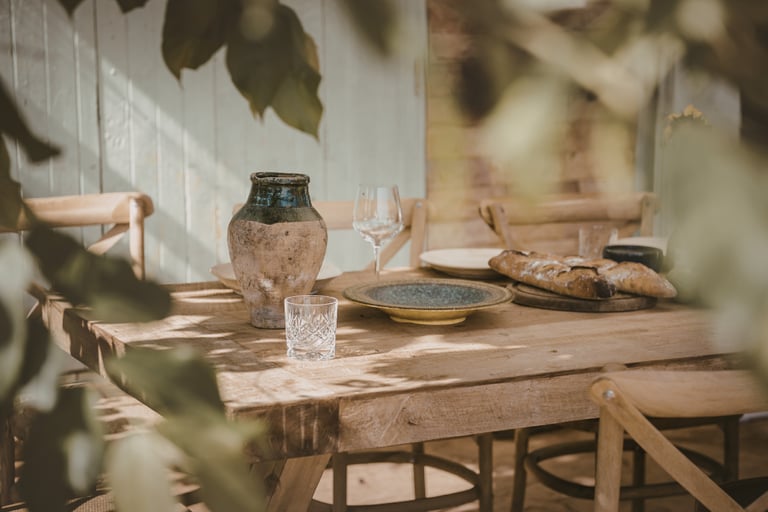
The same applies to whatever sits on the table during the day. Polished metal trays, glass vases, lacquered bowls — these become small mirrors under southern light, breaking the calm the rest of the room is holding. Ceramic, raw wood, linen runners do not.
An empty table is part of the room's structure. It does not need to be dressed to feel finished.
Why the space above and around the table reads more than the table itself is developed in Ceiling Height and Proportion.
How light informs other decisions
Once light and proportion are understood, the rest of the room becomes easier to resolve.
Materials begin to make sense in relation to exposure rather than preference. Seating follows the logic of the table and available space rather than independent choice. Color adjusts rather than leads.
Across the house, this same logic applies. Light establishes the conditions first, and everything else follows — a principle developed more broadly in Light Across the Day.
A French Mediterranean dining room does not need more than it can hold.
It needs light to move freely, proportions that remain stable, and the restraint to stop before the room begins to ask for attention. Everything else follows.
Contact
© 2025. All rights reserved.
An editorial study of French Mediterranean interiors, shaped by observation, lived experience, and a respect for spaces that age gracefully.