
Light & Enclosure in the Bathroom
How a Mediterranean bathroom balances daylight and protection. Why shielded light, breathable enclosure, and quiet shadow define the room before fixtures.
BATHROOM
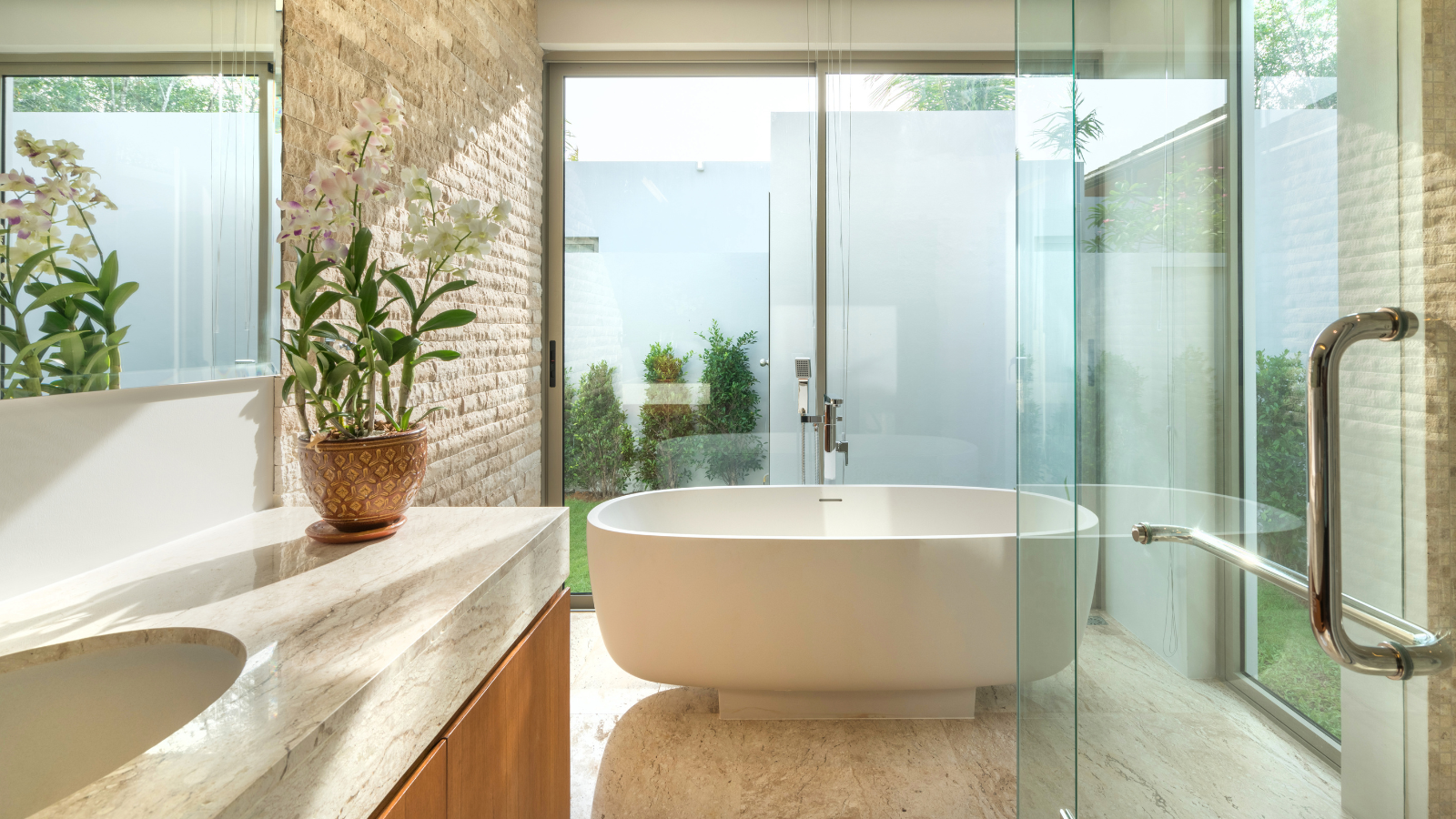
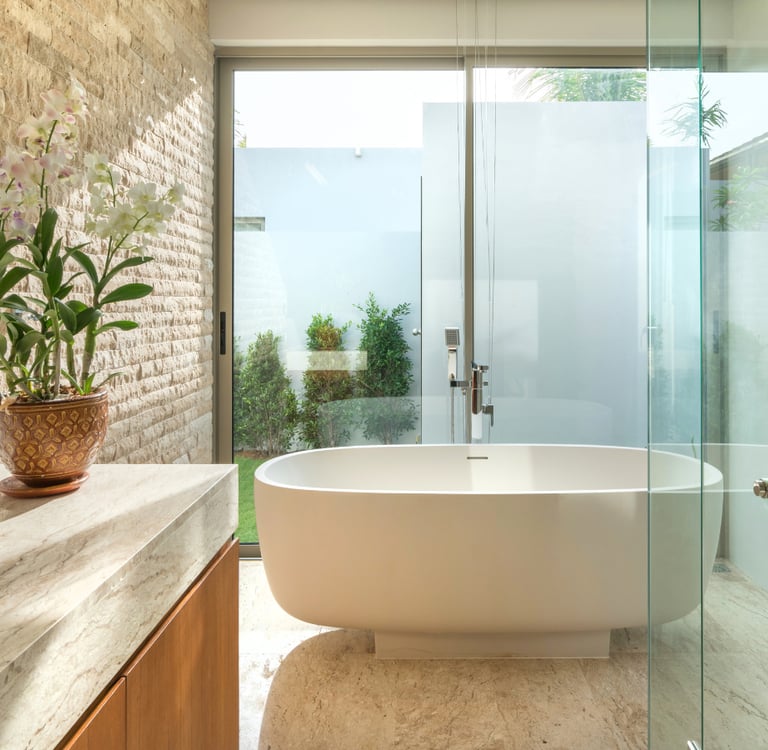
Light and enclosure define the bathroom before any fixture is placed.
In a French Mediterranean interior, the bathroom balances openness and protection. Light is admitted carefully. Enclosure is never heavy. The room must feel private without becoming closed, and calm without becoming dim.
When this balance is misjudged, the bathroom feels exposed or oppressive. When it is right, the room settles into daily use without effort, as introduced in The French Mediterranean Bathroom.
Light that shields rather than reveals
Bathroom light is not meant to display the space.
Openings are positioned to admit daylight without direct exposure. Windows are often higher, narrower, or filtered. Light enters indirectly, washing surfaces rather than striking them.
Strong contrast is avoided. Sharp shadows and glare introduce tension in a room meant for routine and care.
This approach reflects a broader logic in southern architecture, where light is moderated rather than maximised, as explored in Why Southern Homes Prefer Filtered Light.
Enclosure without heaviness
Enclosure in the bathroom is essential, but it must remain breathable.
Walls define the space clearly, without feeling thick or oppressive. Plastered surfaces soften edges. Transitions remain continuous. Doors, when present, are simple and solid.
The goal is to feel held, not confined. The room protects privacy without separating the body from light or air.
This balance is not about isolation, but about measured containment — a condition closely related to how space creates comfort through limits rather than openness.
Shadow as part of the room
Shadow is not treated as absence.
In Mediterranean bathrooms, shadow provides relief. It reduces glare. It allows surfaces to remain legible even when wet. It gives the eye a place to rest.
Corners remain quiet. Ceilings do not demand attention. Light is distributed so that no surface dominates.
This use of shadow is not decorative. It acts as a form of protection, balancing exposure and allowing the room to remain usable over time — a dynamic closely tied to how light is received rather than simply admitted.
Scale of openings and surfaces
The scale of openings matters more than their number.
One well-placed source of natural light is often enough. Multiple openings fragment the room and weaken enclosure. The bathroom benefits from clarity rather than abundance.
Surfaces remain continuous. Interruptions are limited so light can move across walls and floors without breaking rhythm.
This clarity prepares the room for fixtures to integrate into the space rather than sit on top of it, a relationship developed in Fixtures as Architecture in the Bathroom.
Artificial light as support
Artificial light remains secondary.
It fills in where daylight recedes but never replaces it. Sources are discreet, often indirect or concealed. Light appears where needed, at the mirror or basin, then disappears.
Brightness is controlled. The room should never feel clinical or theatrical.
Artificial light supports use without altering the character of the space.
Light at the basin
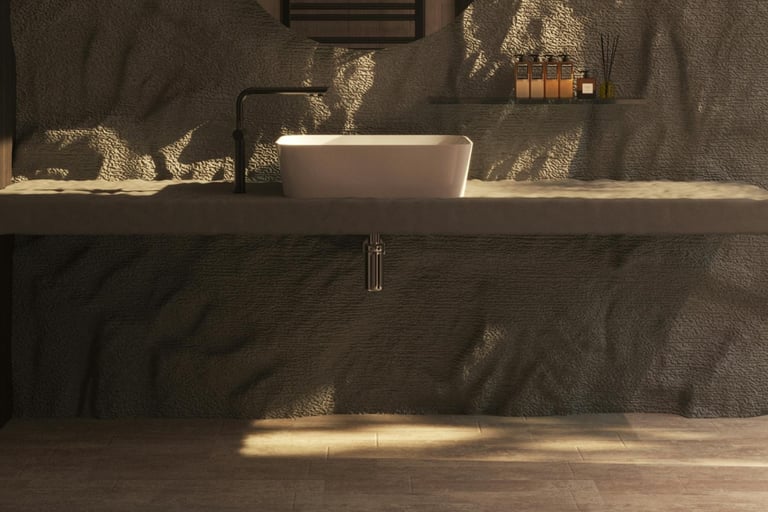
The basin is the one place in the bathroom where light is read at face height.
Most bathroom decisions about light deal with the room — how it enters, how it spreads, how it shades. At the basin the question becomes specific. Light has to allow the face to be seen accurately, without dramatising it. Too much overhead light flattens features and exaggerates shadow. Too little turns the mirror into a dim guess. Side-light from a window beside the basin, or two soft sources flanking the mirror, almost always reads better than a single bright source above.
This is the only place in the room where artificial light is asked to do real work. The rest of the bathroom can rest on filtered daylight and shadow. The basin cannot. It needs a measured, honest light that supports the small daily acts performed there — brushing, washing, looking at a face that is still half-asleep.
When the basin light is right, the rest of the room can stay quiet around it.
How the basin itself is positioned in relation to this light is developed in Materials for Contact in the Bathroom.
A room that holds privacy quietly
A well-designed French Mediterranean bathroom feels protected at all times.
Light enters without exposure. Enclosure remains clear without heaviness. The room adapts to use without demanding attention.
When light and enclosure are resolved early, everything else becomes simpler. Fixtures settle naturally. Materials remain calm.
This quiet balance allows the room to endure — a condition often mistaken for simplicity, but in reality rooted in restraint and control.


Contact
© 2025. All rights reserved.
An editorial study of French Mediterranean interiors, shaped by observation, lived experience, and a respect for spaces that age gracefully.