
The French Mediterranean Bathroom
Why a French Mediterranean bathroom is designed for repetition, not indulgence. Filtered light, materials chosen for contact, fixtures placed with care.
BATHROOM
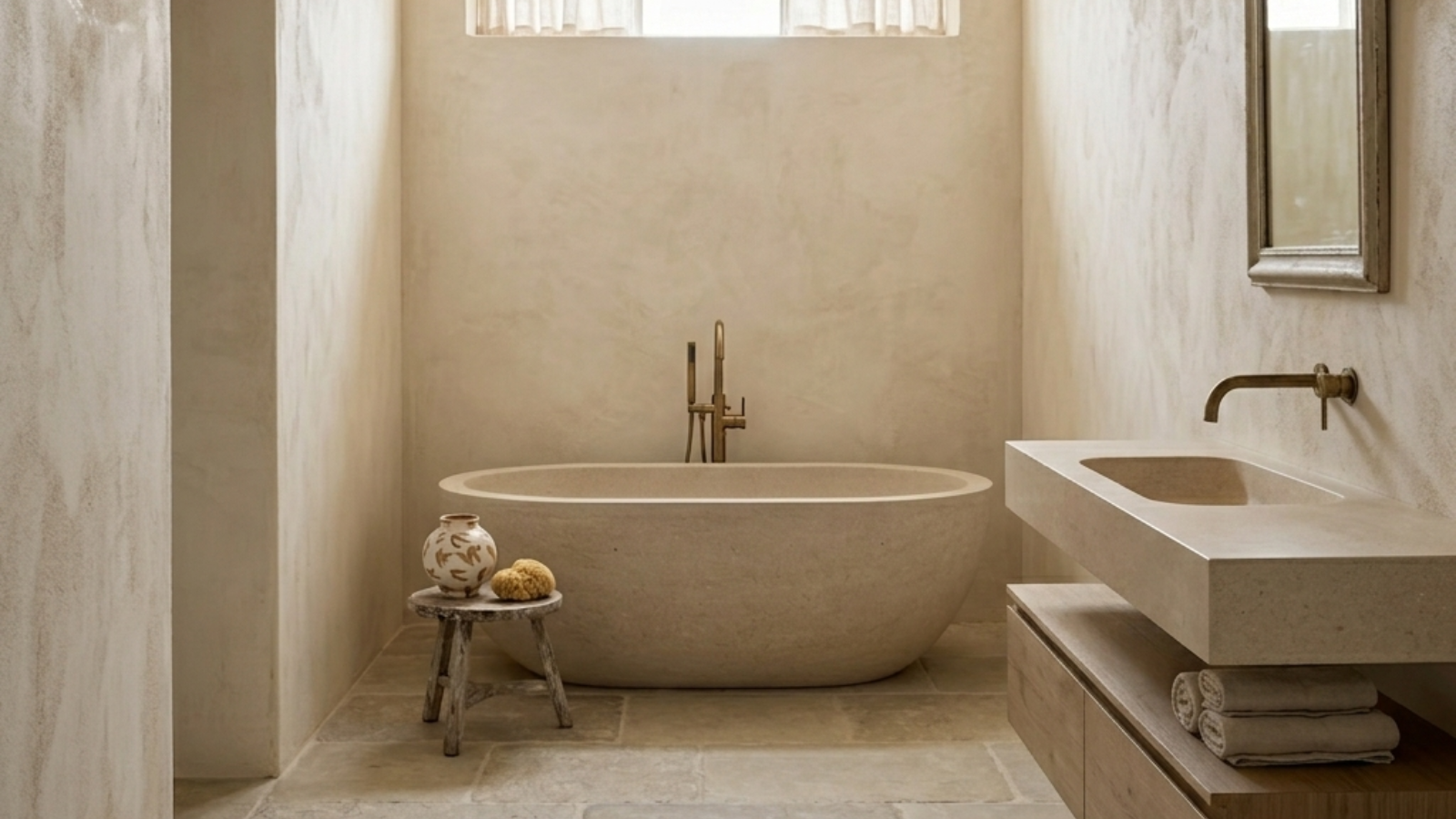
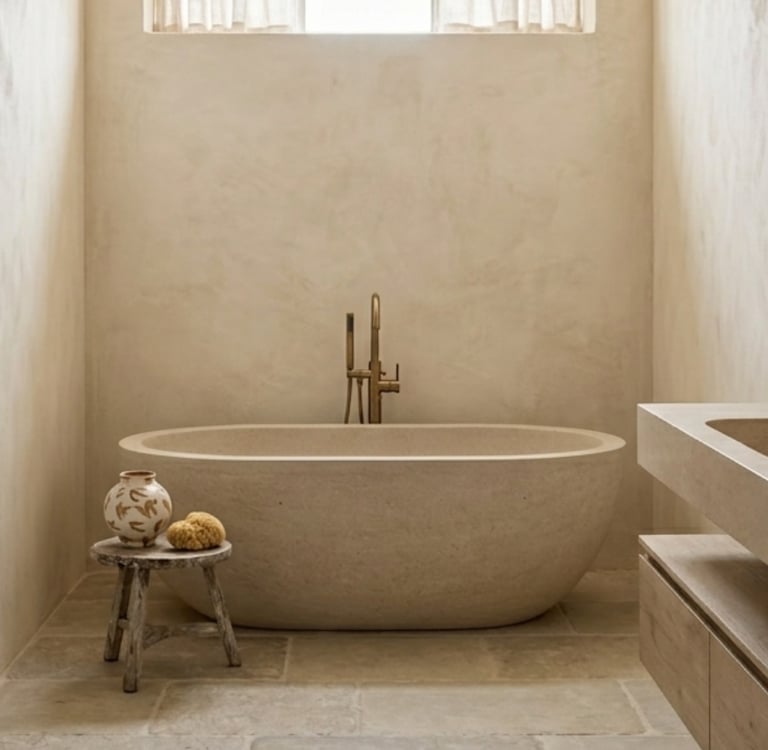
The French Mediterranean bathroom is not designed for indulgence.
It is designed for repetition.
This is a room used every day, often more than once, and often without thought. Its success depends on how quietly it supports those moments. Light is regulated. Materials are chosen for contact. Fixtures are placed with care. Nothing performs.
When the bathroom asks for attention, it disrupts the rhythm of the house. When it holds steady, it disappears into daily life.
A room of care, not display
The bathroom is one of the most functional rooms in the home, but function does not require excess.
In a French Mediterranean interior, the bathroom avoids emphasis. There are no gestures meant to impress, no surfaces chosen to signal luxury. The room exists to support care, cleanliness, and routine without distraction.
Decoration remains minimal. Objects stay purposeful. The room feels composed even when empty.
This relationship between routine and space is not accidental. It reflects how daily use shapes architecture over time, as explored in The Southern House and the Rhythm of Daily Life.
Light that protects privacy
Light in the bathroom is controlled rather than celebrated.
Openings are sized to admit daylight without exposure. Light arrives indirectly, often from above or through filtered glazing. Shadows remain soft. Contrast stays low.
This balance allows the room to feel open without feeling exposed. Privacy is maintained without heaviness.
Rather than amplifying light, the bathroom moderates it — a relationship developed in How Walls Receive Light.
How this filtered light is balanced against enclosure is developed in Light & Enclosure in the Bathroom.
Materials chosen for contact
The bathroom is where materials are felt most directly.
Bare feet meet the floor. Hands touch walls, basins, and fixtures. Water changes temperature and texture. Materials must respond without resistance.
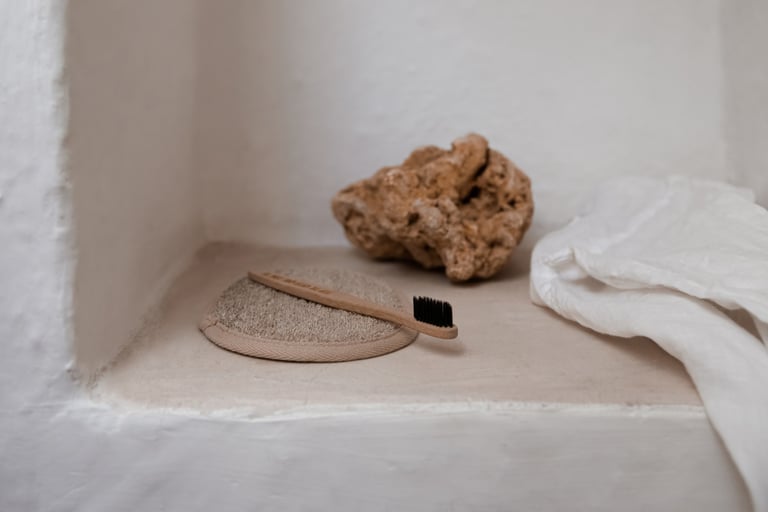
Stone, plaster, and wood appear repeatedly because they age well under use. They absorb sound. They soften light. They remain legible when wet, dry, warm, or cool.
Highly processed finishes, glossy surfaces, or synthetic materials interrupt this relationship.
Materials here are selected for endurance, not effect — a principle covered in Materials for Contact in the Bathroom.
Fewer elements, clearly placed
A restrained bathroom contains fewer elements, each carefully positioned.
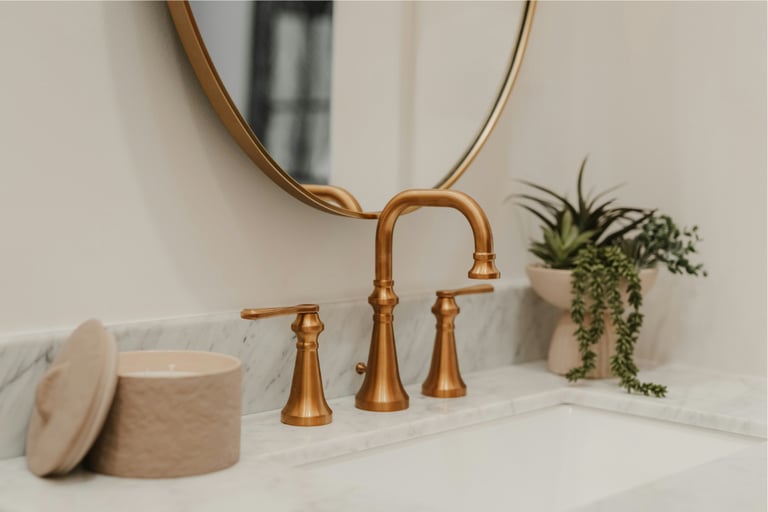
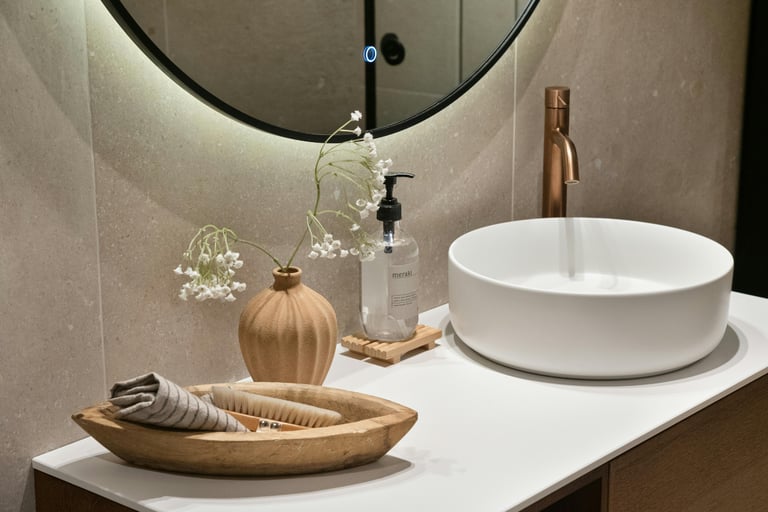
Basins, baths, and showers are treated as fixed parts of the architecture rather than objects added later. Their placement responds to the room, not to trends.
When fixtures are resolved early, circulation becomes clear. The room feels larger without becoming sparse. Use becomes intuitive.
This approach is developed further in Fixtures as Architecture in the Bathroom, where placement defines the room more than the objects themselves.
Continuity over contrast
The bathroom does not separate itself from the rest of the house.
Colors remain muted. Transitions are gentle. Materials echo those used elsewhere, allowing the room to feel connected rather than isolated.
This continuity avoids the sense of entering a different world. The bathroom feels like part of the house, not an exception within it.
When contrast is avoided, the room remains calm even in brief use.
Care over indulgence
A French Mediterranean bathroom is built around care rather than indulgence.
The distinction matters. A bathroom designed for indulgence treats the room as an event — features are added to be admired, materials are chosen for impression, the space becomes a small performance. A bathroom designed for care treats the room as a habit. Features support repeated use. Materials are chosen because they hold up to it. Nothing is added that does not earn its place through daily contact.
Indulgent bathrooms photograph well but rarely settle. The eye keeps moving. The room never disappears into routine.
A bathroom built for care does the opposite. It receives the body each morning and each evening without asking to be noticed. Over years, the room becomes more itself — softer, more grounded, more aligned with the household using it.
A room that recedes
A successful French Mediterranean bathroom does not linger in the mind.
It supports daily rituals quietly and consistently. It ages without requiring updates. It remains composed regardless of use.
The best bathroom is one that disappears once its purpose is fulfilled.
This quiet efficiency is not minimalism, but alignment — a condition found in houses that prioritise use over effect.
Contact
© 2025. All rights reserved.
An editorial study of French Mediterranean interiors, shaped by observation, lived experience, and a respect for spaces that age gracefully.