
Furniture as Extension, Not Feature
Why a Mediterranean terrace uses built elements before movable ones — and how furniture chosen to age outdoors becomes part of the space rather than placed on it.
TERRACE & GARDEN
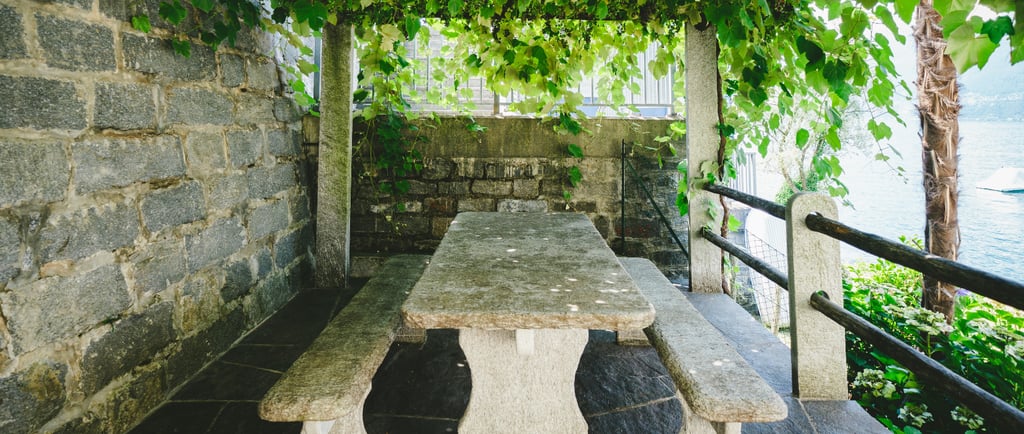
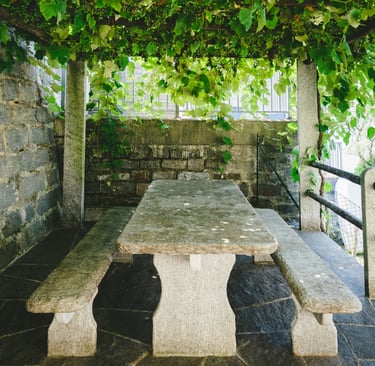
Outdoor furniture should not define the space.
In a French Mediterranean terrace or garden, it supports use rather than attracting attention. Tables, seating, and built elements extend the architecture instead of competing with it.
When furniture dominates, the space feels arranged. When it recedes, it becomes usable.
Built Before Movable
Outdoor spaces rely first on built elements.
Low walls become seating. Steps act as places to pause. Edges define zones without adding objects. These elements remain in place and do not require adjustment.
Movable furniture is added only where needed.
Too many pieces fragment the space and introduce instability. Built elements create structure without clutter — Fixtures as Architecture in the Bathroom shows the same principle working indoors.
Tables and Placement
Tables follow habit, not symmetry.
A table placed in morning shade or evening light will be used. One placed for visual balance often remains empty. Position matters more than form.
Size is measured. A simple rectangular table that allows circulation works better than one that fills the space.
The table becomes the centre of use without dominating the terrace.
Why the table belongs to the rhythm of use rather than to the symmetry of the space is part of the wider argument of The French Mediterranean Terrace & Garden.
Seating and Shade
Seating follows shade and comfort.
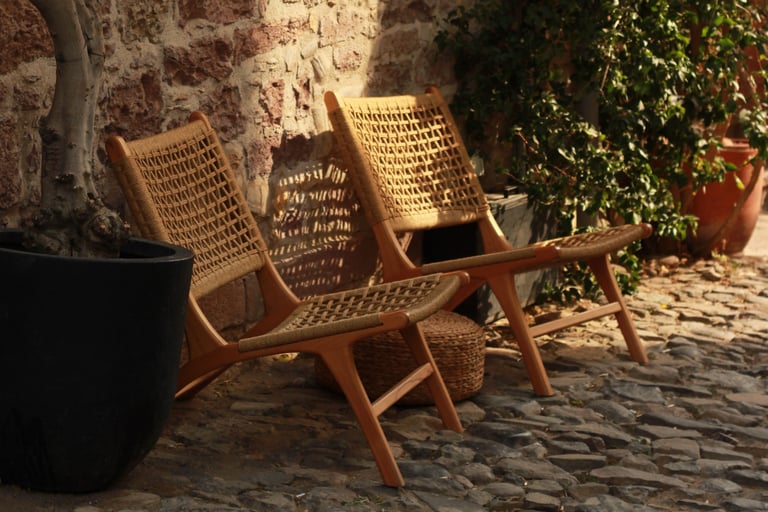
Chairs and benches are placed where shade settles during the day, often shifting slightly with use. Nothing feels fixed unless it needs to be.
Low, simple seating keeps sightlines open and allows light to move across the space. Heavy or sculptural pieces interrupt this movement.
Seating should feel stable enough to remain outside, but light enough to be repositioned when needed.
Materials for Outdoors
Outdoor furniture must tolerate exposure.
Wood, metal, and stone are used in their simplest form. Finishes remain matte. Surfaces accept sun, moisture, and wear without requiring protection.
A wooden bench that fades, a metal chair that dulls, or a stone seat that warms under the sun becomes part of the space over time.
Furniture that accepts it settles into place — the same logic Materials That Weather Well covers for the ground, walls, and built elements.
These materials are chosen the same way they are chosen indoors — for how they accept use over time, which is also what Thresholds: Where the House Changes Pace examines at the edges between built and open space.
Fewer Pieces
A restrained terrace contains fewer elements.
Each piece has space around it. Circulation remains clear. Shade is not contested by multiple objects.
When furniture is reduced, the space feels larger and easier to use.
The terrace begins to function without adjustment.
Through the Cold Months
The way furniture handles the months it is not used decides whether it lasts.
On the Côte d'Azur, outdoor furniture is asked to sit through wet winters, sudden mistrals, and salt-heavy air for roughly half the year while no one is touching it. Most pieces designed for terrace use are not made for this. They are made for the season they are photographed in.
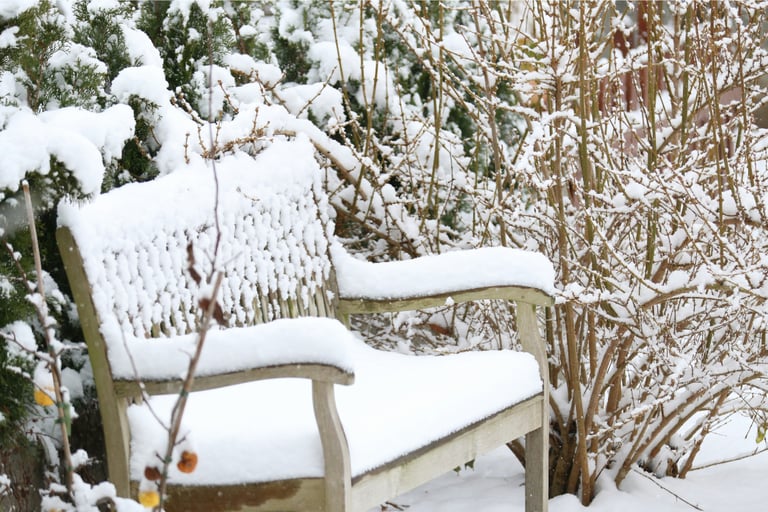
Furniture that genuinely belongs outdoors does not need to be moved indoors at the first cold week. A teak bench stays where it is. A stone seat is immovable by design. A metal chair, properly chosen, dulls without rusting through. The pieces that need wheeling into the shed each November — folding chairs, cushioned loungers, anything with mechanism or fabric that cannot be cleaned outside — are signals that the wrong piece was chosen.
Cushions and textiles are the honest exception. They come in. Frames stay. A terrace that is designed around this distinction is a terrace that is ready for use again in March without preparation — the bench is already there, weathered another shade greyer, holding its place.
A Space That Settles
Outdoor furniture should feel inevitable.
It appears where people naturally gather and remains where it works. Over time, its position becomes familiar rather than deliberate.
The space does not need to be arranged.
It holds its form through use.

Contact
© 2025. All rights reserved.
An editorial study of French Mediterranean interiors, shaped by observation, lived experience, and a respect for spaces that age gracefully.