
Materials That Weather Well
Stone, terracotta, lime, wood. How a Mediterranean terrace is built from materials that soften under sun, rain, and time — rather than resist them.
TERRACE & GARDEN
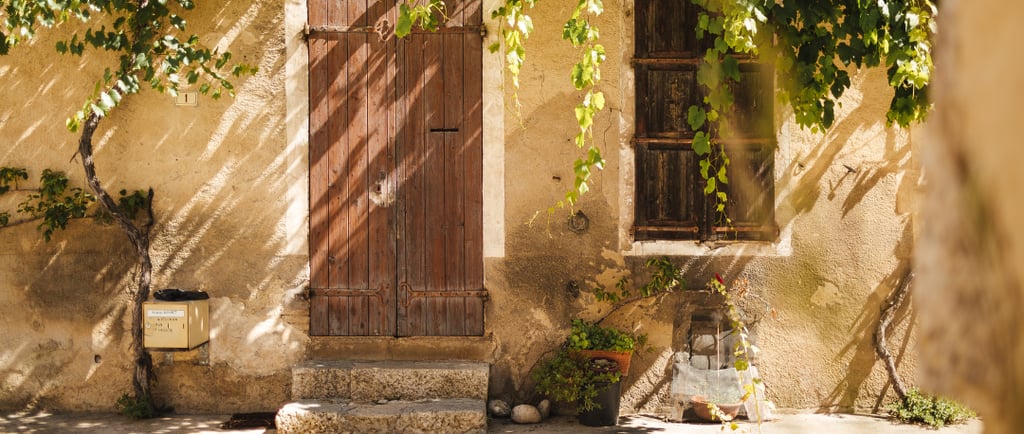
Outdoor spaces depend on materials that accept time.
In a French Mediterranean terrace or garden, surfaces are exposed continuously to sun, heat, rain, and wind. Materials are not chosen to remain unchanged. They are chosen to weather without losing their structure.
Stone, terracotta, lime, and wood endure because they soften rather than break down.
The broader logic that places these materials at the centre of outdoor living runs through The French Mediterranean Terrace & Garden.
Stone as Ground
Stone defines the terrace underfoot.
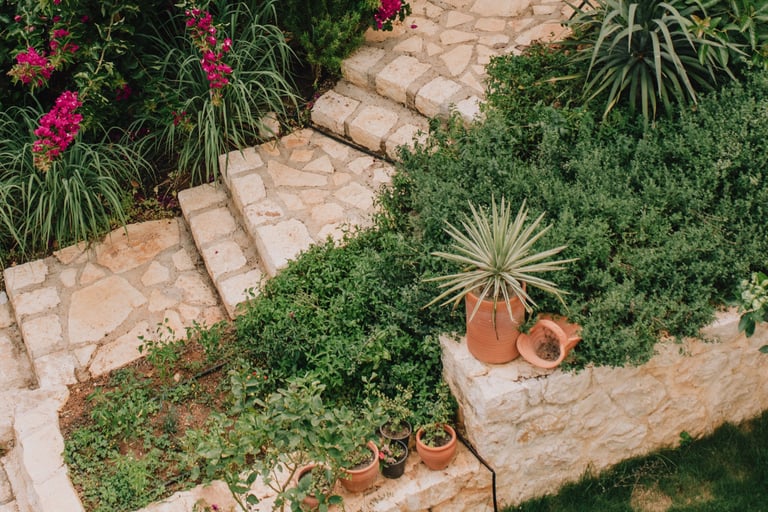
Used for flooring, steps, low walls, and built seating, it absorbs heat during the day and releases it slowly as temperatures fall. Its surface remains readable in strong light and in shadow.
Rough limestone or travertine works particularly well because it reduces glare and provides grip when walked on, even in dry heat.
Highly polished finishes are avoided. Outdoors, they reflect too much light and become uncomfortable.
Stone anchors the space physically and visually.
The same stone appears underfoot inside the house, where its capacity to hold use is examined in What Patina Means in a Well-Made House.
Terracotta and Earth
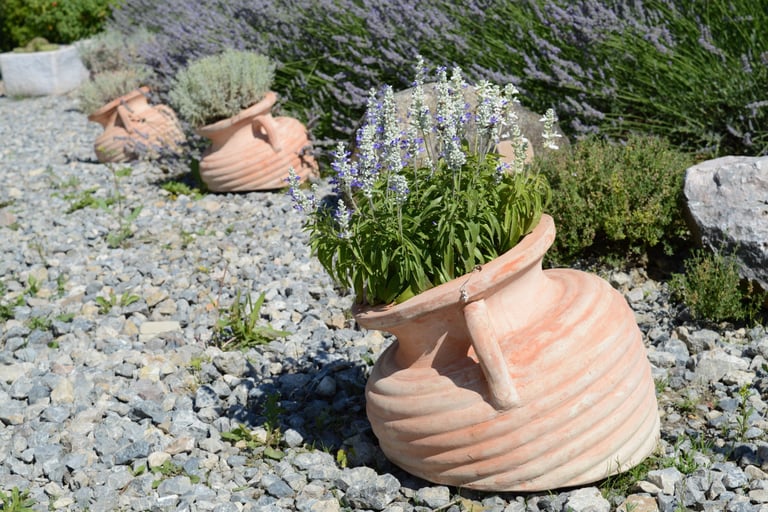
Terracotta sits naturally in Mediterranean outdoor spaces.
Its color belongs to the landscape. Its surface warms under the sun without becoming harsh. Over time, tones deepen and vary rather than fading unevenly.
Used for floors or limited surfaces, it creates continuity between built space and ground.
Earth-based materials prevent the terrace from feeling separate from its surroundings.
Lime Surfaces
Lime-washed walls and finishes play a quiet but essential role.
They reflect light softly without glare and allow moisture to pass through. This keeps walls stable in changing weather conditions.
A lime-washed wall beside a stone floor creates a balanced surface where neither dominates.
Materials for Work in the Kitchen carries the same material logic indoors — surfaces chosen for how they respond over time, not for how they appear at the start.
Wood in Place
Wood appears outdoors with restraint.
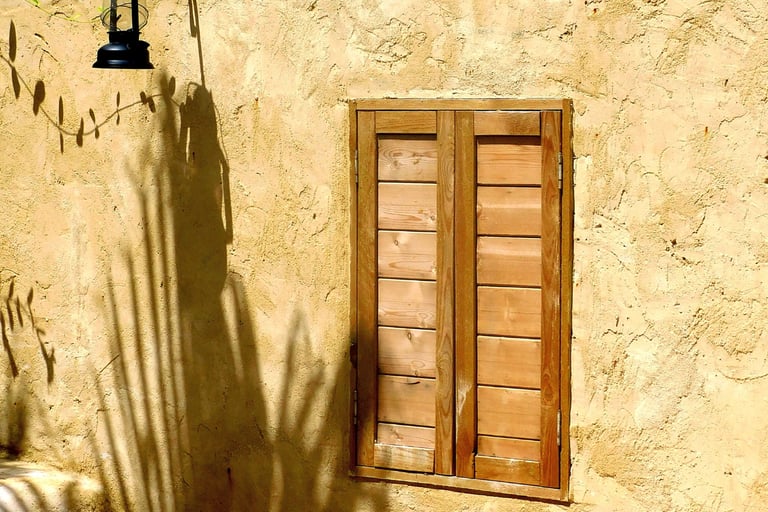
It is used where it can weather gradually: pergolas, shutters, or limited furniture. In these positions, it softens the mineral weight of stone and lime.
It is not placed where it must resist constant exposure. When overused or overprotected, it loses its role.
Used correctly, wood changes slowly and becomes part of the space rather than standing apart from it.
Outdoors, untreated oak, chestnut, or cedar weathers into a silvery grey within two or three seasons and then stops changing. That stable grey is the working state of the material — it is not the start of failure but the end of it. Trying to keep wood looking newly oiled is what most often destroys it; the surface is then locked into a maintenance cycle that does not stop.
Materials for Rest in the Bedroom takes the same measured approach indoors, where wood is allowed to deepen rather than be preserved.
Ground and Drainage
Outdoor materials must work with the ground.
Gravel, compacted earth, or simple stone layouts allow water to pass through and prevent pooling. These surfaces also reduce heat buildup compared to sealed finishes.
The ground should feel stable but not sealed. Movement, water, and use must pass without resistance.
This is what keeps the terrace usable across seasons.
What to Avoid
Materials that depend on staying perfect rarely work outdoors.
Synthetic decking, glossy tiles, and heavily sealed finishes reflect heat and show wear immediately. Scratches, stains, and water marks appear as contrast rather than blending into the surface.
These materials require constant correction.
A Mediterranean terrace works differently. It allows surfaces to absorb use rather than expose it.
The principle is the same one Climate as the First Designer describes for the building as a whole: select for endurance under exposure, not for first appearance.
A Space That Settles
When materials are chosen for how they weather, the space becomes more stable over time.
Surfaces soften. Colors settle. Edges wear without breaking.
The terrace does not need to be refreshed.
It becomes more itself with use.
Contact
© 2025. All rights reserved.
An editorial study of French Mediterranean interiors, shaped by observation, lived experience, and a respect for spaces that age gracefully.