
How Walls Receive Light in a Mediterranean House
Walls behave as filters in southern light. Surface depth, imperfection, and corners decide whether a room feels calm or restless under continuous sun.
JOURNAL
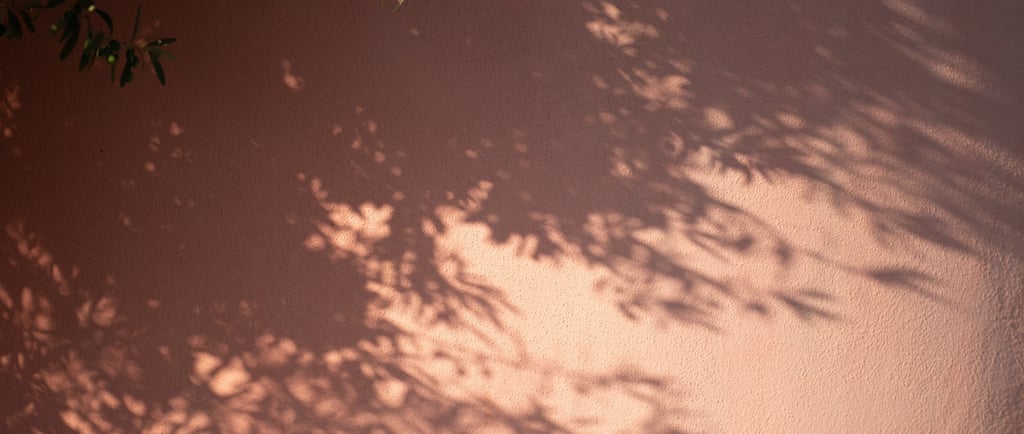
Light does not enter a room evenly. It settles.
Step into a south-facing room in the middle of the afternoon. The light has already crossed the threshold. It sits on the wall opposite the window, spreading slowly across it.
Nothing moves, but the room is not static.
In a French Mediterranean interior, walls are not passive surfaces. They receive light, hold it, soften it, or reject it. The way they do this determines whether the room feels calm or exposed.
Before furniture, before color, before objects, the wall defines what happens to light once it arrives.
Light arrives, then changes
Stand near the doorway and look toward the wall facing the window.
On a smooth painted surface, the light hits and returns immediately. The wall brightens, but it also sharpens. Edges become clearer. Shadows tighten. If someone walks past, you notice the movement instantly.
Now imagine the same wall in plaster.
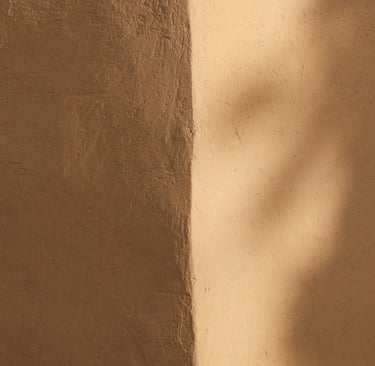
The light does not return as quickly. It spreads. The brightness is still there, but it no longer feels active. The edge between light and shadow softens. You stop noticing the movement in the room as much.
On stone, the effect shifts again.
The surface breaks the light. Small variations catch it unevenly. Some areas deepen, others stay pale. You see a quiet variation that holds your attention for a second, then disappears into the room.
You don’t analyse these differences. You register them immediately when you enter.
The wall as a filter
Sit at a table in that same room around midday.
The light coming from the window is strong enough to be uncomfortable. On certain surfaces, it reflects back toward you. You shift slightly in your chair without thinking about it.
Now look at the wall opposite.
If the surface absorbs the light, the intensity drops as it travels. By the time it reaches you, it feels usable. The room holds the brightness without pushing it back into your eyes.
If the wall reflects it, the opposite happens. The light multiplies. The room becomes harder to sit in, even though nothing has changed structurally.
This is why Mediterranean interiors do not chase brightness. They regulate it.
Over the course of the day, this filtering allows the room to remain stable rather than reactive — a condition tied to how houses support daily life, as explored in The Southern House and the Rhythm of Daily Life.
Surface depth, not decoration
Watch the wall as the sun begins to move.
On a flat painted surface, the shift is abrupt. One moment the wall is bright, the next it is not. The change is visible and slightly harsh.
On a plaster wall, the same shift is slower.
The light does not leave all at once. It fades across the surface. You see a gradient rather than a transition. The wall seems to hold onto the light for a moment longer before releasing it.
This is not about color. It is about depth.
A surface with depth allows light to enter slightly before returning it. That delay is what creates calm.
These surfaces hold light because they are made to. Living Room Materials and Finishes explains how the same logic governs material selection at the room scale.
Imperfection as structure
Move closer to the wall.
At a distance, it looks even. Up close, you begin to see small variations. Slight changes in texture. Areas where the surface is not perfectly flat.
As light passes across it, these irregularities catch it differently. Not enough to create contrast, but enough to prevent uniform reflection.
Now compare that to a perfectly smooth wall.
The light behaves identically across the entire surface. It can feel clean, but also slightly empty. There is nothing for the eye to settle on.
In a lived-in room, those small variations matter. They allow the surface to remain stable as light changes.
This is why materials that already contain variation continue to work over time — a relationship that becomes clearer when considering how surfaces respond to use, as developed in Materials for Contact: Stone, Plaster, and Wood.
Corners and transitions
Stand in the corner of the room and look along the walls.
Where two surfaces meet, light either stops or continues.
A sharp edge creates a clear break. One plane is lit, the other is not. The contrast is immediate.
A softened transition allows light to move around the corner. The change is still there, but it is less abrupt. The room feels continuous rather than divided.
You notice this most when moving.
Walking along a wall with hard transitions feels slightly interrupted. With softer transitions, the movement is smoother, even if you don’t consciously register why.
When walls fail
Enter a room where the walls are too reflective.
The light is strong, but unstable. It shifts constantly. Bright areas feel too bright. Shadowed areas feel disconnected. You become aware of the room instead of settling into it.
Now enter a room where the surfaces are too flat.
Nothing reacts. Light does not move across the walls in a meaningful way. The space feels still, but also slightly lifeless.
Both conditions fail for the same reason.
They do not hold light. They either amplify it or erase it.
Light as something that stays
In a well-made room, light remains present without calling attention to itself.
You notice it when you sit down and stop moving.
The wall across from you is neither bright nor dark. It holds a steady tone. As time passes, the light shifts, but the room does not need to be adjusted.
This is what allows a space to feel calm even under strong southern light — the same light that shapes placement and proportion throughout the house, as described in Light Across the Day.
What follows is a kind of settling. The wall is no longer interpreted; it is occupied. You stop noticing surface, and start noticing time — the small shift of light along a corner in the late afternoon, the deepening of a shadow against a doorframe at dusk.
The room becomes a place that absorbs attention without demanding it. This is what walls receive light for: not to perform brightness, but to hold it long enough that the room can be lived in without adjustment.
When the wall behaves the same way from one room to the next, the house begins to feel coherent — a continuity developed in Materials That Repeat.
Before You Repaint
Not sure which of your surfaces are throwing light back into the room? The free Light Audit helps you find them first — so you change the right wall, not every wall.

Contact
© 2025. All rights reserved.
An editorial study of French Mediterranean interiors, shaped by observation, lived experience, and a respect for spaces that age gracefully.