
The French Mediterranean Kitchen
Why a French Mediterranean kitchen is built for work, not display. Surfaces chosen for use, light kept practical, materials that age into the room.
KITCHEN
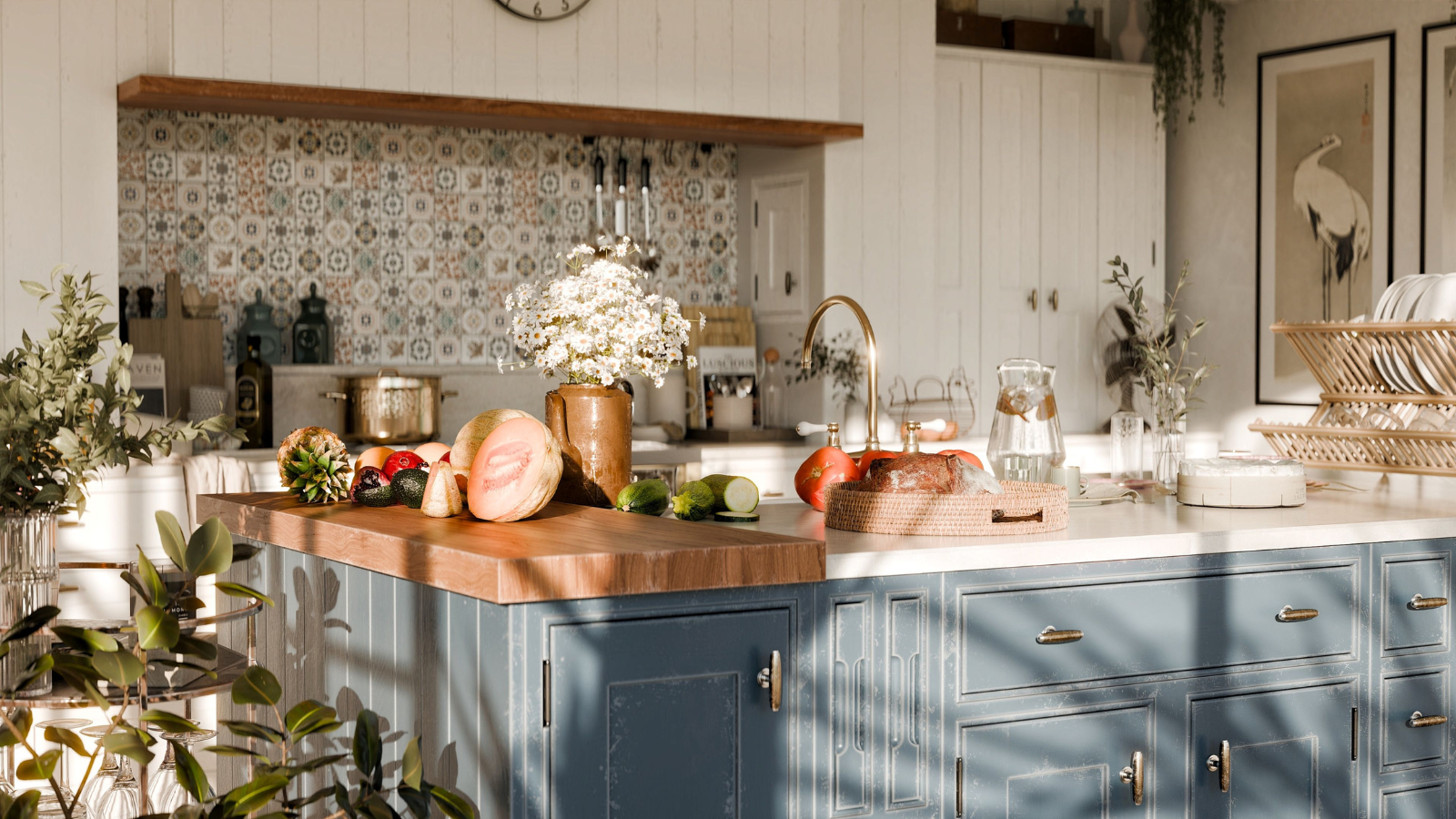
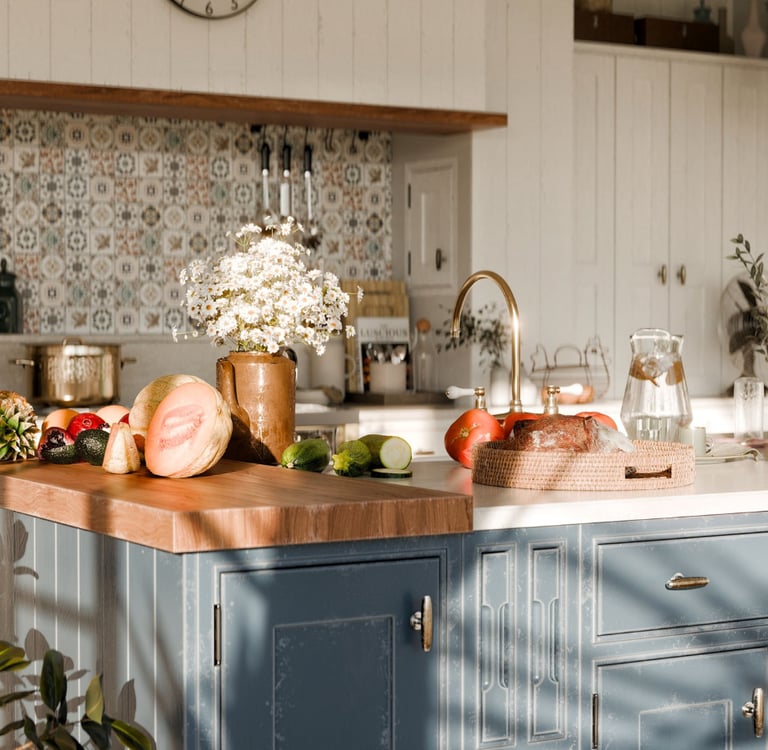
The French Mediterranean kitchen is designed for work.
Not for display. Not for performance. Not for constant visibility.
It exists to support daily repetition with clarity and calm.
This is the most used room in the house, and it is treated accordingly. Surfaces are durable. Light is practical without glare. Materials are chosen to age under use. Nothing is added to be noticed.
When the kitchen performs visually, it distracts from its purpose. When the kitchen recedes, it becomes essential.
A room shaped by rhythm
The kitchen follows a daily rhythm.
Morning, midday, evening. Preparation, pause, repetition. The room must respond to these cycles without changing character. It should feel steady whether empty or active.
Movement is clear. Circulation is direct. The layout supports work without interruption. Excess is removed so routine can unfold without friction.
This attention to rhythm distinguishes the kitchen from social rooms, where atmosphere carries more weight, as explored in The Kitchen Table as the Center of the House.
Light that supports use
Light in the kitchen is functional, but never harsh.
Natural light is welcomed where it supports work surfaces. It is controlled where it creates glare. Openings are sized and positioned with use in mind rather than symmetry.
Artificial light remains even and contained. It illuminates counters and sinks without flooding the room. Shadows are softened. Contrast is limited.
The relationship between natural and artificial light is what most kitchens get wrong. A kitchen lit only by daylight loses utility after sunset. A kitchen lit only by artificial sources reads as a working surface at all hours — including the hours when the family is meant to be eating in it.
A French Mediterranean kitchen tends to layer the two without dramatising either. Daylight does the structural work. Soft, low artificial sources fill in at task points — over the cooktop, beside the basin, above a preparation counter — and stay off everywhere else.
Light & Rhythm in the Kitchen goes further into how this layered light supports the room's daily cycle.
The kitchen should remain readable at all times, without visual fatigue.
Materials chosen for repetition
The kitchen is defined by repetition more than any other room.
Surfaces are touched constantly. Water, heat, and movement leave marks. Materials must respond without resisting.
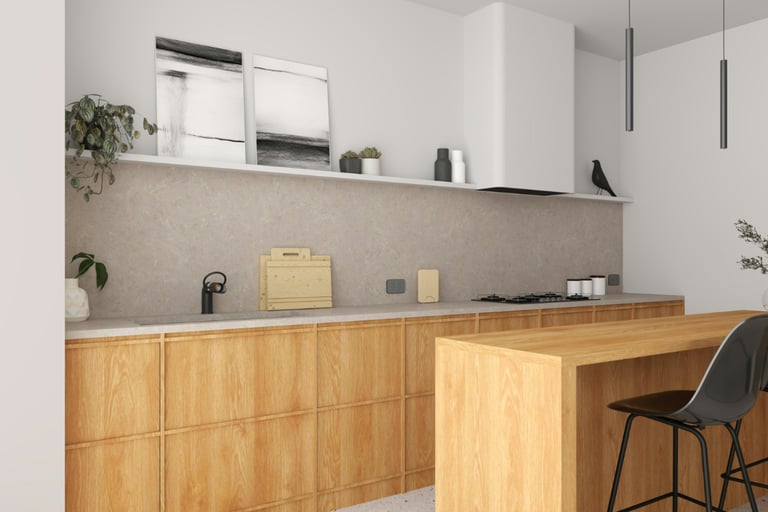
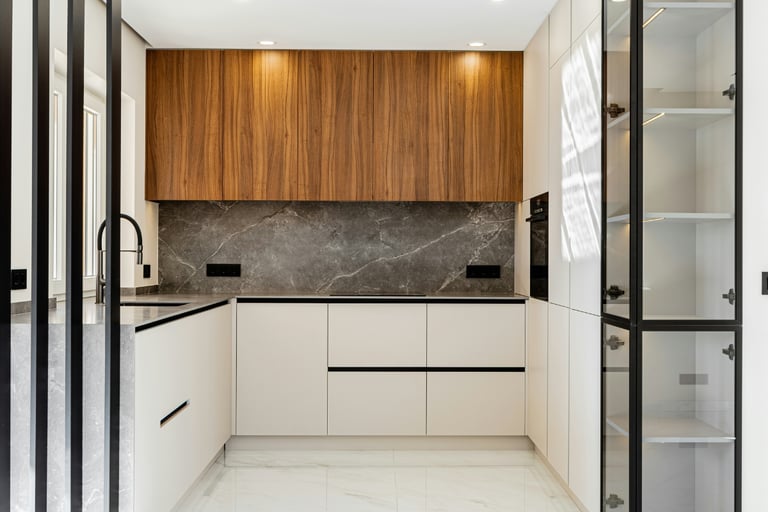
Stone, lime plaster, and wood appear repeatedly because they tolerate use. They develop patina rather than wear. They remain legible even when imperfect.
Highly processed finishes, glossy surfaces, and synthetic materials disrupt this relationship. They amplify damage instead of absorbing it.
The same material logic structures the kitchen itself — Materials for Work in the Kitchen takes it surface by surface.
Work surfaces before furniture
In a French Mediterranean kitchen, work surfaces come before furniture.
Counters are continuous. They are treated as architectural elements rather than pieces added later. Islands, when present, extend work rather than dominate the room.
The kitchen does not rely on statements. It relies on surfaces that function and remain in place.
Kitchen Work Surfaces as Structure picks this up: once work surfaces are resolved early, everything else becomes simpler.
Containment over display
The kitchen benefits from containment.
Storage remains closed and quiet. Objects are kept where they are used, not where they are seen. Open shelving is limited, if present at all.
Containment is what allows a kitchen to be lived in without constant maintenance. When tools and ingredients live behind closed fronts, the room does not need to be tidied between every use — it already reads as tidy.
The opposite is true of open-shelving kitchens, which demand visual order at all times. The mug returned to the wrong hook, the bowl one shelf too low, the bottle out of alignment — each becomes visible. The room asks for attention even when no one is cooking.
Visual quiet allows the room to feel composed even in use. The kitchen should not appear busy simply because it is active.
Continuity with the rest of the house
The kitchen does not separate itself from the home.
Materials echo those used elsewhere. Colors remain subdued. Transitions are gentle. The room feels connected rather than isolated.
This continuity prevents the kitchen from becoming dominant. It remains part of the house, not its focal point.
Color in the Kitchen carries this continuity through the tonal range itself.
A room that endures
A successful French Mediterranean kitchen improves through use.
Surfaces soften. Materials settle. The room becomes more personal without becoming fuller. It does not require updating because nothing was chosen for effect.
This quiet endurance reflects a broader condition found in houses that prioritise use over display, as explored in Why Some Houses Are Easy to Live In.
The best kitchen is one that works quietly, day after day, without needing to be noticed.
That is its measure of success.
Contact
© 2025. All rights reserved.
An editorial study of French Mediterranean interiors, shaped by observation, lived experience, and a respect for spaces that age gracefully.