
Materials for Rest in the Bedroom
Linen, wood, plaster. How a French Mediterranean bedroom is built from materials chosen for contact and ageing — not appearance — and why they belong together.
BEDROOM
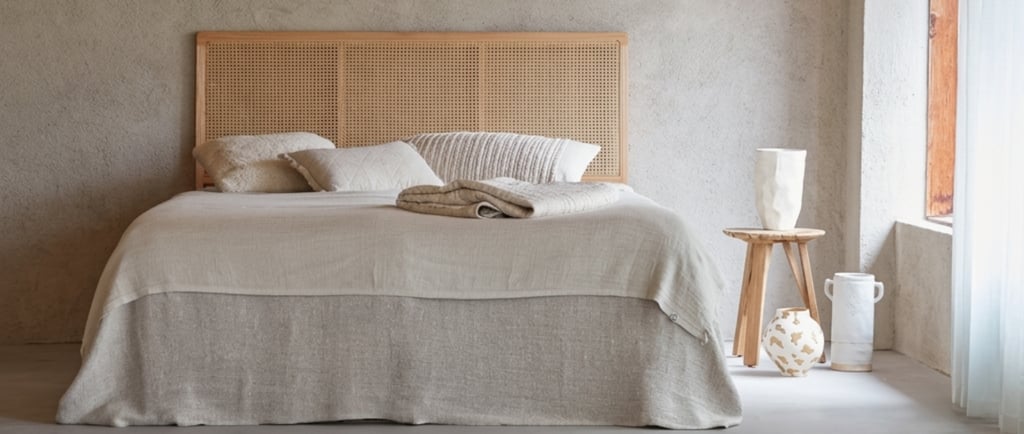
In a French Mediterranean bedroom, materials are chosen for how they behave in contact with the body.
This is not a room for surfaces that shine, resist, or impress. The materials that belong here absorb, soften, and settle. They regulate temperature, quiet sound, and improve with time. Their role is not decorative. It is physical.
These choices build on the foundations set by light and proportion, which define how the room feels before any surface is touched — a relationship developed in Light and Proportion in the Bedroom.
Linen, wood, and plaster appear repeatedly for this reason.
Linen as a regulating layer
Linen is not used for appearance alone.
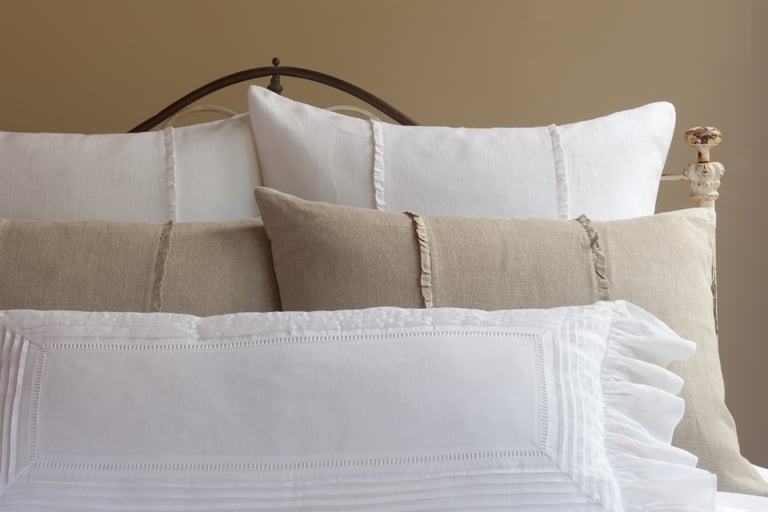
It breathes. It adapts to temperature. It becomes softer with use rather than wearing out. In Mediterranean climates, where nights remain warm and mornings cool, this adaptability matters more than visual consistency.
Curtains in linen filter light without blocking it, maintaining the softened daylight the room depends on. Bedding remains dry and calm against the skin. Even when creased, it does not require correction.
In a room shaped by restraint, linen allows the space to feel lived in without ever feeling careless.
Wood that grounds the space
Wood provides weight and continuity.
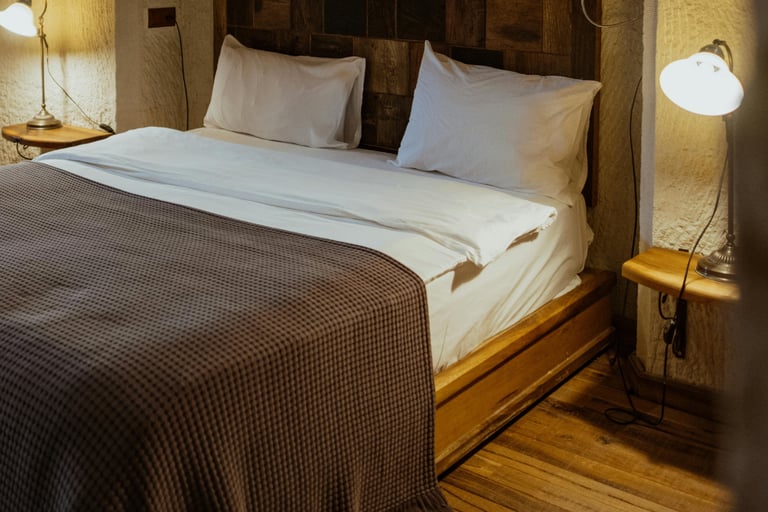
It appears in bed frames, floors, shutters, and smaller elements. Finishes remain matte. Grain is visible. Edges are softened. The goal is not contrast, but stability.
Wood absorbs light rather than reflecting it, reinforcing the calm established through proportion. Over time, it carries marks of use that feel appropriate rather than disruptive.
When the bed is treated as the room’s primary anchor, wood often becomes the material that supports it quietly — a relationship explored in The Bed as the Only Anchor.
Plaster as a soft boundary
Plaster is often the most overlooked material, yet it does much of the work.
Unlike paint or harder finishes, it diffuses light, softens edges, and reduces echo. Walls finished in plaster do not act as backdrops. They hold light.
This allows the room to remain quiet even with very little in it, reinforcing the withdrawal introduced in The French Mediterranean Bedroom.
Materials that age together
What matters is not each material individually, but how they evolve together.
Linen softens. Wood deepens. Plaster settles. None require replacement to remain appropriate. They change slowly, without creating visual conflict.
This shared ageing process gives the room continuity. Nothing becomes obsolete quickly.
Avoiding material contrast
High contrast materials rarely belong in a bedroom intended for rest.
Polished surfaces, sharp metals, synthetic fabrics, or reflective finishes introduce tension. They draw attention.
Reducing variation allows light and proportion to remain legible, even in low light. It also prepares the room for color to remain secondary rather than dominant — a progression developed in Color in the Bedroom.
Material against the body
The bedroom is the only room where material is read with the whole body, not just the eye.
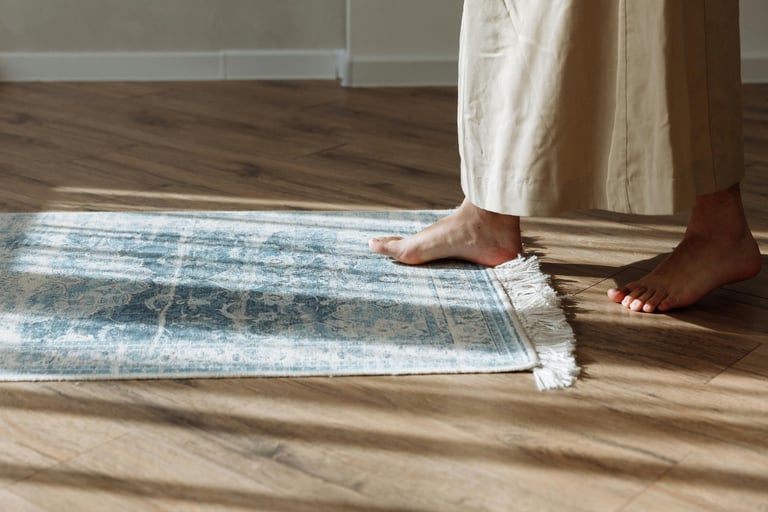
Linen against the skin tells the truth about its weight and weave within a single night. Wool blankets reveal their density in the cold hours before morning. A wood floor under bare feet says more about its finish than any close-up photograph can. The room is judged by touch as much as by sight.
This is why the materials that work here tend to be the ones that improve with this kind of reading. Linen softens. Wool gains a slight nap. Wood underfoot picks up a faint sheen along the walking line. Each surface earns its place in the room through repeated contact.
Materials that fail in a bedroom usually fail at the body before they fail at the eye. Synthetic blends feel warm in the wrong way. Lacquered floors stay cold and slick. The eye may forgive these, but the night does not.
A room that responds to use
A successful French Mediterranean bedroom does not feel complete on day one.
It becomes complete through use. Linen creases. Wood darkens. Plaster settles. The room responds to presence rather than resisting it.
These materials do not preserve a moment.
They accommodate time.
These marks of use accumulate the same way they do throughout the house, as What Patina Means in a Well-Made House examines.
Contact
© 2025. All rights reserved.
An editorial study of French Mediterranean interiors, shaped by observation, lived experience, and a respect for spaces that age gracefully.