
Planting as Structure
Why a Mediterranean garden treats planting as architecture, not decoration. How olive, lavender, vine, and restraint hold the space together over time.
TERRACE & GARDEN
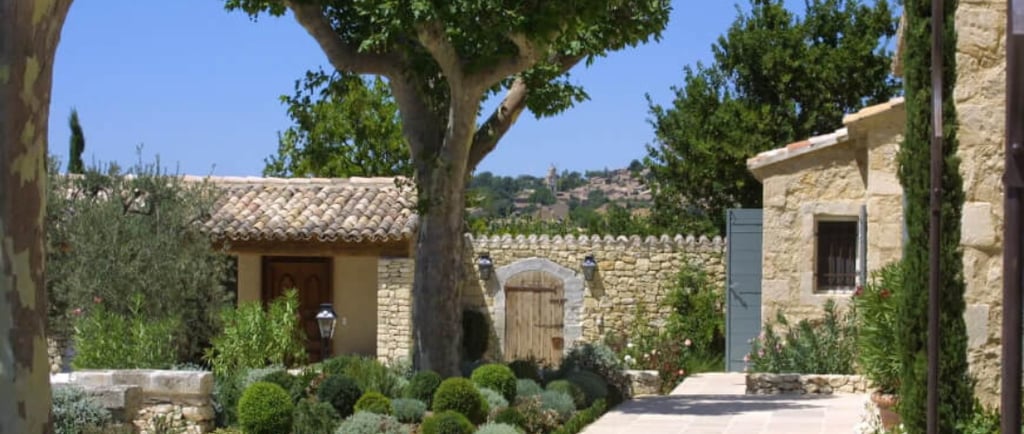
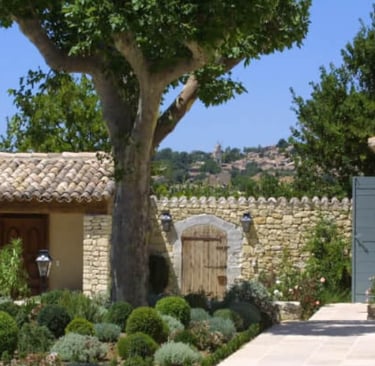
In a French Mediterranean terrace or garden, planting is not decorative.
Its role is to organise space, regulate light, and connect the house to its surroundings. Plants shape how the space is used rather than how it is perceived.
When planting becomes expressive, the garden feels restless. When it remains structural, the space settles.
Why planting is treated this way in the first place — as part of the architecture rather than added to it — sits inside the wider logic of The French Mediterranean Terrace & Garden.
Structure First
Mediterranean planting begins with restraint.
A limited number of species are chosen and repeated across the space. This repetition creates rhythm and keeps the garden legible from different viewpoints.
Planting is placed before it is multiplied. A tree defines a zone. A hedge establishes a boundary. Only then is density added.
Too many varieties break this structure and require constant correction.
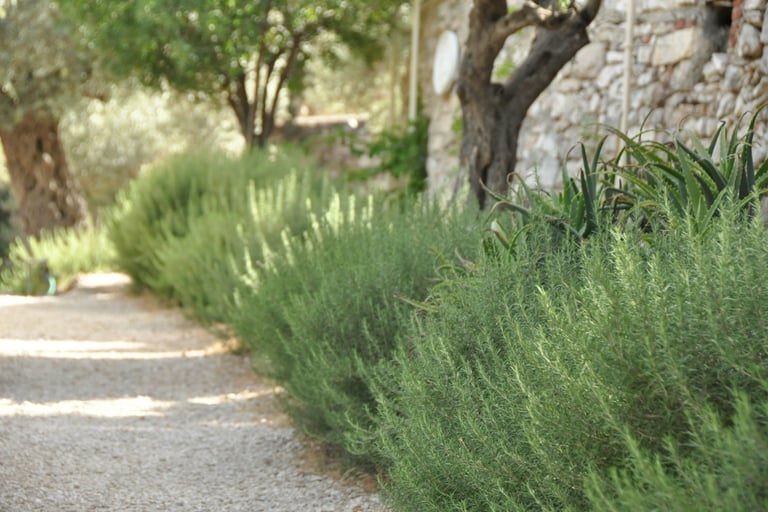
Inside that restraint, individual plants act as spatial elements. A single olive tree can anchor a terrace. A row of shrubs can guide movement. A hedge can enclose without closing. Climbing vines on a pergola filter light while defining a ceiling.
These elements replace decorative beds and borders. Planting becomes part of the structure, working alongside built elements such as seating and edges — a relationship Furniture as Extension, Not Feature takes from the other side.
Plants That Belong
Plants are chosen for climate, not novelty.
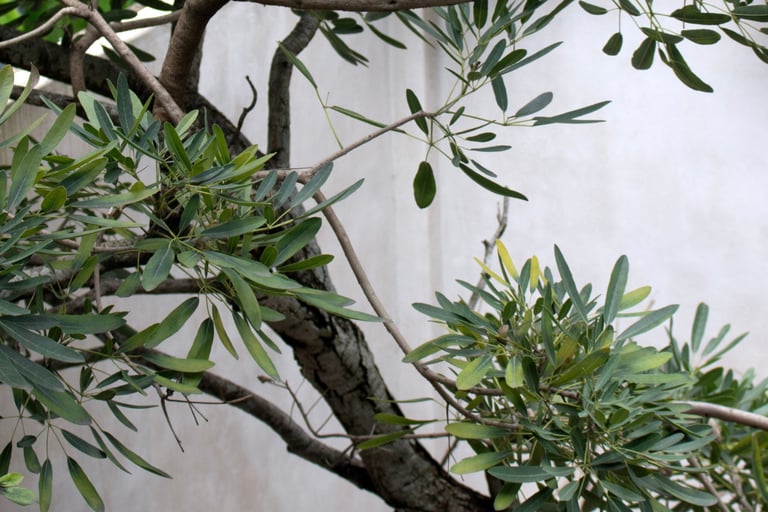
Olive, fig, citrus, rosemary, lavender, and climbing vines tolerate heat, wind, and limited water. They remain stable without constant trimming or replacement.
Their form stays readable even when slightly unmaintained.
Plants that require frequent reshaping or seasonal renewal disrupt continuity. They introduce effort where the space should remain easy.
Spacing and Density
Spacing matters as much as selection.
Plants are not packed tightly. Air, light, and movement pass between them. This prevents the garden from feeling dense or overgrown.
Density is introduced gradually. A few well-placed plants often define the space more clearly than many small ones.
The garden should remain readable at all times.
Seasonal Rhythm
Mediterranean planting follows a clear rhythm.
Summer slows growth. Autumn restores it. Winter remains open. Spring brings renewal without excess.
The garden is not expected to feel full at all times. Periods of emptiness are part of its structure.
A Mediterranean garden is not at peak in every season. It is meant to look bare in late August, when heat slows everything, and slightly skeletal in February, when nothing has yet returned. These are not failures of the garden — they are its working states.
Trying to keep the garden visually full year-round is what produces the over-planted, over-watered, constantly-replaced Mediterranean gardens that age badly.
This rhythm allows the space to remain stable rather than constantly adjusted.
What to Avoid
Decorative planting disrupts structure.
Flower-heavy schemes, sculptural arrangements, or mixed styles draw attention to themselves. They turn the garden into an object rather than a setting.
Overplanting creates visual noise and increases maintenance. Plants compete for light, water, and space.
A restrained garden avoids this. It allows each element to remain clear.
Material Continuity
Planting works with material and light, not against them.
Leaves filter sunlight across stone and lime surfaces. Green tones remain muted, allowing mineral materials to stay present.
This keeps the garden aligned with the house — the same material logic Materials That Weather Well covers for the built surfaces of the terrace.
The same principle of continuity appears at the room scale, where surfaces selected to behave together hold the interior together — developed in Materials That Repeat.
A Garden That Settles
A successful Mediterranean garden improves over time.
Plants grow unevenly. Some expand, others recede. The space adapts without needing redesign.
When planting is treated as structure, the garden becomes stable, legible, and easy to live with.
It no longer needs to be maintained as an image.
It holds its form through use.


Contact
© 2025. All rights reserved.
An editorial study of French Mediterranean interiors, shaped by observation, lived experience, and a respect for spaces that age gracefully.