
Storage as Background in the Kitchen
Why a Mediterranean kitchen keeps storage closed and quiet — and how containment, not display, is what allows the room to function under daily activity.
KITCHEN
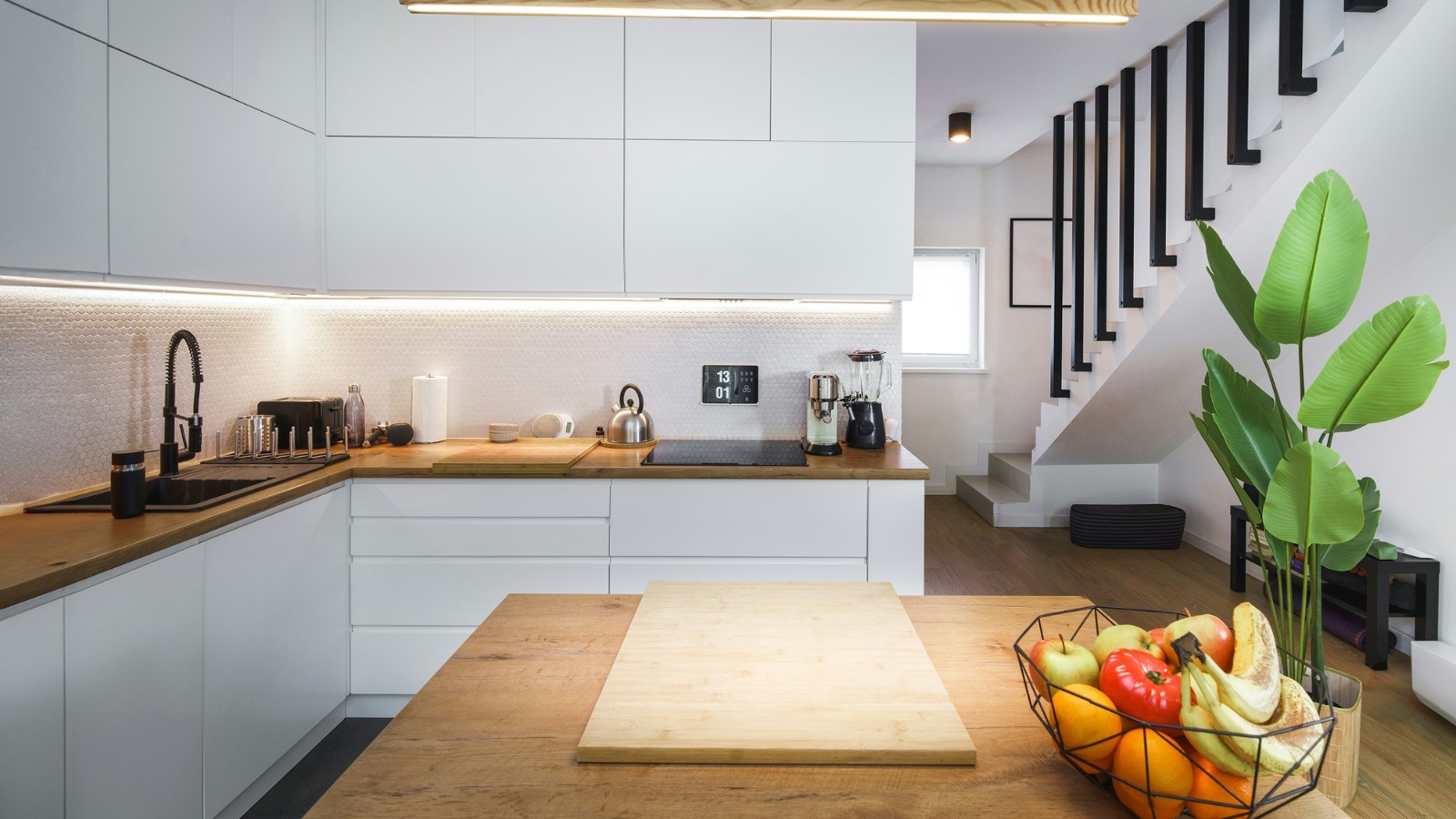
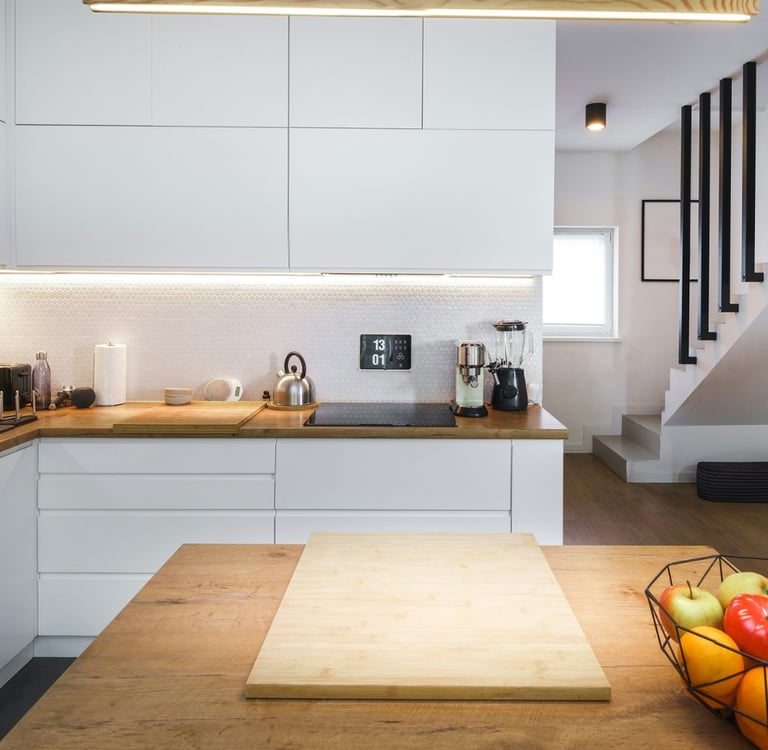
In a French Mediterranean kitchen, storage is not a visual element.
It exists to contain, not to express. Its role is to remove distraction so the room can remain calm, even during constant use.
When storage draws attention to itself, the kitchen feels busy. When it recedes, work becomes easier and the room settles — a condition introduced in The French Mediterranean Kitchen.
Containment before display
The kitchen benefits from containment.
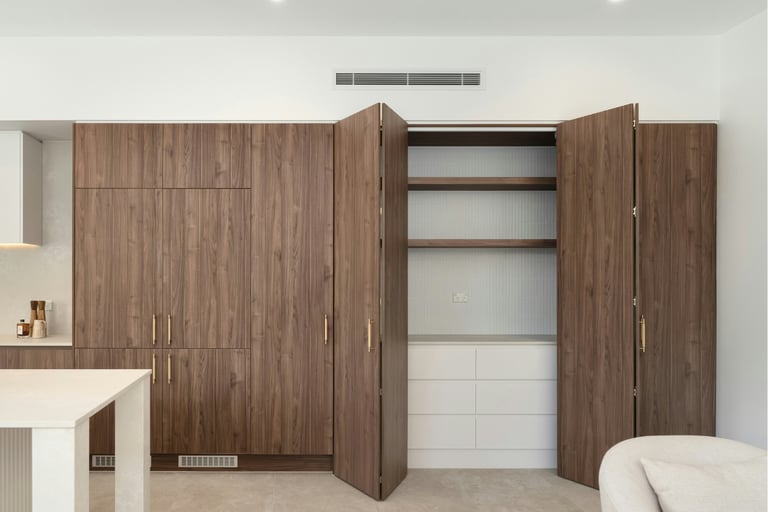
Closed storage keeps objects where they are needed without exposing them visually. Tools, dishes, and provisions remain accessible but unseen. The room reads as continuous rather than layered.
Open shelving, when overused, turns daily objects into decoration. It demands order at all times and introduces visual noise where routine should feel effortless.
A restrained kitchen allows activity without asking for performance.
Storage that follows work
Storage follows use, not symmetry.
Items are placed where they are used. Cooking tools near work surfaces. Dishes near preparation and cleaning zones. Storage supports movement rather than interrupting it.
When storage is arranged for appearance, the kitchen becomes inefficient. When it responds to routine, the room feels intuitive.
This logic aligns with how surfaces structure the kitchen from the beginning, as developed in Kitchen Work Surfaces as Structure.
Quiet fronts, continuous planes
Storage remains visually quiet.
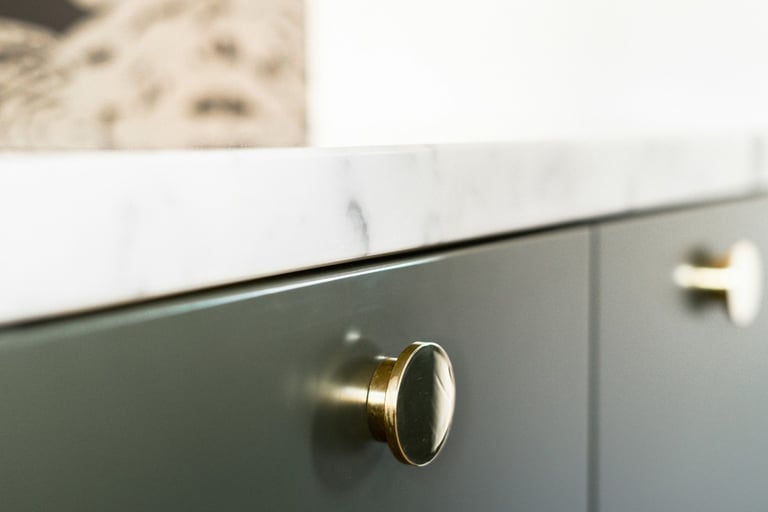
Fronts are flat or lightly detailed. Finishes are matte. Handles are integrated or discreet. The goal is continuity rather than articulation.
Strong contrasts, decorative profiles, or mixed finishes fragment the room. They turn storage into furniture, competing with the work of the kitchen.
When storage reads as part of the wall rather than as objects attached to it, the space feels larger and calmer.
Fewer elements, clearer use
A restrained kitchen does not rely on excess storage.
Too many cabinets often signal poor organisation rather than necessity. When storage is reduced and resolved early, its placement becomes clearer and its use more deliberate.
Fewer elements reduce decision-making and visual interruption. The kitchen becomes easier to navigate and easier to maintain.
This clarity supports the rhythm of the room, where movement repeats without friction, as developed in Light and Rhythm in the Kitchen.
Storage as support, not statement
Storage should never become the focus.
Tall units remain aligned with walls. Upper storage is used sparingly. Visual weight is kept low so light can move freely across the space.
When storage asserts itself, it changes the character of the kitchen. When it supports quietly, the room remains balanced.
Inside the closed front
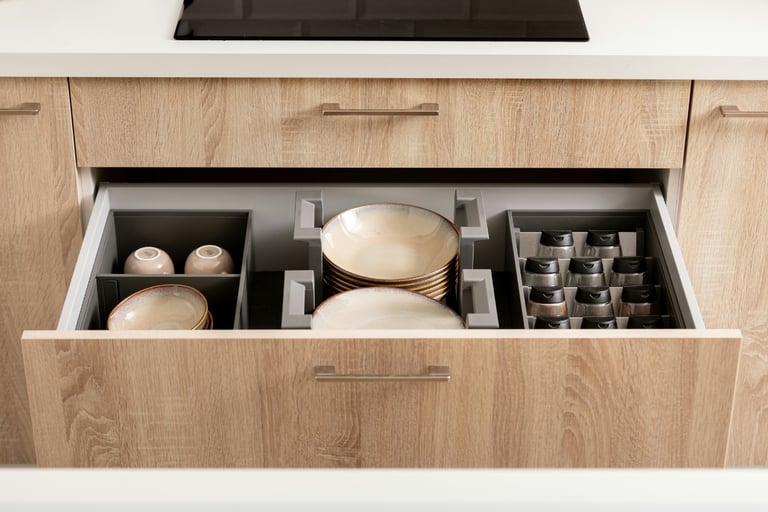
Closed fronts only work if the inside of the cabinet has been thought through.
A kitchen that hides its storage behind quiet, continuous fronts can still be exhausting to use if the inside is chaotic. Drawers stuffed past their depth, pans wedged between unrelated bowls, lids stacked away from the pans they belong to — every act of cooking becomes a small search.
The French Mediterranean preference for closed storage assumes the inside follows the same logic as the outside. One drawer for one type of object. Tools placed where the hand naturally reaches. Heavy items low, light items mid-height, rarely-used items above the working zone. Nothing stored where it has to be moved aside to reach something else.
When the inside is resolved this way, opening a cabinet does not interrupt rhythm — it continues it. The room stays calm in use because the storage stays calm in use.
A room that stays composed
A well-considered storage system allows the kitchen to remain composed at all times.
Doors close. Surfaces clear. Objects return to place without effort. The room absorbs daily use without appearing cluttered or controlled.
This quiet containment reflects a broader logic where the house absorbs use rather than reacting to it — a condition developed in A House Shaped by Use.
Storage fades into the background, where it belongs.
That is what allows the kitchen to function as a room of work rather than display.
Contact
© 2025. All rights reserved.
An editorial study of French Mediterranean interiors, shaped by observation, lived experience, and a respect for spaces that age gracefully.