
What Defines a French Mediterranean Dining Room
Light, materials, proportion, restraint. What makes a French Mediterranean dining room age gracefully while staying entirely functional — a quiet structure.
DINING ROOM
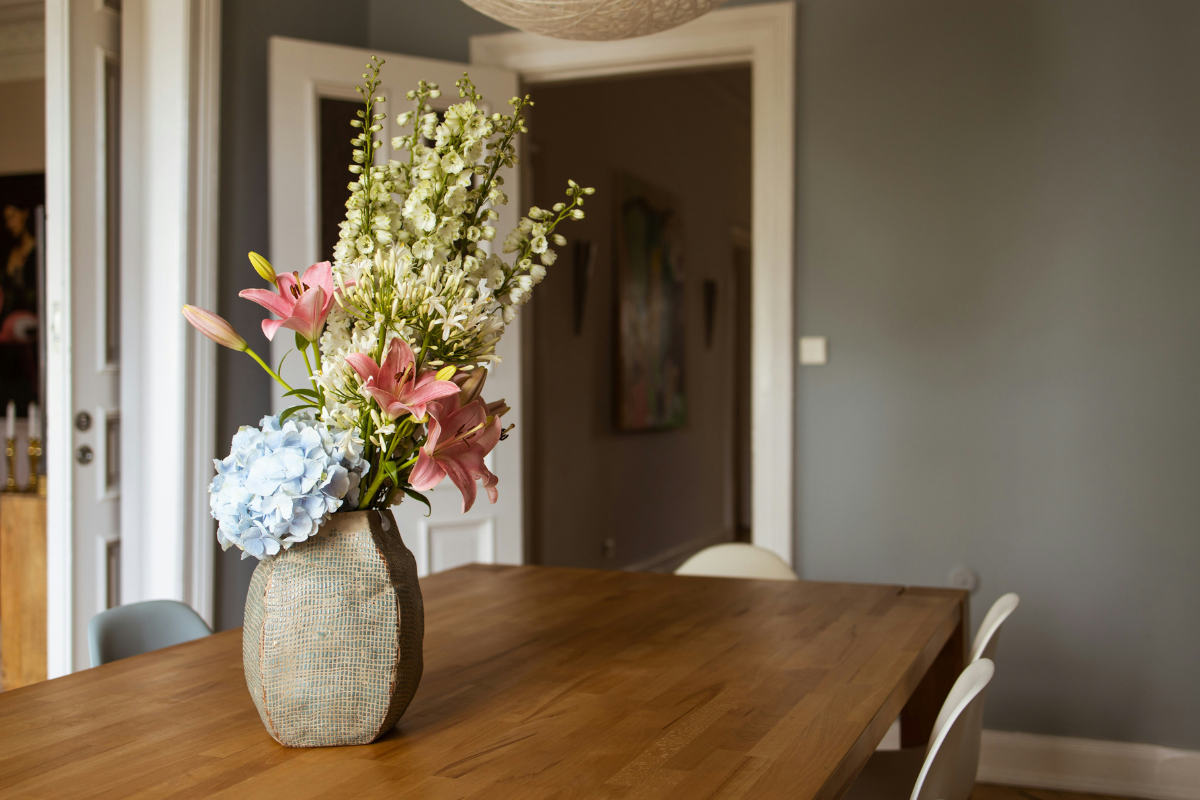
A French Mediterranean dining room is not staged. It is composed.
Light defines the space. Materials carry weight and texture. Furniture is chosen for proportion and use, not effect.
Every piece must belong. Nothing is introduced to fill space or impress. The room works because some things are deliberately left out.
Dining is not only about meals. It is about pause, presence, and comfort. This is a room meant to age gracefully while staying functional.
The principles that follow guide decisions for the entire dining area, from furniture to finishes, ensuring the room feels calm, grounded, and enduring.
Light and proportion
Light shapes everything in a dining room.
Southern light is steady and revealing. Glossy surfaces glare. Sharp contrasts dominate. Only furniture and materials that respect the light remain visually coherent.
This is not a question of atmosphere but of placement. The way light meets the table, the walls, and the circulation around it determines whether the room settles or fragments — a relationship examined in Light and Proportion in the Dining Room.
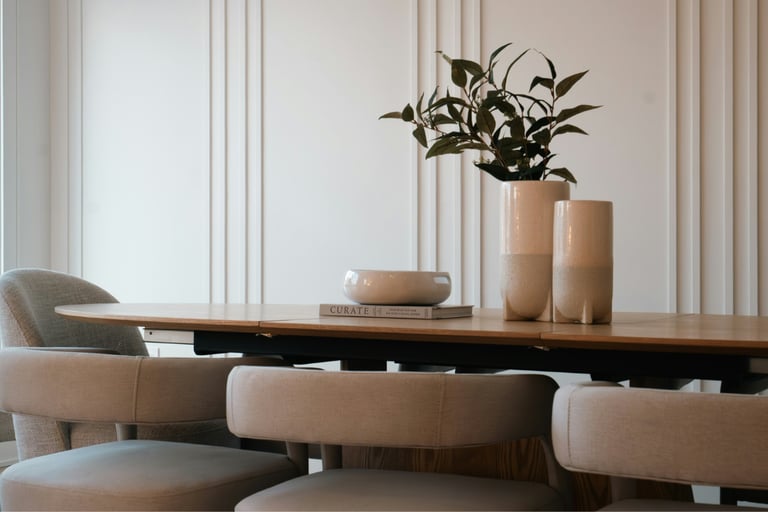
Proportion matters more than style. Tables, chairs, and sideboards must feel anchored without overwhelming. The space between pieces is as important as the pieces themselves.
This logic does not belong to the dining room alone. It continues across the house, where light establishes the conditions first, as explored in Light Across the Day.
Materials and finishes
Materials define permanence.
Stone, solid wood, linen, ceramic, and wool are preferred because they absorb light, age gradually, and remain visually appropriate over time.
Their role is not decorative. It is structural. Surfaces must hold the room together under changing light conditions. This becomes clearer in Materials and Finishes in the Dining Room, where materials are understood through their behavior rather than their appearance.
Synthetic substitutes, glossy coatings, or processed materials resist wear and quickly appear out of place under Mediterranean light.
This is not about authenticity. It is about coherence under exposure.
Seating
Seating anchors the dining room.
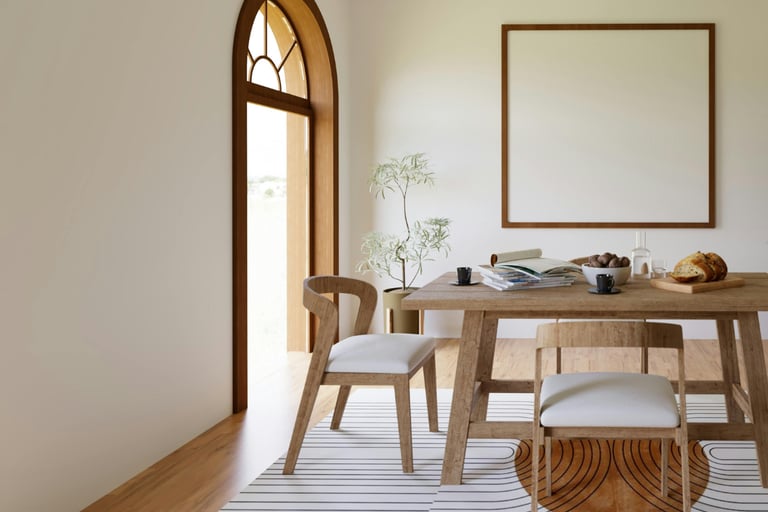
Chairs should be low and grounded, with proportion suited to the table and the surrounding space.
Comfort is immediate, not demonstrated. It does not rely on excess padding or visual signals.
What matters is how seating relates to the table, to movement, and to the edges of the room. This relationship is developed further in Seating in the Dining Room, where scale is treated as a spatial condition rather than a stylistic choice.
Sculptural or visually dominant chairs rarely belong. Seating must respond to the room, not compete with it.
Color in southern light
Color exists to support light and materials.
Base tones remain soft and reflective. Grounding tones introduce warmth without weight. Darker tones are used sparingly, only to stabilize perception.
There is no palette to apply. Color emerges from the interaction between light and surface.
High contrast, sharp whites, or trend-driven palettes disrupt the balance. Color should never dominate. It should settle into the room.
How colour responds to light and material in this room is developed in Color in the Dining Room.
How dining rooms age
A dining room is used more directly than most rooms in the house. Tables are scratched. Chairs are pushed back and forth across stone. Linen is wiped, stained, washed, and returns slightly different.
Materials chosen for this kind of use settle into the room rather than retreating from it. Wood deepens at the corners where hands rest. Stone takes a softer sheen along the edge where chairs are pulled in. Linen relaxes its first stiffness and begins to fall the way it will fall for the rest of its life.
Nothing here is preserved. Nothing here is touched up. The room is allowed to record the meals it has held, and becomes more, not less, itself in doing so.
Selection and curation
Not every piece belongs.
Every item must support proportion, materials, and use. If an object requires justification, it likely does not belong.
The room works not because it is reduced, but because it is resolved. This distinction matters. It is not about having less. It is about having what fits.
This idea extends beyond the dining room and shapes how entire houses are experienced — a logic developed in The Comfort of Understatement.
Space between pieces is as critical as the pieces themselves.


Contact
© 2025. All rights reserved.
An editorial study of French Mediterranean interiors, shaped by observation, lived experience, and a respect for spaces that age gracefully.