
Mediterranean Bathroom Materials That Age Well
Stone, plaster, wood, ceramic, metal. Why a Mediterranean bathroom is built from materials that improve under use — and which finishes fail first.
BATHROOM
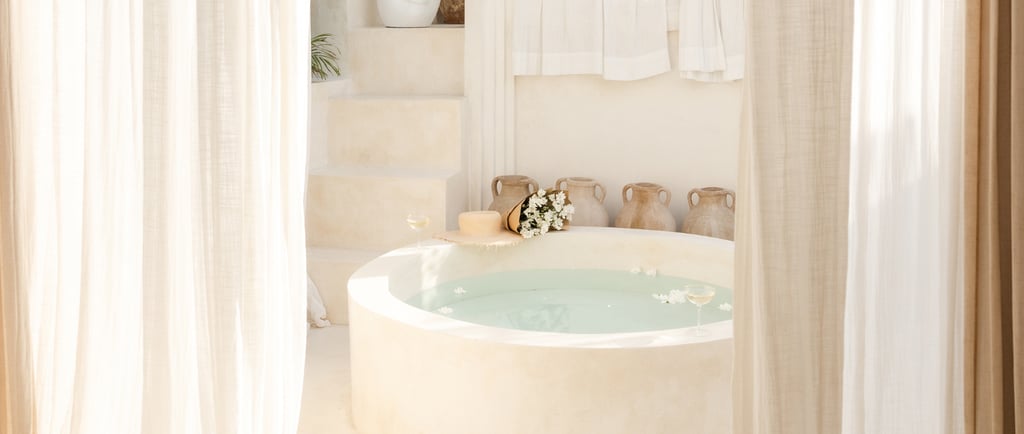
A Mediterranean bathroom is not defined by fixtures or decoration, but by the materials that shape it over time.
If you’re choosing bathroom materials, the goal is not to keep surfaces perfect, but to select ones that improve with use. Many interiors look clean at first, then quickly feel artificial as coatings wear unevenly or finishes begin to break.
A more grounded approach starts with how materials respond to humidity, light, and daily contact. The room should not resist change. It should absorb it.
What “Aging Well” Actually Means
A material that ages well does not stay the same.
It develops patina instead of damage, softens rather than deteriorates, and remains visually stable even as it evolves.
Bathrooms are demanding environments. Heat, moisture, and repeated use reveal weaknesses quickly. Materials that depend on coatings or uniform finishes tend to fail first.
What remains are surfaces that were never trying to stay perfect.
This logic appears across the house, particularly in Materials That Weather Well, where materials are chosen for how they evolve rather than how they appear when new.
Natural Stone: Stable and Quiet
Natural stone is one of the most reliable materials in a Mediterranean bathroom, not because it stays perfect, but because it absorbs use.
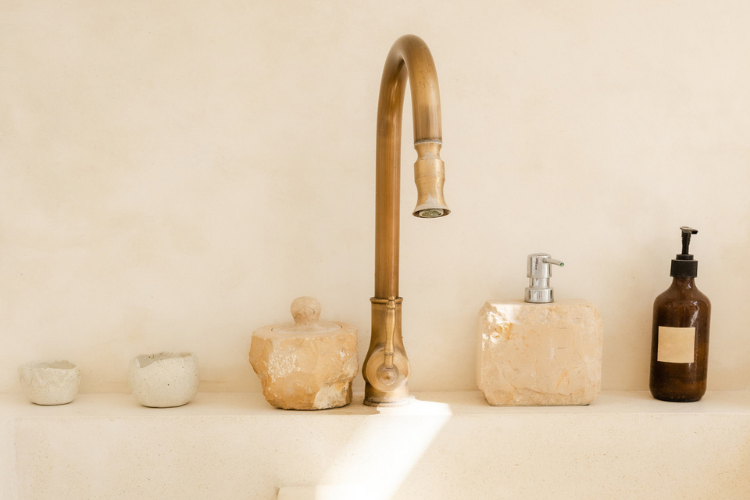
Limestone or travertine floors, for example, do not show water marks or wear as contrast. Slight variations, traces of moisture, and daily use blend into the surface instead of interrupting it. This allows the room to remain visually stable even in a humid environment.
Unlike polished or highly uniform finishes, natural stone already contains variation. That variation makes change less visible over time.
The way these surfaces respond to light throughout the day is closely tied to how rooms feel inhabited, a relationship explored in Light Across the Day: Morning, Noon, Evening.
Plaster and Mineral Finishes
Walls in a calm Mediterranean bathroom rarely rely on tiles alone.
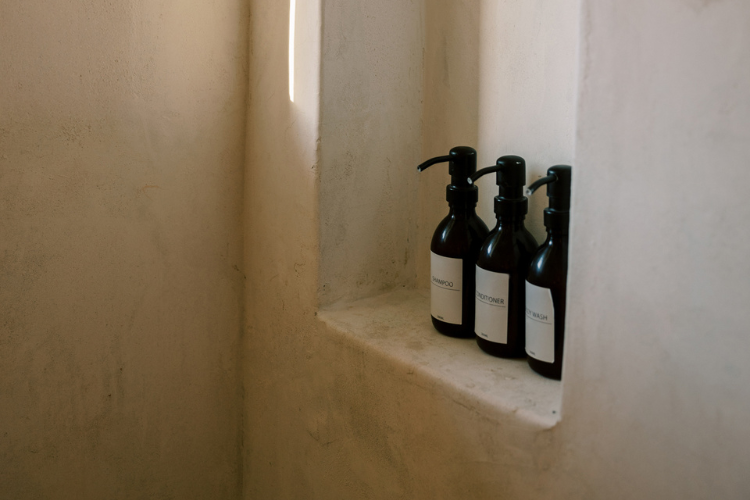
Lime plaster, tadelakt, or mineral-based finishes create depth without sharp reflection. Instead of bouncing light back, they diffuse it, softening contrast across the room.
A plaster wall beside a stone floor, for example, allows light to settle rather than scatter. Small irregularities appear over time, but they enrich the surface instead of breaking it.
This approach to surface continuity aligns with how color is handled in smaller spaces, where variation stays within a narrow range, as seen in Color in the Bathroom.
Wood: Controlled Use, Real Presence
Wood in a bathroom is often misunderstood.
Either it is avoided entirely, or it is sealed so heavily that it loses its character. Both approaches remove what makes it valuable.
Used carefully, wood introduces warmth and balance. A simple wooden vanity, shelving, or stool can anchor the room without dominating it. These elements are placed away from constant water exposure but remain part of the daily environment.
The goal is not to freeze the material, but to allow it to respond gradually.
This balance between use and restraint becomes most visible in transitional spaces, where materials shift subtly, as described in Thresholds: Where the House Changes Pace.
Ceramics, Terracotta & Metals
Not all ceramic surfaces behave the same.
Highly glossy or perfectly uniform tiles tend to highlight wear. Water marks, joints, and small imperfections become visible interruptions rather than part of the surface.
Matte ceramics or slightly irregular tiles behave differently. They soften reflection and integrate variation more naturally.
Terracotta, when used with restraint, adds depth without becoming decorative. A terracotta floor or accent surface can sit quietly within the room rather than defining it.
These materials sit between precision and irregularity, allowing the bathroom to remain stable without feeling rigid.
This balance between precision and irregularity also extends to the metal fittings that sit alongside these surfaces.
Brass and bronze, used for taps and small details, do not need to remain polished. They evolve visibly over time — water, air, and touch shift their surface. Instead of maintaining a uniform finish, they develop continuity through change.
The variation becomes part of the room rather than a defect, the same logic that allows ceramic and terracotta to repeat across the house without monotony — a continuity developed in Materials That Repeat.
What to Avoid
Materials that need to stay perfect usually fail first.
Highly polished stone, glossy tiles, synthetic coatings, or heavily sealed wood tend to show wear as contrast. Scratches, chips, and water marks appear as interruptions rather than blending into the surface.
These materials create a constant need for correction. The room never settles, because the surfaces are always slightly out of place.
A Mediterranean bathroom works differently.
It allows materials to absorb use rather than expose it.
Bringing Materials Together
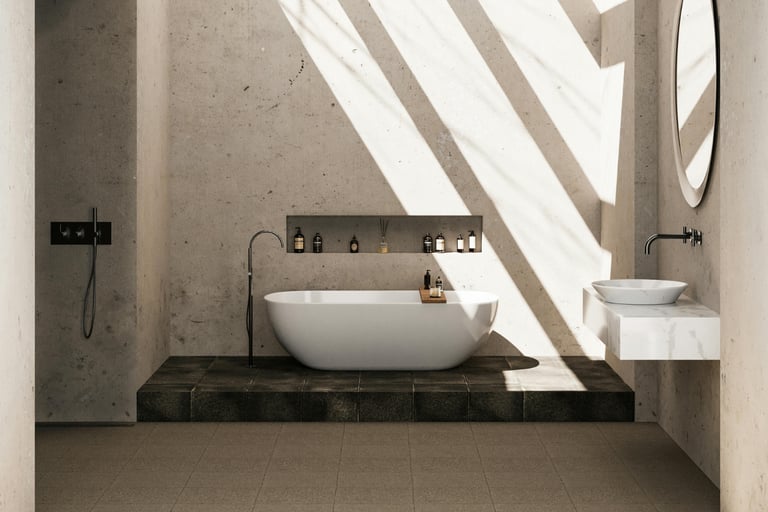
A calm Mediterranean bathroom is not built on a single material, but on how materials relate to each other.
Stone grounds the space. Plaster softens it. Wood introduces warmth. Ceramics provide structure. Metal adds depth over time.
When these elements are chosen with aging in mind, the room becomes more consistent as it is used. Nothing stands out abruptly. Nothing needs to be hidden.
The room does not need to stay new.
It needs to remain stable as it changes.
Contact
© 2025. All rights reserved.
An editorial study of French Mediterranean interiors, shaped by observation, lived experience, and a respect for spaces that age gracefully.